NASIR YOUSIFI
Nubra(Ladakh): The rugged terrain of Ladakh is not only about exploring nature or hiking into mountains; the camel safari in the cold desert of Nubra Valley has emerged as one of the major tourist attractions nowadays. Once regarded as a burden, the double-humped camel brings prosperity to the tribal village in Nubra Valley’s Hunder village in Ladakh.
Fourteen years ago, a 56-year-old pastor from the remote region of Nubra in Ladakh gifted all four of his double-humped camels but one to a distant relative due to the lack of resources to feed them. Now, Mohammad Ibrahim, the 32-year-old son of the same pastor, keeps a troupe of eight camels to run a successful safari business in the cold mountains of Nubra. While recalling the incident, Ibrahim says he has a vivid idea of how his father and he drove those camels for miles across white sand dunes to hand them over to an acquaintance in Diskit.
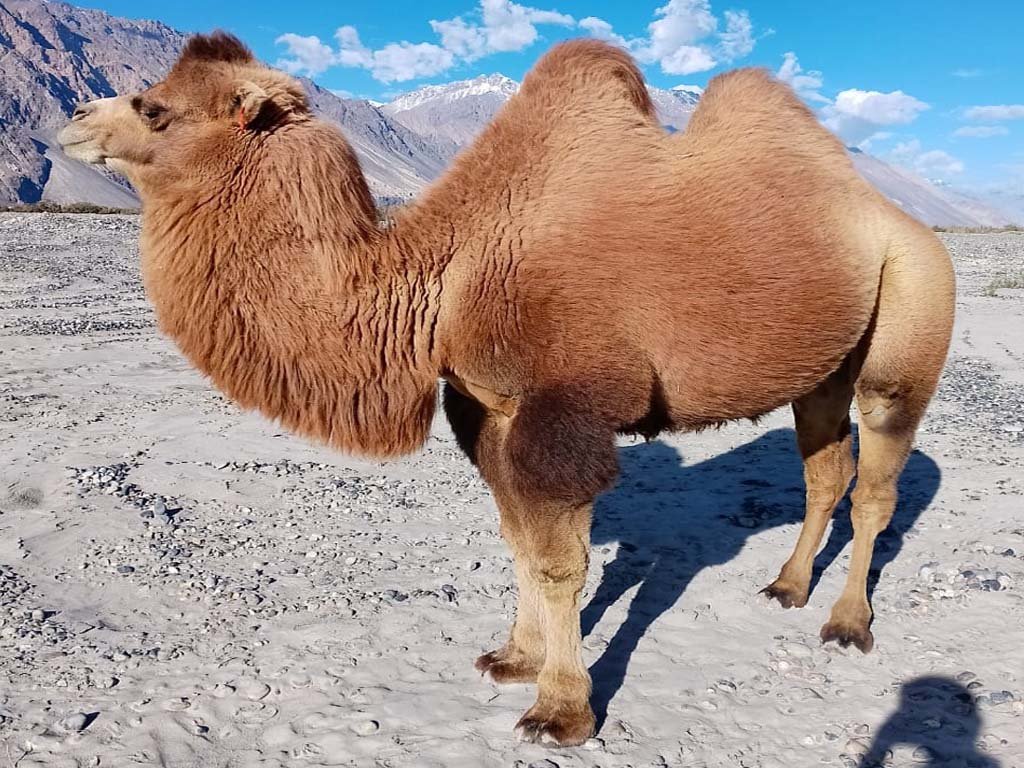
Luckily, the one we kept back has become a source of prosperity for us now. I have raised almost a quarter dozen Bactrian camels and thank God, I use all of them for tourist safaris,” says Ibrahim, who, along with his two younger brothers, is now running a successful camel safari business in his Hunder village in Nubra Valley. Once regarded as a burden and used occasionally as a means of local transport to carry loads and rations in the remote parts of Ladakh, the ship of the mountain is now the main source of livelihood for scores of families in the region.
Not only Ibrahim, but a sizable number of youths from the historic tribal village are now engaged in running camel safaris and other tourist-related services in the area, earning their livelihoods. Every day, hundreds of tourists take their dream ride on sand dunes abundantly found between Hunder and Diskit villages—a ride on a double-humped camel.
A famed ride
The remote Hunder village in Ladakh’s Nubra Valley has added many dimensions to mountain tourism, and a ride, especially on a double-humped camel, is never to be missed among them. A large number of tourists in the village can be seen riding the camels and taking selfies with the prized animals.
“I had heard about this camel from a friend who had visited this place earlier. Since then, I dreamt of a ride and a selfie with this fine friend,” says Raveena, a school teacher from Pune who is visiting Ladakh with her husband. Riding this type of unique camel is truly a once-in-a-lifetime experience, adds a jubilant Raveena.
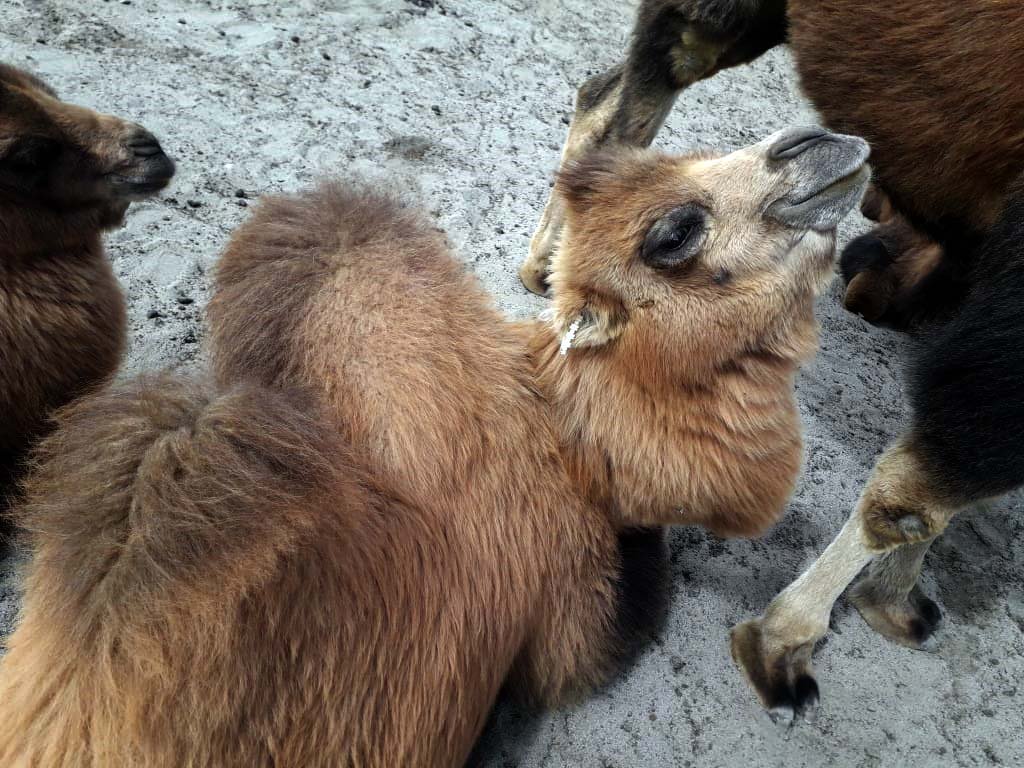
According to Feroz Ahmad, a local tour operator from Nubra Valley, hundreds of tourists visit the valley every day. From mountain biking, trekking, and heritage trips to cultural exploration, these tourists engage in a variety of pursuits. However, the one must-have pleasure for all these people seems to be the camel ride and taking selfies with the prized animals. The Bactrian camel has lately turned into a source of handsome seasonal income for the youth in the area.
Growing Numbers:
Once struggling to survive in the seventies, the population size of India’s only double-humped camel found in Nubra has witnessed an uptick. From about 40 camels a decade ago, there are now hundreds of these camels in the region.
According to Mohammad Iqbal, Chief Animal Husbandry Officer, Leh, there are 298 double-humped camels in the region, as per the latest census conducted by the department. Experts believe that the main reason behind the growth in the population of this otherwise critically endangered species in the region is their usefulness in generating income for many local families through safaris. As per the camel keepers, they earn about Rs 1500–2000 from a camel per day during the season. However, the animal needs special care.
Double the Hump, Double the Care
Most of the Bactrian camels feed on Seabuckthorn, a prominent shrub commonly found in community grazing fields in the region. However, the shrub is only available during a few months of summer. Ibrahim says that it is very hard to feed the animal during winters, as the region lacks any viable plant material due to severe cold.
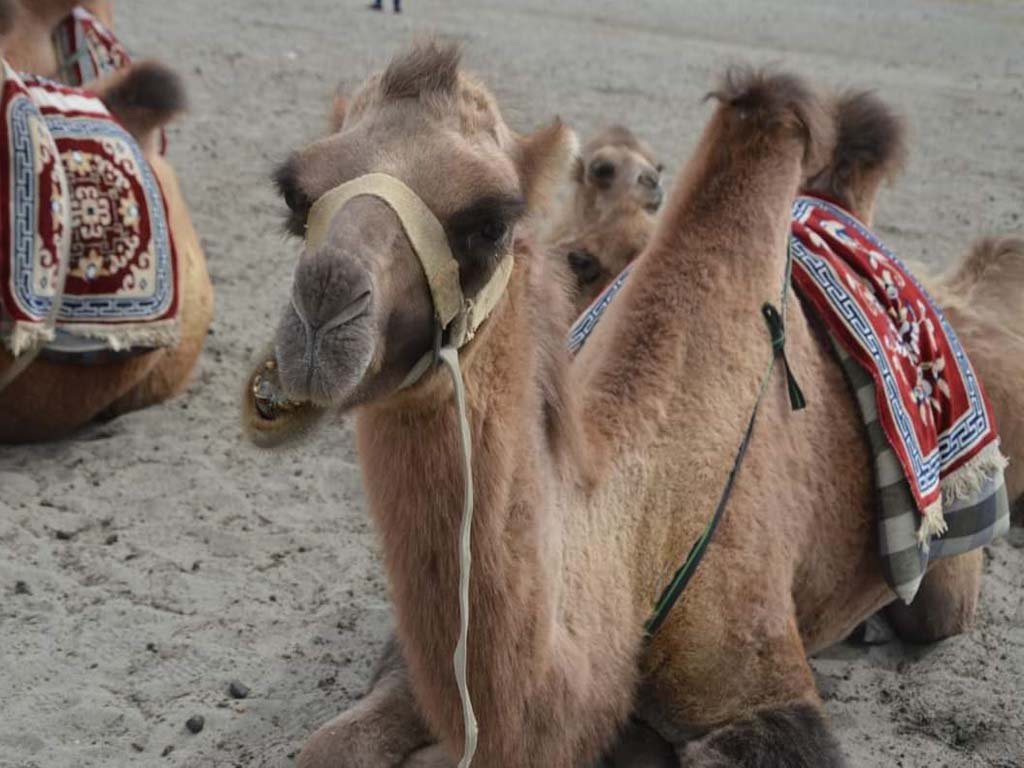
“Our women collect alfalfa hay from the wild to feed the animals during the winter season. But as the numbers of animals have increased, one does not get sufficient hay for the animals. So every winter, the fodder for the camel becomes unaffordable,” Ibrahim says. He adds that during winters, they spend a good amount on feeding them.
Apart from the hard work, the double-humped camel has given a new identity to the historically important Hunder village.
The Last Remnants of the Silk Route
Found in good numbers now in Nubra Valley’s Hunder village, about 135 kilometers from Leh city, the double-humped camel is believed to have come to Ladakh from the neighboring Tibetan region during the 17th century. Apart from Ladakh in India, the prized camel is found in the Hor region of Central Asia.
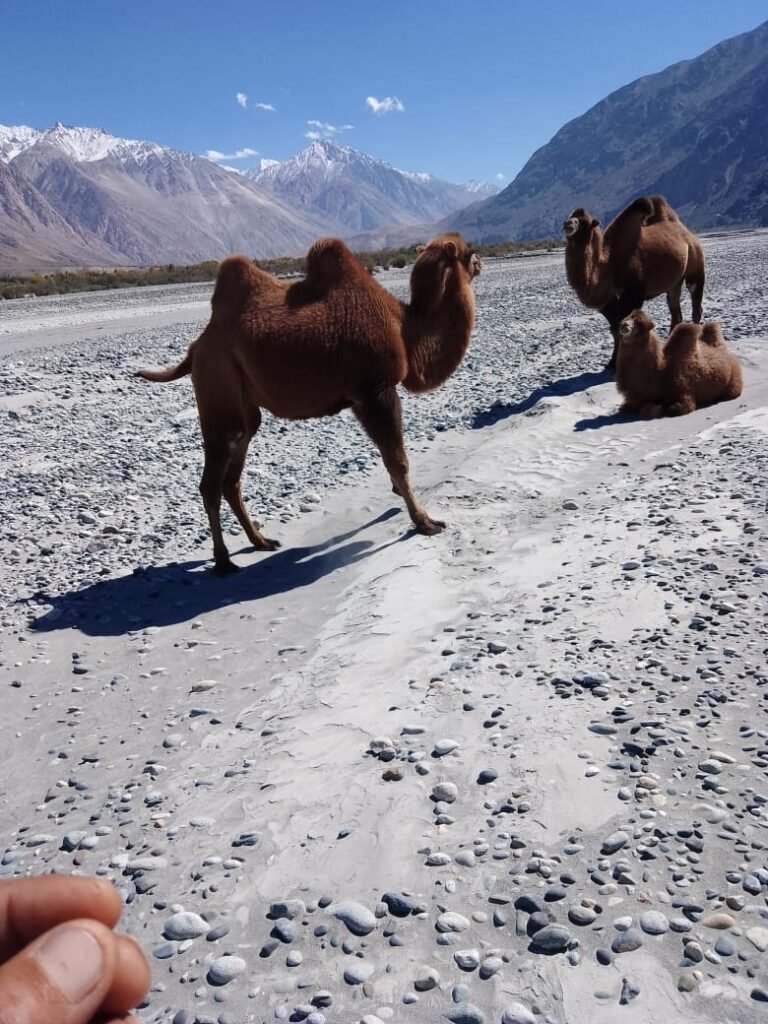
According to P. Stobdan, who works as a teacher in the Government-run higher secondary school at Chochut, Leh was a part of the famed Silk Route. Until recently, the region remained an important transit point on the historic route. These camels were widely used to carry loads and goods for trade. However, after the closure of the Silk Route in 1950, few camels were left in the region, which are now widely used in tourism activities in the region.