NASIR YOUSUFI
BUDGAM: On a cloudy evening, Abdul Rahim Khan , a 33-year-old craftsman from Shunglipora village in central Kashmir’s Budgam was busy in helping his wife to milk the cow, when he received a carpet dealers call from nearby village asking for an immediate meet. Sensing urgency, Khan walked down two kilometers from his house to dealer’s home. On reaching the destination, his joy knew no bounds.
Khan is one among a few craftsmen, selected for making a handmade carpet for the highest institution of democracy in the world, the Parliament House of Sansad Bhawan in the national capital, New Delhi.
For a moment, the talented craftsman from a remote area in upper reaches of the valley could not believe the news. Though a school dropout, he knows the importance of the Sansad.
“I have woven more than hundred carpets during my 20 years career as carpet weaver. Where those have been used, God knows better. But this time, I feel really excited that my art will get showcased at such an important place,” exclaims Khan, who is into carpet making since his childhood.
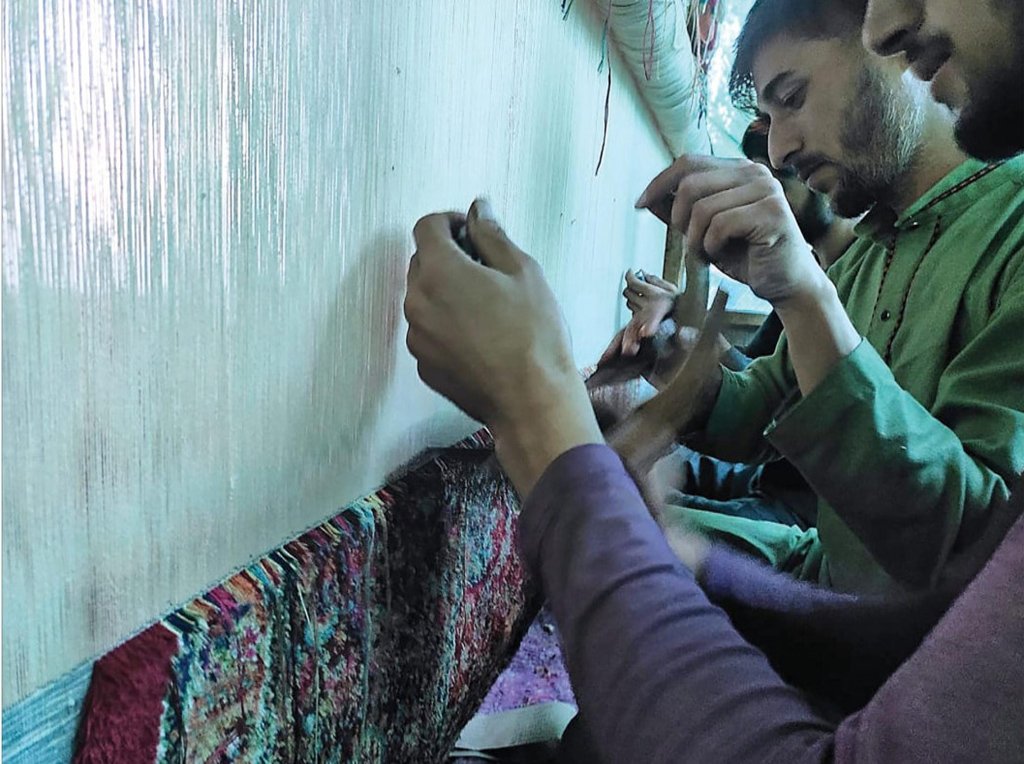
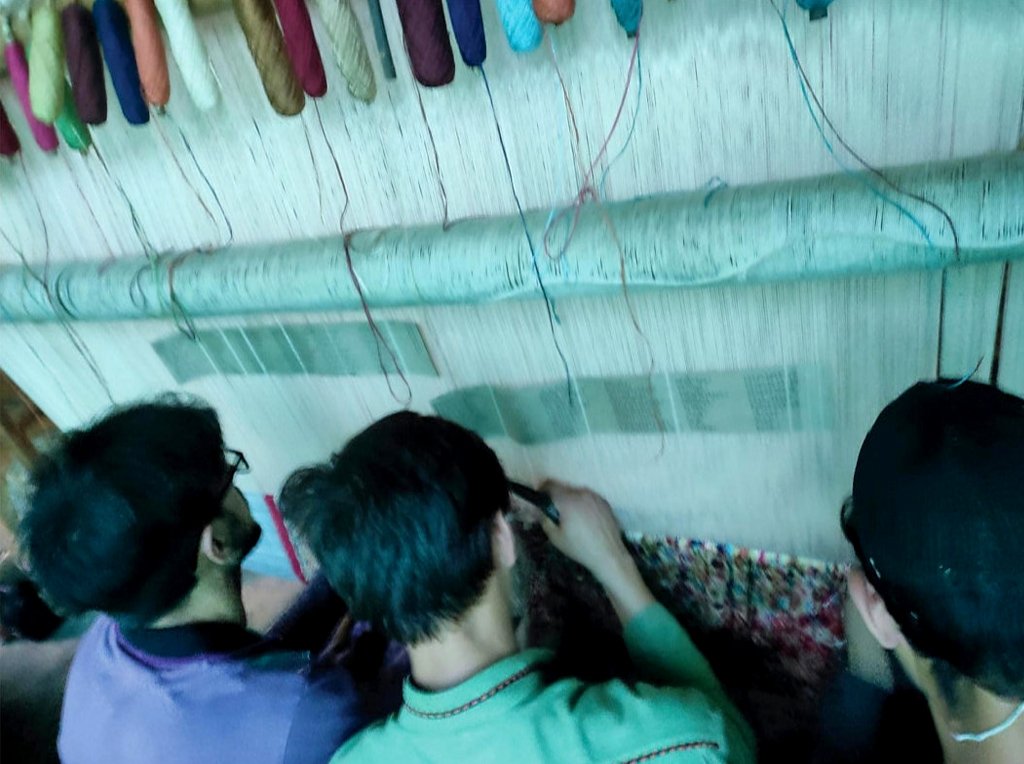
Abdul Rahim Khan is not doing it alone. He is equally assisted by two more siblings, 27-year-old Tariq Ahmad Khan and 29-year-old Reyaz Ahmad Khan in running the loom. The trio is about to complete the prized carpet. “When any of the male members is off the work, a female member from the household works for that time,” Khan adds.
It is not only the Khan family from Shunglipora, there are few more groups of artisans from other villages near lush green Tosamaidan meadows who have almost completed the weaving of carpets for the Parliament House.
How it happened:
It all started in October of 2021, when a 62-year-old local carpet dealer, Ghulam Mohammad Khan Tahiri, the owner of Tahiri Carpets sealed a contract with a Delhi based firm for weaving the carpets. “They only provided us the di-mensions and shape of the carpet, rest has been left for us to decide the design and stuff of carpets,” says Tahiri.
A veteran carpet dealer with an experience of over 35 years in carpet industry, Tahiri immediately sensed the im-portance of the rug for the Parliament. He says, his carpet making company has mainly focused upon the design, stuff and the art used in these carpets.
As the work on these prized handmade carpets for country’s Parliament has been mostly done, the joy has come after a days of intense hard work.
“We have already made carpets for Raddison Group of Hotels and some other big corporate houses. But as soon as I learnt about this prestigious order, I sat down with my father, discussed all the peculiarities about the consignment. We decided to use a quality stuff and master craftsmen for the esteemed project. “After arranging super quality silk from Delhi , the second tough thing was a selection of 12 master craftsmen out of about 120 craftsmen working with us, for this important consignment,” says Qamar Ali Tahiri, Chief Executive Officer of Tahiri Carpets and son of veteran Tahiri.
The timeline for the completion of this project was also a concern. Usually, during summers, many craftsmen take to farming or other labour work in this area, while most of the craft work is carried out in winters. “So we had to moti-vate the craftsmen to work during summers too, for timely completion of work,” Tahiri adds.
Design and Make
With 11 feet in length and 8 feet in breadth, covering an area of 90 sq feet approximately, a trapezium shaped carpet is made from silk on silk, an arrangement when both threads and knots are made from silk. As per Tahiri, there are 288 X 288 knots in one foot length of the carpet.
The prized rugs have been woven in a famed Kashmiri design ‘Shikaar’. Known as the traditional design in local carpet industry, Shikaar is a depiction of jungle life. The images of Lion, Leopard, Deer, Elephant, Peacock or birds are perfectly portrayed on the frame.
“They wanted to craft these masterpieces in a traditional art. So we have chosen this old art for these carpets,” says Qamar while referring to one of the finished carpets, portraying a leopard roaming in a jungle.
The color combination of the prized rugs has been also taken care of. Qamar says, that they have used a combination of 12 colors. “Ranging from Red, Orange, Blue, Green to others, the colors have been used as per the scenery and animal portrayed on the carpet. I still remember, how we had dyed the thread dark red to portray the blood around deer for a scene portrayed on one of the carpets.”
Proud Moments
As the carpets from Kashmir made in traditional art are about to décorate the building that houses the highest law-making institution in India, the local artisans are upbeat with a news. Many artisans are hopeful that the develop-ment may augur well for Kashmiri handicrafts in particular the carpet industry.
According to Dr Shaheena Akhter, a lecturer in Business Studies, the projects like these have a potential to promote local handicrafts, “as they serve as a sort of encouragement for the artisans and opening of more marketing avenues for local craft.”
While the handicrafts from the valley struggle to bounce back to lime light, the likes of carpet-weavers -Abdul Rahim, Tariq and Reyaz they are hopeful of more work.
Says Reyaz: “For me more work means a sustainable livelihood and that is what we people crave for.”