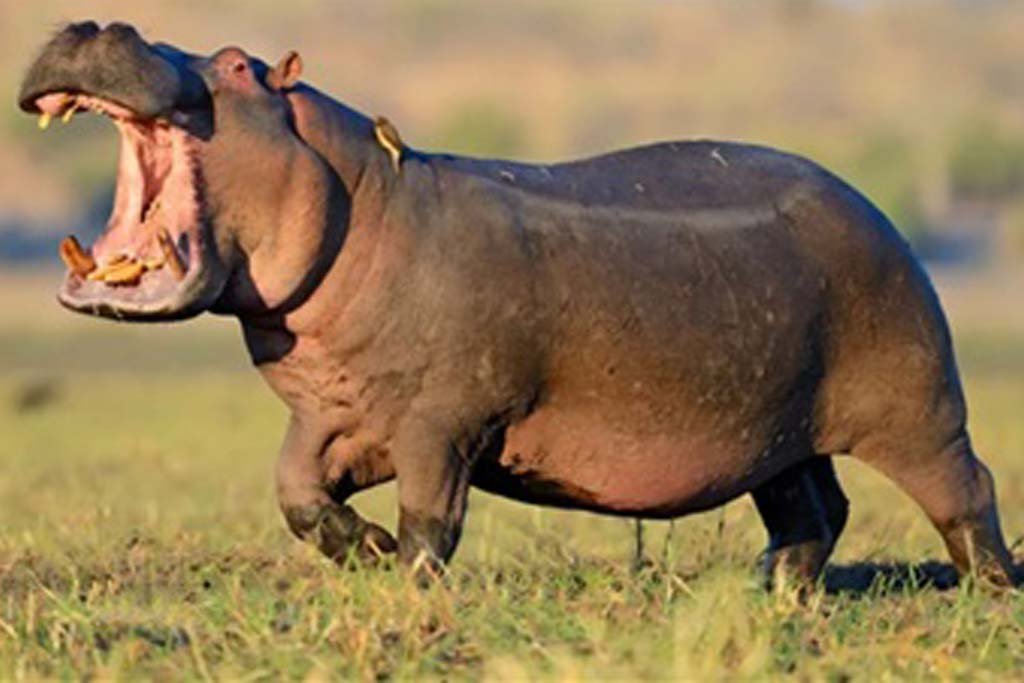
JAMMU, MARCH 13: The Jambu Zoo welcomes its new residents, a pair of hippopotamuses brought from Aringar Anna Zoological Park, Chennai, Tamil Nadu in exchange of a pair of Himalayan Black Bear, approved by the Central Zoo Authority.
The move of add Hippopotamuses in the family of the Jambu Zoo was the brainchild of Sarvesh Rai, PCCF/Head of Forest Force, J&K (the then Chief Wildlife Warden, J&K Govt.). The hippopotamus often referred as hippo, is a large semi-aquatic mammal native to sub-Saharan Africa. Its name comes from the Ancient Greek word for “river horse”.
After elephants and rhinoceroses, the hippopotamus is the next largest land mammal. Despite their physical resemblance to pigs and other terrestrial even-toed ungulates, the closest living relatives of the hippos are cetaceans (whales, dolphins, porpoises, etc.), from which they evolved about 55 million years ago.
The team of the officers deputed for transportation of the animals included Noor ul Amin (I/C Range Officer), Sudesh Kotwal (FPF Guard), Anwar and Mukhtiar (Animal keepers). The Team was assisted by Dr. Ranjit Katoch, Veterinary Assistant Surgeon.
The transportation of the animal from Chennai to Jammu through train was critical as the body temperature of the animal was to be maintained with the help of water sprinklers which were customized for the train journey. The animal arrived at Jambu Zoo on 13th of March 2026 and will be kept under quarantine period of 15 days, before it is open to public display.
Chaturbhuja Behera, Chief Wildlife Warden, J&K Govt. has welcomed the pair of Hippos, which is going to be a great attraction for the people of J&K. He has urged the students, tourists and locals to visit the Jambu Zoo to see Lions, Tigers, Crocodiles, Gharials, Snakes, Bears etc and the new addition i.e. Hippopotamus.
According to the Chief Wildlife Warden, Chaturbhuja Behera many other animal species will be added to the Jambu Zoo in the coming months and efforts are underway to enhance facilities for the visitors.
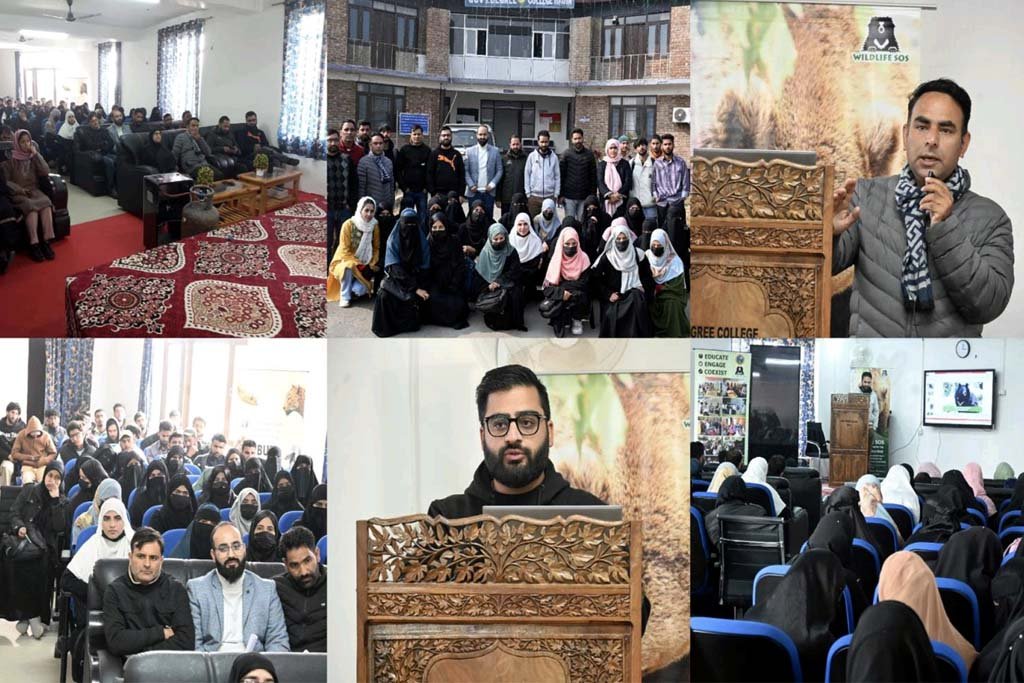
BANDIPORA, NOVEMBER 21: Government Degree College Hajin, in collaboration with Wildlife SOS, on Thursday organized a Wildlife Conservation Outreach Program.
The initiative aimed to sensitize students about the significance of biodiversity with a special focus on wildlife conservation, rising man–animal conflicts, and the preventive measures essential for maintaining ecological balance.
The program was presided over by the Principal GDC Hajin, Prof. (Dr.) Gazala Firdous, who encouraged students to actively participate in conservation activities.
Resource person from Wildlife SOS delivered a detailed and insightful presentation on wildlife conservation, explaining the ecological importance of various species and the threats they face due to habitat loss, poaching, climate change, and increasing human encroachments. His session included visual aids and case studies that helped students understand the gravity of the situation.
Resource person presented an extensive lecture focusing primarily on man–animal conflicts, their causes, and practical measures that communities and authorities can adopt to mitigate these conflicts. The importance of coexistence, proper waste management, early warning systems, and community-based conservation practices were stressed.
The outreach program concluded with an engaging question–and–answer session, during which students discussed various wildlife-related concerns relevant to the region.
The program proved to be highly informative, enriching, and impactful, successfully achieving its objective of raising awareness about biodiversity protection and fostering responsible environmental attitudes among the students.
JAMMU, MAY 16: Research team of Department of Wildlife Protection, Jammu & Kashmir has confirmed the presence of Snow Leopard in Kishtwar High Altitude National Park through camera trap photographs.
The camera traps installed before snowfall in the National Park have been retrieved and multiple images of snow leopards have been captured in the camera trap frames. In one camera trap frame, three snow leopards have been captured roaming amidst the pristine snow-covered landscapes in Renai catchment of Kishtwar High Altitude National Park. The camera trap images showcase the remarkable adaptability of this elusive species, well-suited to thrive in the challenging high altitude environment of Kishtwar.
The Kishtwar High Altitude National Park, in the UT of Jammu & Kashmir is renowned for its diverse array of flora and fauna, including several rare and endangered species. It encompasses breathtaking alpine meadows, snow-capped peaks and lush green forests, serving as a vital ecological corridor for many wildlife species.
Expressing his happiness over this sighting, Sh. Suresh Kumar Gupta, IFS, Chief Wildlife Warden, Jammu & Kashmir appreciated the efforts of the research team led by Dr. Kumar MK, IFS, Regional Wildlife Warden, Jammu and Majid Bashir Mintoo, Wildlife Warden, Chenab Division Kishtwar. He further added that successful camera trap sighting of the Snow Leopards is an affirmation of the effectiveness of the park’s conservation strategies, which encompasses habitat protection, anti-poaching initiatives, community engagement, and scientific research. These combined efforts have created a conducive environment for the Snow Leopard population to flourish within the park’s boundaries and adjoining areas.
The Snow Leopard holds immense ecological significance, acting as a keystone species in maintaining the delicate balance of the ecosystem. By conserving this apex predator, the Kishtwar High Altitude National Park also safeguards the diverse range of wildlife that co-exists within its boundaries, including the Himalayan Ibex, Musk Deer, and numerous avian species. This sighting of the Snow Leopard in Renai area reinforces the importance of protected areas in safeguarding endangered species and underscores the need for collaborative initiatives involving local communities, governments and conservation organizations. Earlier, the Department of Wildlife Protection Department, through outsourced scientific study, has also captured two leopards (one adult and one sub adult) in a single frame of camera trap in Nanth Nallah. This study is part of Snow Leopard Population Assessment and biodiversity documentation of protected areas being carried by the department.
Srinagar: Rolling fingers gently over the pointed and branched antlers, put at a display on the entrance of their grandparent’s home, two siblings Muafiq and Faizan often cherish the majesty of unseen red deer. Septuagenarian Mohammad Yousuf Wani, their grandfather recalls how occasionally ,’Kashmir’s prized animal’ used to stray in as close to their premises, while turning nostalgic on the mention of the animal. A spectre, Muafiq and Faizan in their early twenties have never been able to witness unlike their grandfather at their ancestral house in Barji Harwan, a small hamlet situated at a stone’s throw from Dachigam National Park, harbouring the world famous species of Himalayan red deer.
The Hangul or Kashmir stag (Cervus elaphus hanglu) is the only subspecies of European red deer found in India.
Its limited distribution and small population makes it a worlds critically endangered species.
With drastic decline in the numbers over the years, the risk of its extinction looms large. IUCN Red Data Book, which records the list of species facing the risk of extinction, has declared this state animal along with Markhor and Chiru found in the himalyan ranges of J&K as most endangered species.
Dwindling Numbers:
Pegged once at around 5000 in 1900 A.D, the population of Hangul has saw a constant fall over the decades. Counting carried out in 2017 by the department of wild life and protection in collaboration with other agencies, puts the number of Himalyan red deer as low as 182.
Annual Hangul counting started since 2004 using scientific methods estimates the population at 197(2004), 153 (2006), 127 (2008), 175 (2009), 218(2011),186(2015) and 197(2017).
Hangul Population trends in Dachigam Landscape, 2004 to 2017.
Though the last two decades have shown some stability in the population estimates, the low numbers put the state animal of J&K at the constant risk of extinction.
Fragmented habitat, Inbreeding issues, poaching and poor female-fawn ratio are the main concerns faced by this unique species of Himalayan Red Deer.
In 2004, sex ratio was 19 males per 100 females which dwindled between 21 males in 2006, 22 males in 2008, 26 males in 2009, 29 males in 2011, 22 males in 2015 to 16 males per 100 females in 2017.
Fragmented Habitat and Inbreeding depression:
Once widely distributed in the mountains of Kashmir with the small population outside J&K in the Chamba district of Himachal Pardesh , the Hangul distribution range has drastically declined , confining the animal to 141 sq Km Dachigam national park only.
“Hangul is a long ranging animal. Earlier Its traditional habitat stretched between Kishtwar to Gurez . Unfortunately this corridor connectivity has been lost to many biotic factors, leading to the inbreeding depression ”, says Dr Khursheed Ahmad Scientist and Head Division of Wild Life Sciences SKAUST Kashmir, while deliberating on the eminent causes of the decline in Hangul population.
“Disconnectivity among the main set of population in Dachigam and the adjoining protected areas like Wangat, Shikargarh etc leaves the chances of genetic spread at ebb. Isolated population leads to the lack of population progression” adds Dr Khursheed.
Female Fawn ratio and predation:
In 2004, female fawn ratio was 23 fawns per 100 females .There were 9 fawns per 100 females in 2006, which remained unchanged in 2008. Then after the ratio swung from 27 fawns in 2009, 25 fawns in 2011, 14 fawns in 2015 to 19 fawns in 2017, reveals the annual census exercises carried by the Department of Wild Life Protection, Jammu and Kashmir.
Very low fawn survival is attributed as the main cause of poor fawn female ratio.
In addition, Biotic factors, fairly good population of local dogs as wel as belonging to Security forces camped in the area, harsh winters, natural predation by leopard and fox and the coinciding of movement of livestock with the fawning season are other major factors affecting the fawn survival, explains Dr Khursheed.
Conservation measures and some hope:
According to the renowned wildlife conservationist, M.K Ranjitsinh in her famous book ‘A life with wild life’, Dachigam national park is only hope for the critically endangered Hangul. “Shifting of the sheep breeding farm from the national park has a been a big step in conserving the whatever population has been left now” says the expert in his book.
“Shifting the sheep farm would result in more natural fodder for the animal” says an employee working for past 20 years in the department. “Proper feeding of the animals during winters in the form of dried Salix leaves and salt licks, when the prized species normally face scarcity of the fodder has also helped in maintaining the numbers for last few decades” claims, the employee.
Establishment of 5 acre breeding centre in shikargarh Tral is another big project for improving the population of Hangul through In-Situ breeding.
However, there is still a large way to go, adds Dr Khursheed. “Establishment of corridor connectivity between mainland Dachigam and adjoining relic protected areas, Conservative breeding programme , re-introduction programme and elaborate research are needed to increase the population of Hangul”, opines Dr Khusheed.
As the fate of world precious Kashmir stag still hangs in balance, Kashmir’s top wild life officer , Rashid Yahya Naqash, Regional Wild Life Warden Kashmir has a message for public on the eve of wild life week celebrated annually from October 1 to October 7.”The department seeks cooperation from public at large to save and conserve the wild life especially the priced Hangul ”, appeals Rashid.
Amidst the efforts and appeal, the likes of Muafiq and Faizan in particular the nature lovers long for the smooth and durable survival of the Kashmir’s pride.