Pankaaj Koul
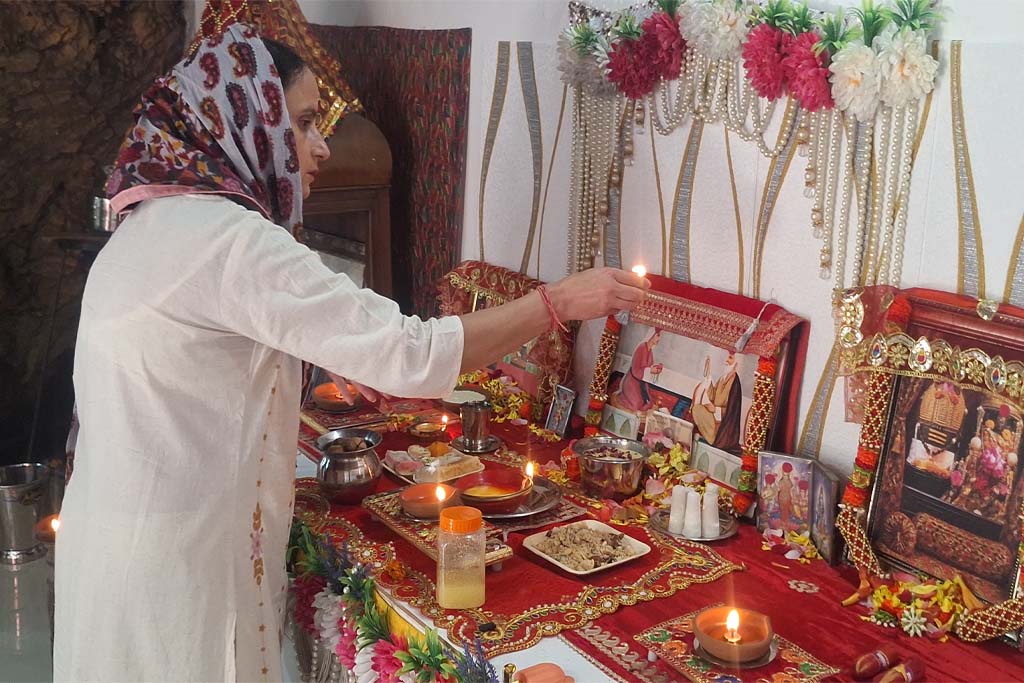
SRINAGAR, June 29: Hundreds of devotees gathered at the historic Mata Roop Bhawani Temple at Khanqah-e-Sokhta in Nawa Kadal on Monday to celebrate the birth anniversary of the revered 17th-century Kashmiri saint, Mata Roop Bhawani.
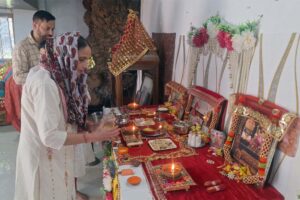
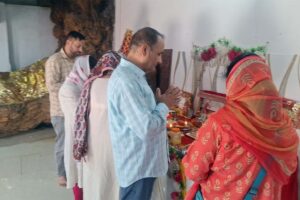
Organised under the spiritual guidance of the Alakh Sahiba Trust, the day-long celebrations featured special puja, devotional prayers, distribution of prasad, and collective prayers for peace, prosperity, and communal harmony in Jammu and Kashmir.
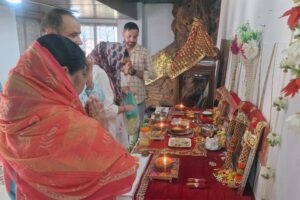 The temple precincts in Srinagar’s old city resonated with devotion and nostalgia as members of the Kashmiri Pandit community, including many who had returned to visit their ancestral neighbourhood, joined the celebrations. The event reflected the enduring spirit of Kashmiriyat—the Valley’s centuries-old tradition of communal harmony and mutual respect.
“We are happy to visit Mata’s temple for darshan. We once lived in this locality. I love my native place and also our Muslim brothers,” said an emotional devotee while recalling memories of the neighbourhood.
Legacy of Mata Roop Bhawani
Mata Roop Bhawani, born as Akhileshwari in the 17th century, is among Kashmir’s most revered mystic saints. She was born to Pandit Madhav Joo Dhar at Nawa Kadal. According to tradition, her father, a devout worshipper of Maa Sharika, spent long hours in prayer at Hari Parbat. It is believed that the Goddess appeared before him and granted his wish to be born as his daughter, leading to the birth of Akhileshwari on the full moon day of the month of Jyeshtha.
 Following her father’s spiritual path from an early age, she devoted herself to meditation and self-realisation. Although married, she is believed to have left her matrimonial home after enduring ill-treatment, choosing instead a life dedicated to spiritual pursuit.
She performed intense meditation at Chashme Shahi, Manigam and Vaskura. These sites, along with her birthplace at Khanqah-e-Sokhta, Nawa Kadal, are today revered as the Roop Bhawani Asthapanas.
 According to tradition, Mata Roop Bhawani attained Mahasamadhi in 1721 on the seventh day of the month of Magha. Legend holds that while her devotees were carrying her mortal remains for cremation, they encountered a village headman who claimed to have just seen her walking along the road. When the devotees looked inside the bier, they found only locks of her hair (alak) and flowers. Her physical body was never found, and the sacred locks continue to be worshipped with deep reverence by devotees.
About The Author