


NASIR YOUSUFI
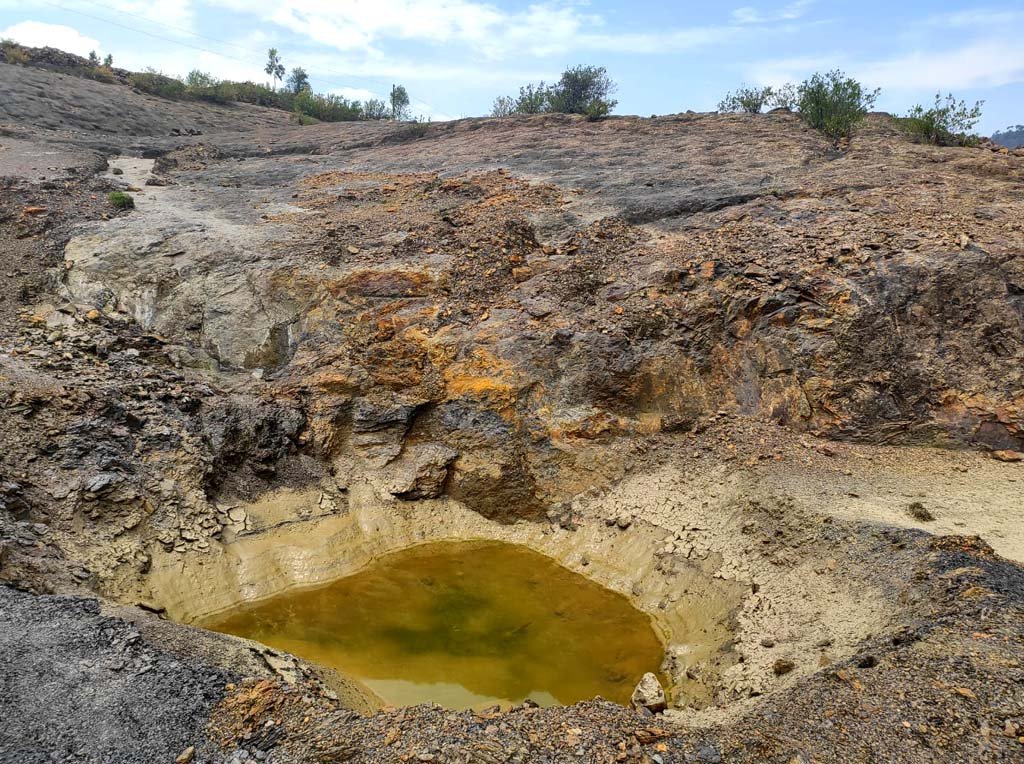
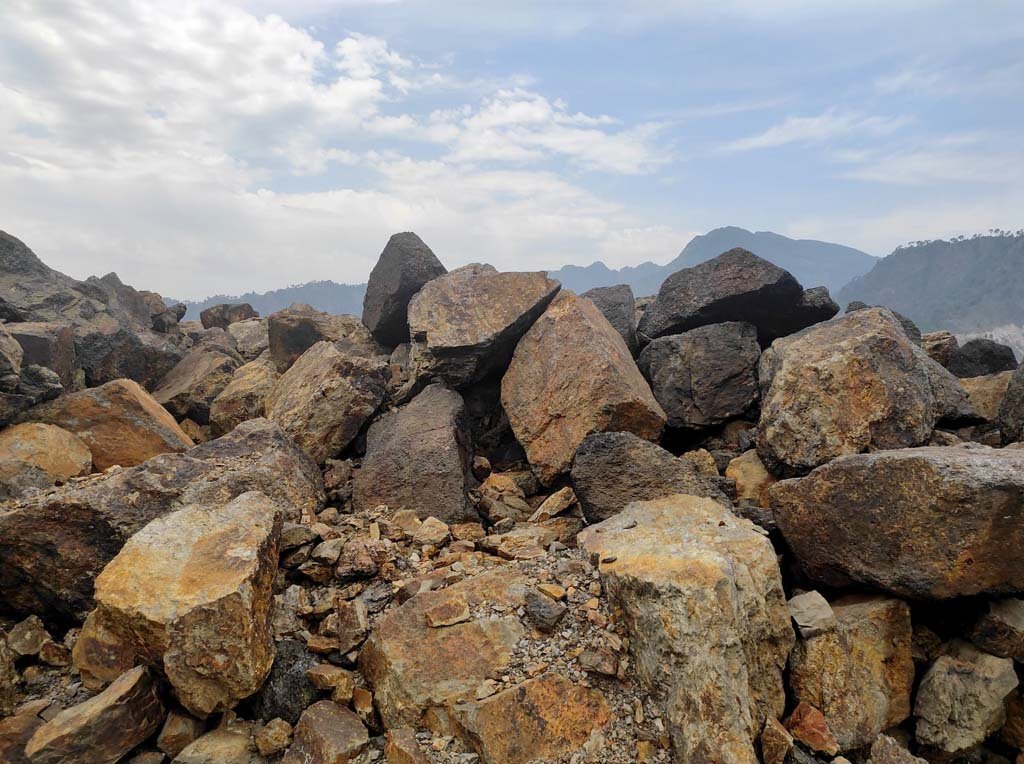
JAMMU: As soon as a news bulletin from a local radio station ends, a sexagenarian farmer rushes down the slope towards a rocky field near his house. Rolling his fingers over a surface of a moonlit rock, 63- year-old Puran Singh from Salalkot village in Reasi district of Jammu and Kashmir is surprised to learn that a mound of rocks lying for ages in his village is in fact treasured in the modern world.
“Having spent all my life among these rocks, I never knew that these greyish brown things would prove so precious. Our village has been sitting on treasure and finally we have come to know it,” said an excited Singh.
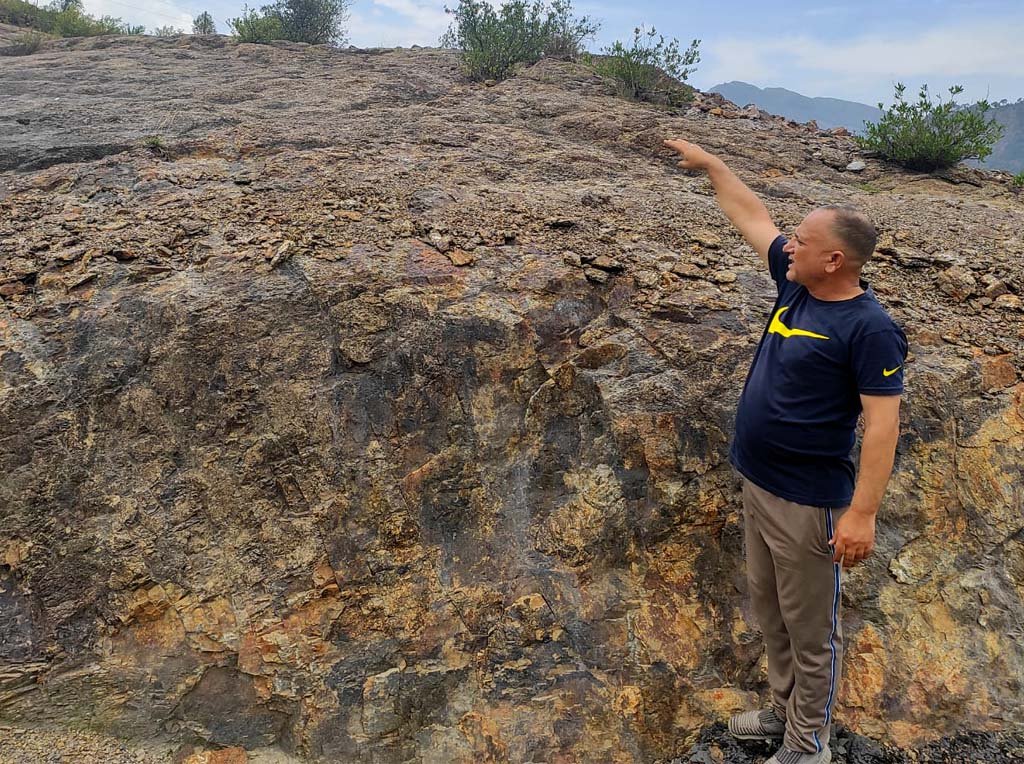
The elderly farmer was talking about the lithium deposits recently found in Salal-Haimana region of the district in this northern Indian state in the Himalayas.
According to Geological Survey of India (GSI), a stretch of land near Salal is a storehouse of huge lithium reserves. The Ministry of Mines pegs the perceived reserves at 9.3 million tonnes, making it the world’s largest deposit. https://pib.gov.in/PressReleseDetailm.aspx?PRID=1897799#:~:text=Geological%20Survey%20of%20India%20has,Jammu%20%26%20Kashmir%20(UT). Lithium is the key metal in new generation batteries expected to play a key role in moving India and the world towards renewable energy sources.
“GSI carried out G3 mineral exploration in Salal-Haimana areas of Reasi district, Jammu and Kashmir, during 2021 and 2022 and estimated an inferred resource (G3) of 5.9 million tonnes of lithium ore and the report has been handed over to the Government of Union Territory of J&K,” Pralhad Joshi, India’s minister for coal and mines, stated in a written reply in Parliament’s upper house Rajya Sabha on Martch 13, 2023.
According to Vivek Bharadwaj, secretary in the ministry of mines, auction of the lithium reserves will be started by the end of 2023.
Experts believe if the recent findings of GSI translates into extraction, the metal will provide the Indian economy a shot in the arm.
Timely catch
The finding has already enthused many lithium dependent industries. Manufacturers of lithium-based batteries, electric vehicles and other lithium-based industries are looking at easier availability of the metal in the Indian market soon. There is high global demand for lithium. India now imports raw lithium from Argentina and Australia, while most of the lithium ion batteries are imported from China. These batteries are used in electric vehicles (EV) and to store solar and wind energy for use at night or when the wind is not blowing. Significant domestic lithium mining in India is bound to bring down the cost of these batteries in the country and give a boost to the EV market.
“The cost of a battery can come down and the country can get a stable supply of the precious metal. The domestic raw material reserves will help India to have energy security and protect industries from price spikes like the ones we witnessed post COVID,” said Rahul Walawalkar, Lithium ion battery expert and president of India Energy Storage Alliance & Customized Energy Solutions. Supply chain issues can also be dealt with once there is domestic production of the metal, he added.
EV penetration
India, the world’s most populous country, as per NITI AYOUG plans 80% penetration in two- and three-wheeler, 70% in commercial vehicles and 30% in private cars by 2030.https://pib.gov.in/PressReleseDetail.aspx?PRID=1570107. The government’s own think tank NITI Aayog has partnered with industry in an effort to reach its 2030 goals through its ACC PLI mission aimed at achieving deeper EV penetration in the country. ACC PLI is Production Linked Incentive for Advanced Chemistry Cell Battery Storage. Under this scheme the government provides incentives to eligible companies to boost local battery production.
A study, Unlocking India’s electric potential, says EV sales will cross 10 million vehicles by 2030. That will make India the world’s third largest EV market, up from its current fifth position. https://www.adlittle.com/en/insights/report/unlocking-india%E2%80%99s-electric-mobility-potential
Domestically available lithium means increase in the number of domestically manufactured lithium batteries. Since these batteries form an important component of electric vehicles, the country can see an exponential growth in EV ecosystem ,” added Walawalkar.
According to India’s ministry of road transport and highways, there were 1,392,265 EVs on the roads by August 2022. The ministry expects the number will cross the 50 million mark by 2030. https://pib.gov.in/Pressreleaseshare.aspx?PRID=1848751
As per INVST INDIA- a National Investment Promotion & Facilitation Agency , from 2000-2021, the EV sector in the country has attracted 6% FDI equivalent to $ 32.84 Billion which shows the gradual surge in Foreign Direct Investment in the sector. https://www.investindia.gov.in/team-india-blogs/electric-vehicle-ev-sector-india-boost-both-economy-and-environment
Bashir Ahmad, professor of economics at Kashmir University, said that presence of large lithium deposits has a potential to boost economic activity in the country, in particular in Jammu’s Chenab valley. If extracted and refined, Chenab valley will see huge lithium-based investments, Ahmad added.
Net Zero push
Expansion in EV ecosystem can be a big contributor to reaching India’s pledged goal to have Net Zero carbon emissions by 2070. Emissions of greenhouse gases, mainly carbon dioxide, is causing climate change, which is already having devastating impacts, including through more frequent and more severe clouds, floods and avalanches in Jammu and Kashmir.
Net zero is a situation where the amount of carbon emitted to the atmosphere is balanced by the amount of carbon absorbed.
The transportation industry accounts for 23% of all carbon dioxide emissions worldwide as per OECD. CEEW says India is about 93% emissions are CO2 which makes the country 4th largest emitter of greenhouse gas in the world as per the study carried out by Carbon Brief. https://www.carbonbrief.org/the-carbon-brief-profile-india/
According to CEEW-CEF study “Investment Sizing India’s 2070 Net-Zero Target”by 2030, India is expected to attract USD 20 billion investments in EV and lithium-based sectors. But it is estimated that the country needs USD 10.1 trillion dollar investment in the sector to further its push for net zero ambition. https://www.ceew.in/cef/solutions-factory/publications/CEEW-WEF-Mobilizing-Investment-for-Clean-Energy-in-India.pdf
“More and more electric vehicles in the country will surely help in cutting carbon emissions as the conventional means of transport is a major contributor of carbon emissions. Electric vehicles powered by lithium have lower lifecycle GHG (greenhouse gas) emissions, which makes these vehicles eco-friendly means of transportation,” said Dr. Rakesh kumar, an environmental scientist from the University of Jammu.
Experts say , on average, a conventional car consumes petrol worth Rs 6 per kilometre, compared to the Rs 0.5 per kilometre cost of running an electric vehicle. https://m.economictimes.com/wealth/spend/should-you-buy-an-electric-car-comparison-with-other-fuel-cars-pros-and-cons/articleshow/88088750.cms
A long way to go
The recent findings in Reasi have raised hopes, but experts say there is a long way ahead before the lithium becomes commercially available.
As per the report prepared by GSI in 1999 by GSI scientists KK Sharma and S.C Uppal,The presence of Lithium deposits in the area was originally mapped and reported by GSI almost two decades ago. https://www.telegraphindia.com/india/indian-geologists-in-1999-had-pointed-out-the-possibility-of-lithiums-presence-in-jammus-reasi-district/cid/1915957
After the reconnaissance (G4) stage, the potential deposits have gone through the G3 stage in which quantities are inferred. The deposits need to undergo two more stages G2 (general exploration) and G1 (detailed exploration) before the metal is extracted. Questions mailed to the ministry of mines regarding the economic viability of extracting the lithium deposits in the region have not led to any response yet.
The cost of extraction and the technology used plays a crucial role in mining. Since India presently imports all its lithium, initially it will rely heavily on other countries for extraction technology.
“Countries like Chile and Argentina extract lithium from brine which is not the case in J&K (Jammu and Kashmir). Here the metal has to be extracted from hard rock. The cost of extraction would heavily depend upon the use of technology,” said Khursheed Ahmad Parray, a geologist from the University of Kashmir.
China, which produces the majority of lithium batteries in the world, leaches the metal through a technology that the country has kept secret.
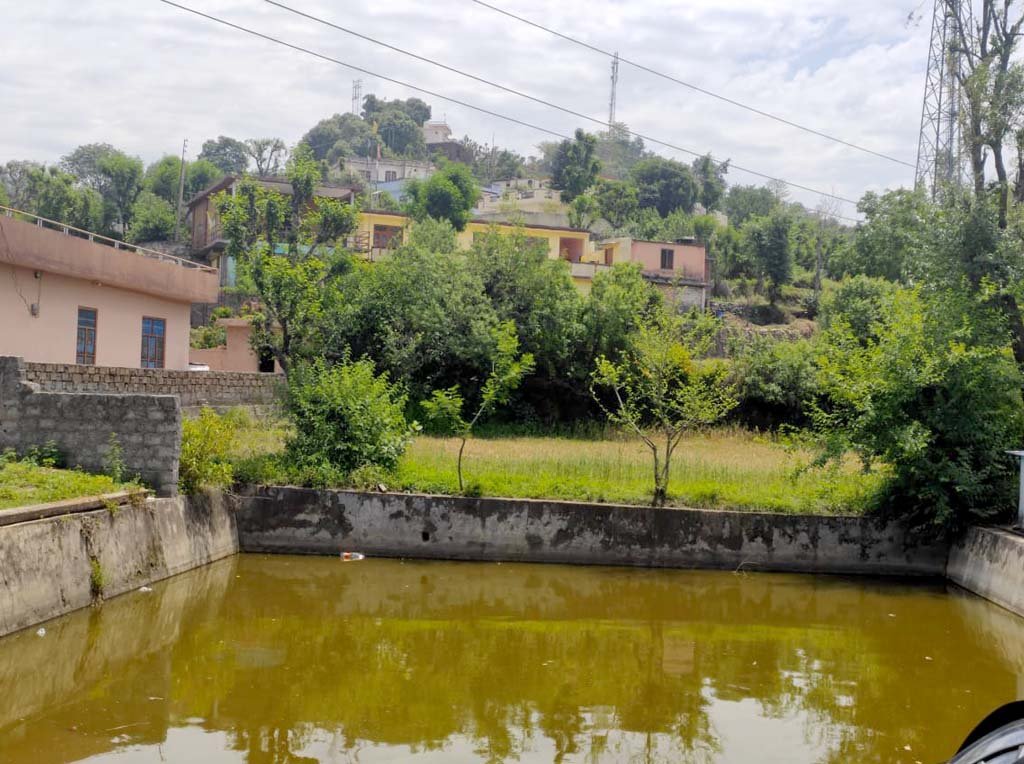
The location of deposits in a fragile Himalayan belt also poses a challenge. Mining activity affects the surrounding environment. There is a every likelihood that flora and fauna will get affected in the area, Parray added. If the metal is leached in the area, a considerable amount of lithium can seep into both surface and underground water, a potent threat to water bodies. Use of state of the art technology can minimise damage to the environment, he added.
Scientists at Massachusetts Institute of Technology say that approximately 2 million litres of water are used and 15 tonnes of carbon dioxide released in the atmosphere to produce one ton of lithium. https://meche.mit.edu/news-media/how-much-co2-emitted-manufacturing-batteries.

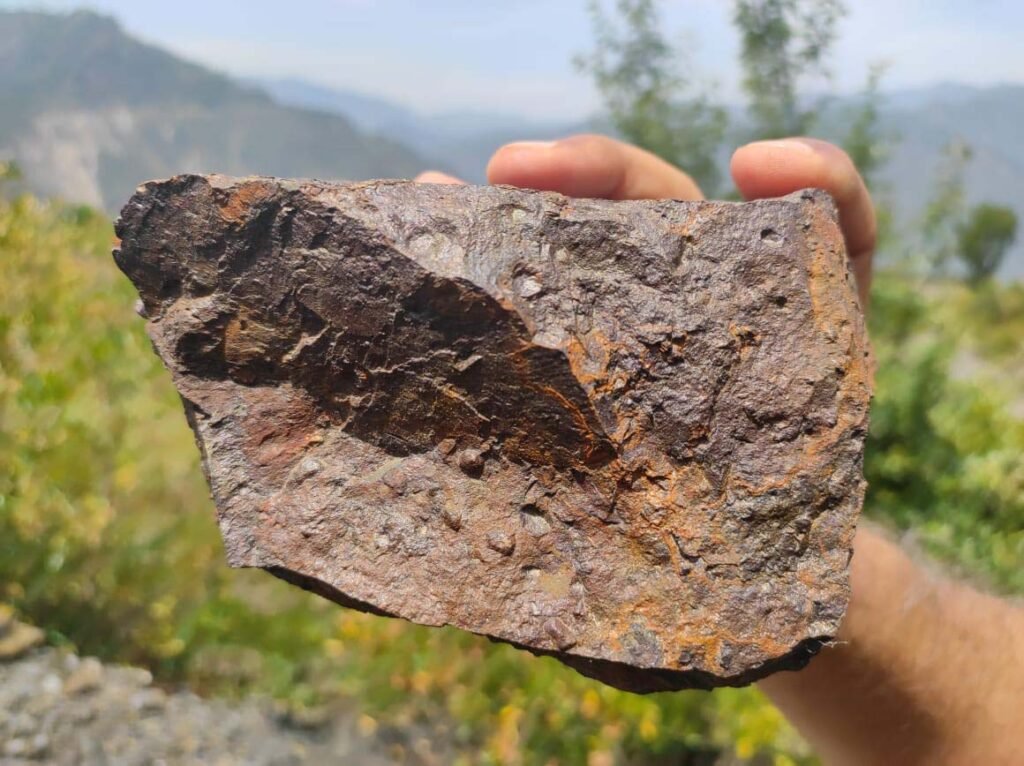
Mixed reactions among residents
Most Reasi residents are cautiously happy about the lithium find.
“Our village is already known for the Salal hydropower project. Now these lithium-laden rocks found everywhere in our village have brough more laurels to our village. We are happy that the lithium reserves found in our village will help the country in fostering prosperity and development. But it is also the responsibility of the government to take proper care of the welfare of villagers who will be affected by the proposed mining in the area,” said Raj Kumari, a district development committee member from Arnas in Salal. She wanted the authorities to “properly rehabilitate” the villagers at a suitable place.
Pritam Singh and Mahinder Singh, panchayat heads from Salal and Arnas villages in the region respectively, say the government should ensure the sustainable livelihood for the people in the area, in particular the villagers effected by the proposed project. “ It is estimated that the mining will affect 326 families,” said Krishan Lal, Naib Tehsildar Salal.
Balwan Singh, a 49-year-old farmer from Haimana wants to get shifted to a place where he can have a farm.
The hilly nature of the area where the lithium deposits have been found will make extraction costlier. Bashir Ahmad, an eminent economist from the University of Kashmir, says mining at high altitude involves additional costs. For one, heavy machinery will have to be transported through difficult terrain.
The story has been produced with the support from Internews ’Earth Journalism Network’.