


NASIR YOUSIFI
Srinagar: Zaitoon Akhtar, a 42-year- old woman from Devsar hamlet in south Kashmir’s Kulgam carefully segregates the dried brinjals from the long thread like slices of sundried gourd before the local vegetable dealer weighs the stuff on his handheld balance and negotiates the deal.
Every year Zaitoon sundries the surplus produce from her vegetable garden and sells it during winters. “I have been making Al Hache, sundried bottle gourds and wangan hache dried brinjal slices for several years now. While I use some of the dried stuff in my kitchen, I am able to sell the rest of it to a dealer for good amount, as there is always a good demand for these dried vegetables in the market during winters,” she says while showing a tangled mass of Al Hache or sundried bottle guard.
About 90 kilometers away, Shahida Bano from Chadoora Budgam in central Kashmir has a dozen odd transparent bags filled with dried vegetables hanging on the attic of her multi-storied house. “During summers there is surplus production of vegetables in our vegetable gardens. Since the price of the same is very less due to surplus supply in the market, I prefer to sundry the surplus vegetables and sell them during winter months for a good return,” says middle-aged Shahida seconding Zaitoon.
Be it a sliced brinjal, laced gourd, tomato chops, turnip halves, their sundried form is destined to be a part of Kashmiri cuisine in almost every household, scenting the surroundings with peculiar aroma and taste during winters with -Hokhsyun or sundried vegetables.
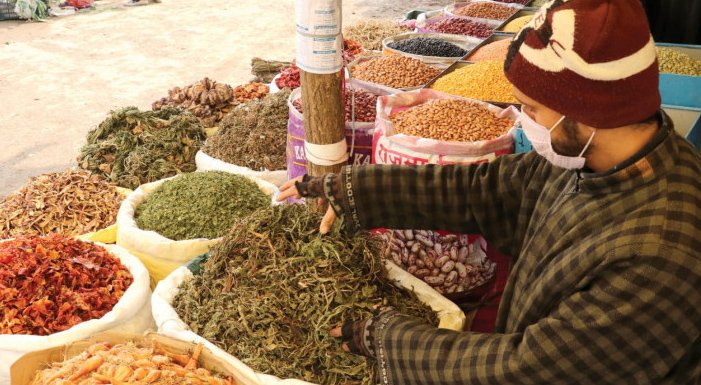
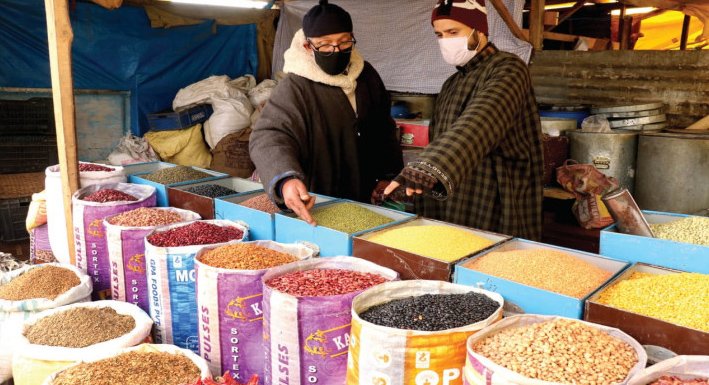
With the demand from every nook and corner of the valley, the sellers of the dried delicacies dot almost every major market in the Kashmir towns and cities. “I have been selling these vegetables throughout the winters for many years now,” says Fayaz Ahmad, while standing besides the mass of dried stuff, put for sale on a push cart adjacent to famous Jamia Masjid at Srinagar’s famous Nowhatta market in congested downtown.

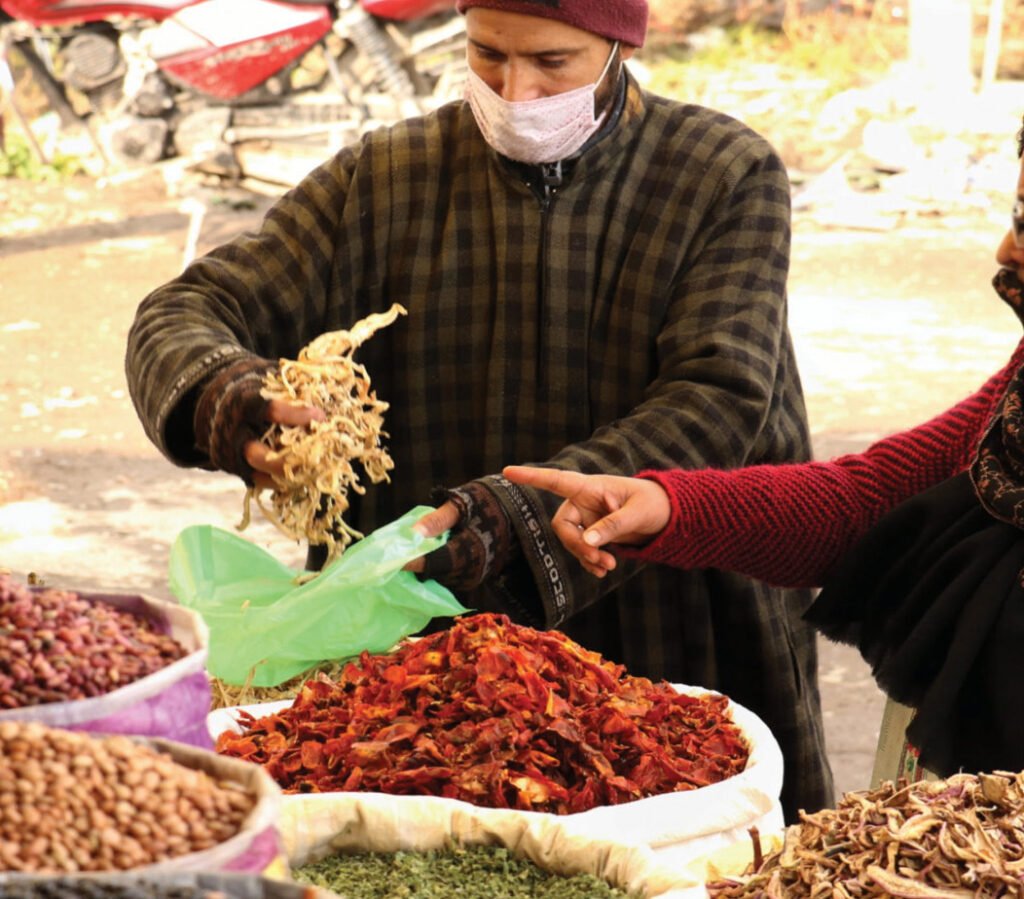
Asserting, though seasonal in nature, there is good demand for these edibles during winters, Fayaz says, while selling the slices of Ale Hache to a customer.
There are many customers from places like Kargil, Leh and Jammu as well. Kashmiri Pandit community in Jammu is also fond of Hokhsyun. “On an average, I send a consignment weighing hundreds of kilograms, comprising of dried veggies to these places by the end of autumn every year,” says Bashir Ahmad Dar a Hokhsyun dealer from Noorbagh area of Srinagar.
Lesser movement of people during winters, lack of proper agricultural activity and peculiar geographic location promotes the use of dried veggies in the region.
As the valley witnesses a good production of locally grown vegetables like bottle gourd, brinjal and tomato in summers, there is a tradition of sun-drying the surplus for the use in harsh winters. During the months of July and August, there is large scale production of gourds, brinjal and many other vegetables owing to increased trend of kitchen gardening and hybrid variety of seeds in the valley. “Growers or households, usually dry up the surplus produce for the winter use,” says, Ajaz Hussain, Agricultural Officer, from Jammu and Kashmir Agricultural Department, posted in Srinagar.
It is not only turnip, gourd, tomato and brinjal which are sun dried in large quantities, but people also sundry lotus stem, fish, pepper, spinach and dandleon for consumption in winters. Though most of the vegetables are available in the valley throughout the year, some vegetables and fruits like gourd and pear are mostly dried as they are not easily available in the market during winters.
Consumption of dried veggies has been a part of the Kashmir’s culture since ages. Climatic conditions, geographic location and its unique culture are among many contributing factors as to why the people in this part of world still long for Hokhsyun.
According to Mohammad Ashraf, ex-Professor of History, in older times due to harsh winters, the movement of people used to get restricted. “Absence of any agricultural activity coupled by harsh life conditions imposed by the apathetic weather forced the people to pile the stock to survive those times.”

The tradition finds its followers in these modern times too, as the region still goes through the period of harsher colder days during Chilai Kalan, when the temperatures plummet to sub zero for scores of days together.”
Famines are also one of the reasons for this tradition, says the historian, while deliberating upon the main causes for the practice. “For the fear of famine in earlier times, people took to stocking the consumable stuff in the valley… One of the reasons why people have a stock of consumables for months together here.”
Other reasons apart, it is essentially the taste that drives the people to make the dried stuff still a part of Kashmiri kitchen.
Zoona, a sexagenarian woman says though she does not eat much at this age, she often keeps asking for Hokhsyun varieties to her children for its aroma and taste.
Though medical fraternity raises concerns about the hygiene of Hokhsyun, the use of winter delicacy goes on in the valley.
“When not dried properly, the dried vegetables can catch fungus, a source of toxins which are carcinogenic in nature. But if dried and cooked properly, these are quite safe to consume,” says Dr Abdul Gani Ahangar, ex- medical superintendent from the Health department of Jammu and Kashmir.
Amidst the Chillai Kalan, 40 days of harshest period of winter, cuisines in both urban and rural Kashmir aromatize with Hokhsyun to much delight of vegetable growers. People are enjoying the popular Hokhsyun dishes like Gogje Paneer, Alhache-Chicken and Hoggad chutney in the valley. Here Hokhsyun is a winter speciality!