


NASIR YOUSIFI
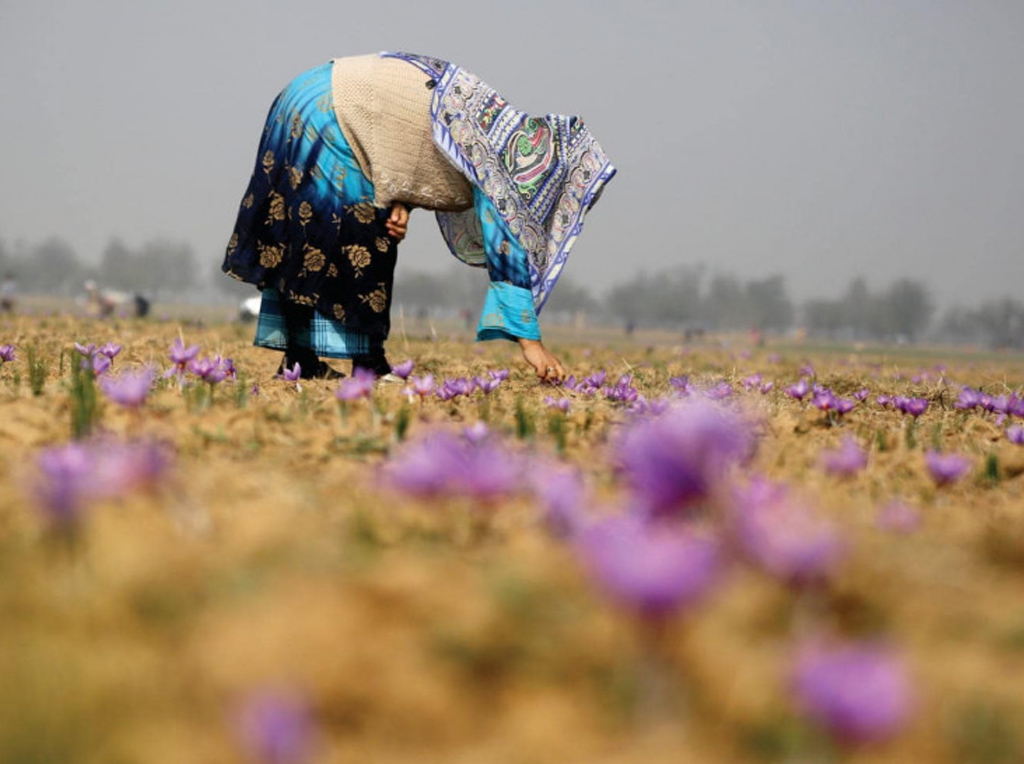
SRINAGAR: Leave the dip in day and night temperatures aside, autumn has turned on a spell in this Himalayan region. While the crimson Chinar leaf falling in the backdrop of red sun during evening hours give a specter, the violet petals of the saffron painting the Karewas of Pampore with colour and fragrance adds to the watchers-treat.
Amidst thousands of herbal bulbs dotting the Karewas sprout the saffron magic, the famed Saffron fields of Pampore in South Kashmir have thrown the valley into poetic gaiety.
By mid-November, it is a festivity around. During this period, Saffron harvest is at its peak in the valley. After a yearlong wait and hard work, it is time to reap the merry-crop.
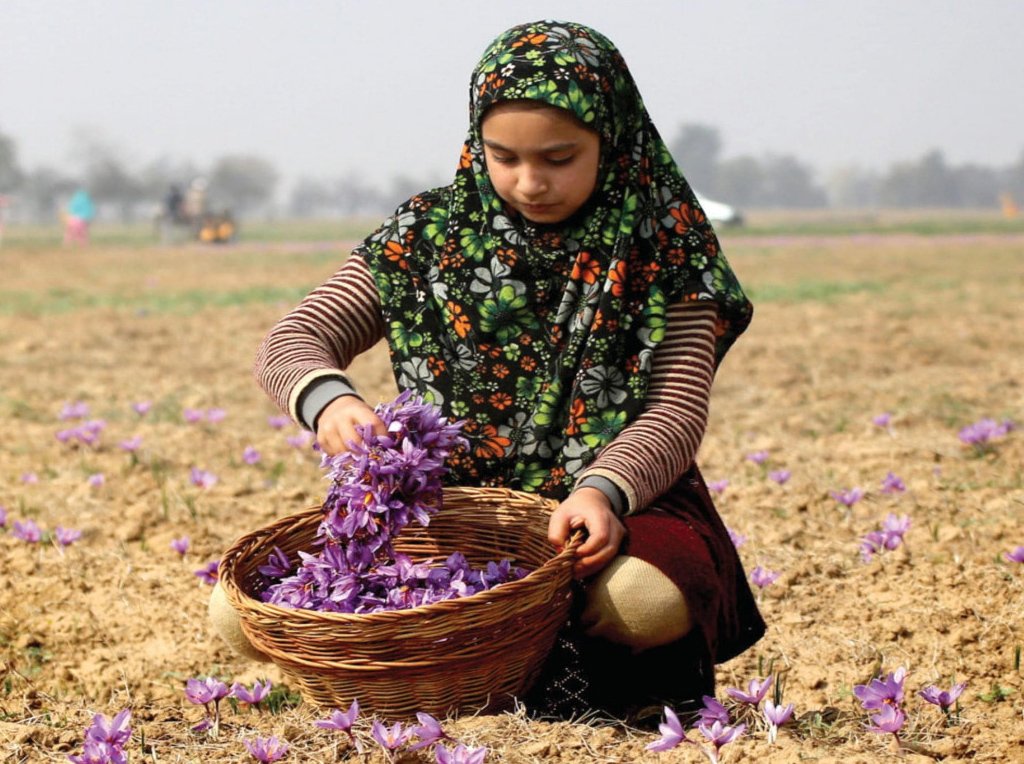
Picking saffron flowers carefully from the vast stretch of fields outside Balhama stretch, middle-aged Fatima Bano along with her 12-year-old school going daughter Zainab is busy collecting the prized spice in her wicker bas-ket.
Not only elders, young and children too are at the forefront to celebrate the festivity of prized harvest.
“It is just like Eid here. Everywhere the people are busy plucking the posh, flower,” says Basit while helping the family to harvest the stock.
It is not only about harvest, along with the colours and aroma, people enjoy the local foods too during the harvest time. “I enjoy the morning Nun Chai and Makai tchout or corn bread, and satu or baked flour in the fields,” a jolly Zainab says, while holding the basketful of world famous saffron flowers.
As the festivity is in the air, how could be the people related with tourism stay immune to the saffron fever. In the first week of November, Jammu and Kashmir Tourism Department organized a mega festival in the Saffron fields of Pampore. Portraying culture, ethics and heritage, Directorate of Tourism Kashmir organized a daylong festival. The festival was attended by many dignitaries from Department of Agriculture, SKUAST, Cooperative societies and hundreds of saffron growers from the area.
Speaking on the occasion, Divisional Commissioner Kashmir, PK Pole who was a chief guest highlighted the im-portance of world acknowledged spice from Kashmir. He said that it is collective responsibility of all the stake hold-ers to preserve and safeguard the reputation of internationally famed Kashmiri Saffron.
The saffron festival was attended by hundreds of people in the karewas of Pampore. Believed to have been intro-duced to Kashmir around first century BC from central Asia, Kashmiri saffron is the sweetest, most precious spice in the world.
Its strands are thicker and more fragrant than its counterpart from Iran, which accounts for more than 90 percent of the world’s saffron production. For Kashmiri farmers, crop sells for as much as Rs 250,000 to 30,000 a Kg. Most of Kashmir’s saffron is grown in Pampore, south of the state’s summer capital, Srinagar.
Kashmir saffron is known to rejuvenate health and is used in cosmetics, medicinal and beverage purposes. It has been associated with traditional Kashmiri cuisine and represents the rich cultural heritage of the region.
Most of the saffron produced in the valley is exported to overseas markets adding hundreds of crores to national economy.
There is good news year for saffron producers in Kashmir. The annual production calculated at the end of 2020 for this costliest spice has been 13.2 metric tons. This is the highest yield in a decade for this sector in the Valley. From the low yield of 1.5 Mts in 2011-12 to 13.2 Mts, this journey has been a mark of revival of saffron economy in Kash-mir.
Saffron, despite its price, is in high demand for its antioxidant properties. It carries a hefty price tag also because the process of converting crocus flowers into the thread-like spice is painstaking and labour-intensive: It takes around 160,000 flowers to yield a kilogram of saffron.
Each year, Kashmir produces 17 metric tonnes of saffron, on average, as per the agriculture department. Saffron is cultivated in three districts: Pulwama, Srinagar and Budgam in Kashmir and Kishtwar in Jammu province.
Last year Kashmiri saffron was granted a GI tag, a feat, experts believe would prove beneficial to the growers in the region.
Geographical Indication is a name or sign given to certain products that relates or belongs to a specific geograph-ical location or origins like a region, town or country. GI helps the genuine producers to earn profit in the competi-tive market and enables the customers to buy products having superior quality.
It is expected that this GI certification will help farmers in getting the best remunerative price and also help in preventing the prevalent practice of adulteration of Saffron, Kashmir’s globally-acclaimed crown of spices that equally adds beauty to picturesque autumn as winter approaches fast!