Categories
BUSINESS

DC Budgam launched Three-Day ‘Naqsh-e-Meeras’ workshop at NIFT

Initiative aims to reconnect younger generation with Kashmir’s handcrafted traditions

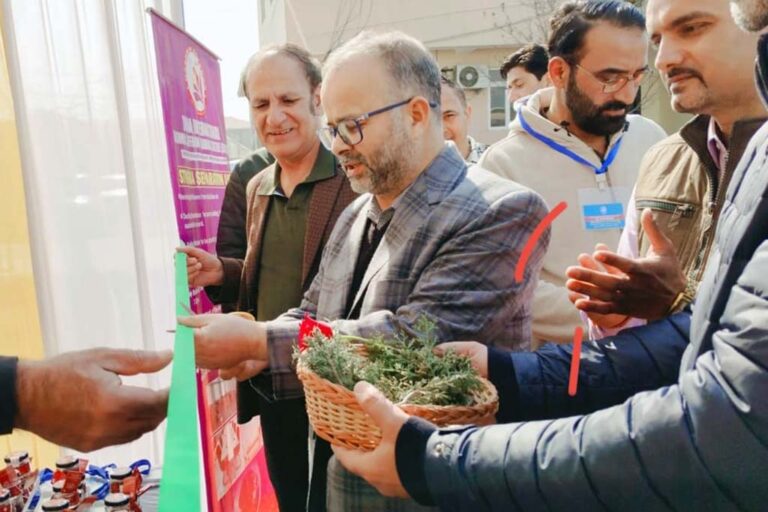
BUDGAM, FEBRUARY 05: District Administration Budgam today inaugurated a three-day cultural and heritage workshop titled “Naqsh-e-Meeras”, aimed at promoting, preserving and reviving the rich and diverse traditional art and craft heritage of Jammu & Kashmir.
The workshop is being organised from 5th to 7th February, 2026 at the National Institute of Fashion Technology (NIFT), Budgam.
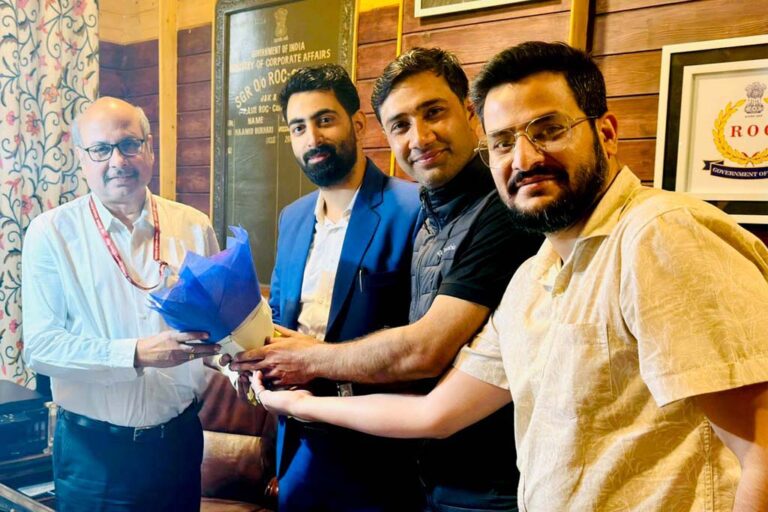
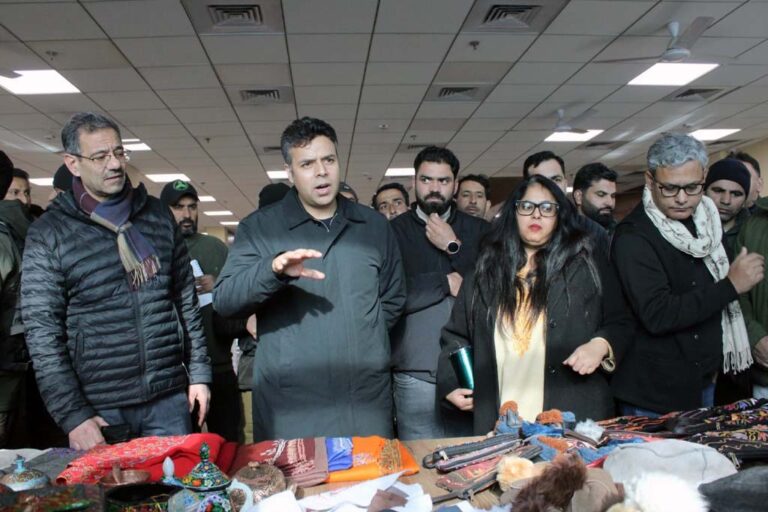
The programme was formally inaugurated by the Deputy Commissioner Budgam, Dr. Bilal Mohi-ud-Din Bhat, along with distinguished guests from the Indira Gandhi National Centre for the Arts (IGNCA), in the presence of senior district officers, artisans, students, Self Help Groups and members of the local community.
Speaking on the occasion, the Deputy Commissioner said that Naqsh-e-Meeras is a significant initiative of the District Administration to reconnect the younger generation with the rich legacy of Kashmir’s handcrafted traditions, while also providing a strong platform for local artisans to showcase their skills, products and creativity.
The DC emphasized that such heritage-based programmes are vital for preserving traditional knowledge systems that have been passed down through generations. He stated that Kashmir’s handicrafts are not just economic activities but are an important part of the region’s cultural identity, history and collective memory.
“We want our local art and crafts to flourish in a sustainable manner so that our younger generations understand the true value of handcrafted products and can clearly differentiate between machine-made and hand-made items. This understanding will help in preserving authenticity, quality and cultural heritage,” the DC said.
He further added that such seminars and workshops play a crucial role in boosting the morale of local artisans, craftsmen and children by giving them recognition, exposure and confidence.
“These platforms not only provide visibility to our artisans but also generate awareness among the masses to adopt and promote local products. This is fully aligned with the spirit of Vocal for Local, where people are encouraged to support indigenous crafts and local economies,” he said.
The DC also highlighted that showcasing traditional techniques and live demonstrations can significantly enhance the financial stability of artisans by opening new market avenues, increasing demand for authentic handmade products and creating sustainable livelihood opportunities.
By demonstrating old and traditional crafts in a modern, organised setting, we are creating linkages between heritage and contemporary markets. This will ultimately strengthen the economic position of our artisans and contribute to overall economic growth of the district and the region,” he added.
The DC stressed that the District Administration will continue to support such initiatives in collaboration with reputed national institutions to ensure that local craftsmanship receives the recognition, protection and promotion it truly deserves. He reiterated that District administration is committed to continue organising such heritage-focused programmes to promote cultural preservation, artisan empowerment, youth engagement and sustainable economic development across the district.
The event witnessed the presence of several senior district officers including GM DIC Budgam Zahid Rashid, SDM Beerwah Taufeeq Gazi, Chief Planning Officer Budgam Javaid Ahmad Najar, CEO Municipal Council Budgam Bilal Ahmad, CEO Budgam Rifat Irfan, District Information Officer Budgam Iram Khan, EO Municipal Committee Beerwah Zamir Lone, besides other senior officers of the district administration.
Large participation was also recorded from students of various schools and colleges, local youth, traditional artisans, Self Help Groups (SHGs), craftspersons and members of the general public, reflecting strong community engagement and interest in heritage preservation.
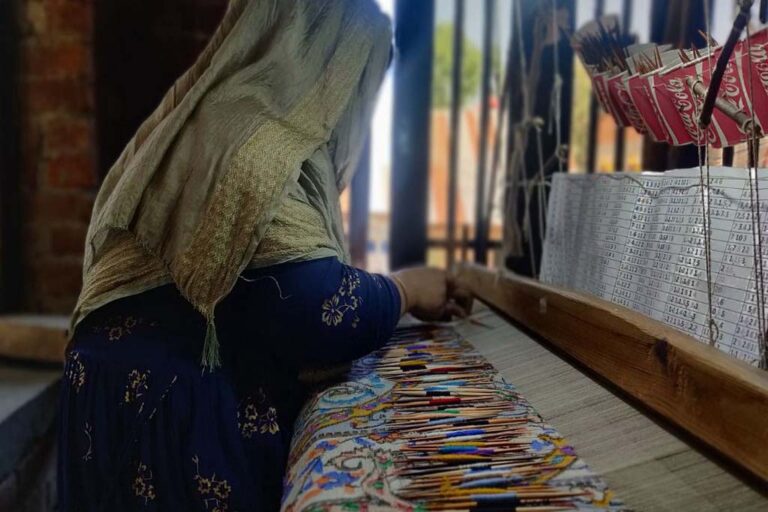
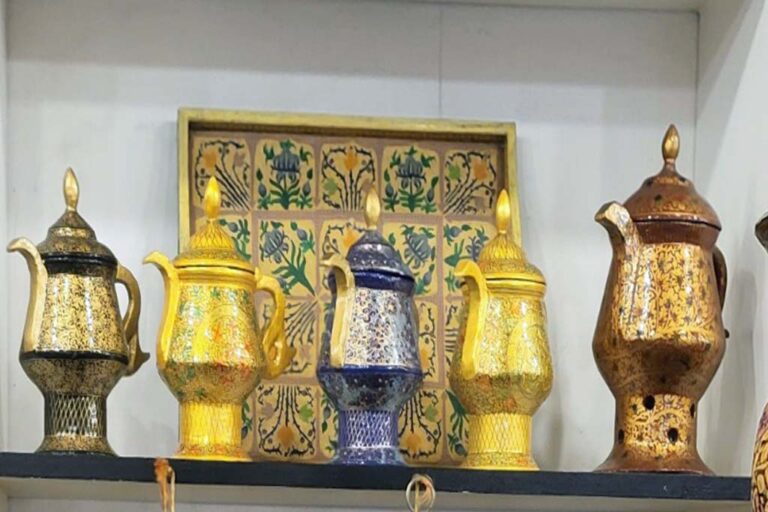
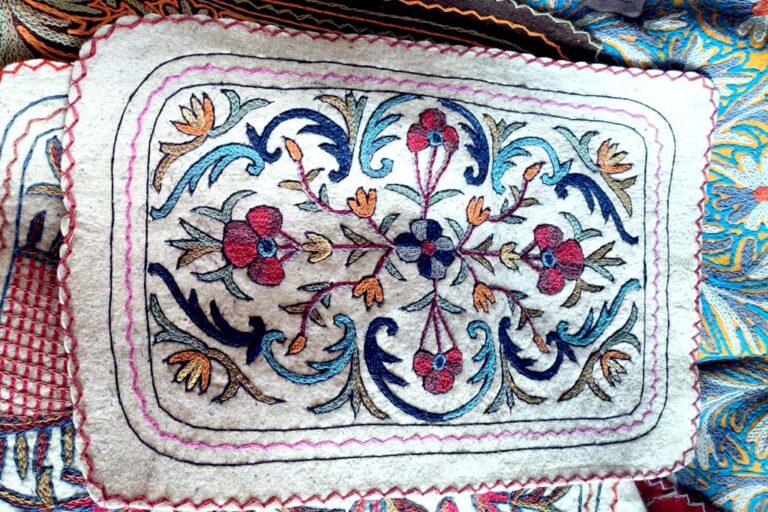
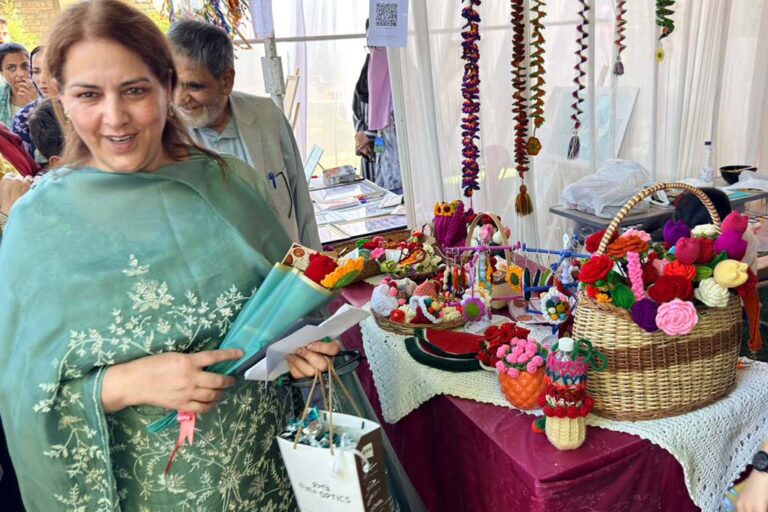
On the first day of the workshop, various competitions were organised including calligraphy, painting and sketching, aimed at nurturing creativity among students and young artists. Multiple stalls were set up showcasing a wide range of traditional crafts such as Paper Machie, Kani weaving, Sozni embroidery, cooper making, Kangri making, wood carving and other indigenous art forms.
An exclusive art gallery was also displayed featuring iconic paintings depicting old Jammu & Kashmir, offering visitors a glimpse into the region’s historical, cultural and artistic evolution.
Traditional activities such as yarn weaving and other heritage processes were also demonstrated live, giving participants a hands-on understanding of age-old techniques.
The workshop is being organised by District Administration Budgam in collaboration with the Indira Gandhi National Centre for the Arts (IGNCA) and the National Institute of Fashion Technology (NIFT), Budgam, ensuring expert guidance, technical support and national-level exposure for local talen.

Categories
BUSINESS

Over 8,000 new artisans trained in GI registered papier mache craft

Handicrafts & Handloom Dept refutes claims of art dying, published in a daily newspaper


SRINAGAR, JANUARY 31 – The Handicrafts and Handloom Department, Kashmir has strongly refuted certain portions of a news story published in a Local daily newspaper with headline – ‘The Art Will Die with Us’: Srinagar’s papier mache craftsmen battle extinction.


In a press release issued here today, a spokesman of the Department countered the claims made by Nasir Ahmad Mir, a papier mache craftsman, who was interviewed by a reporter for the news story published on 29.01.2026 of the said newspaper.


Giving details, the spokesperson stated that the Handicrafts and Handloom Department, Kashmir, has 19 training centres across Kashmir Division, imparting hands-on training in papier mache craft to around 400 artisans in elementary and advance training courses every year. “The Department has trained as many as 8,102 new papier mache artisans across the valley, who have taken the unique craft forward and carved out a niche for themselves,” he said, adding that a large number of papier mache artisans are still in the unorganised sector, who are being registered so that they can avail the benefits of various flagship schemes of the Government.


In order to promote and encourage artisans in papier mache craft, as many as 25 master craftsmen have been conferred with UT Awards over the last 10 years. “Apart from this, J&K has been made proud by papier mache craft maestros like Fayaz Ahmad Jan and Iqbal Hussain Khan, who have been conferred with Padma Shri & Shilp Guru awards respectively in recognition of their contribution in promotion of the craft,” he added.

Referring to the Department’s initiative of Know Your Artisan, under its Soulful Kashmir brand promotion, campaign, the spokesman said that special representation is made for papier mache craft, which remains the most popular, along with walnut wood carving, in the non-textile craft sector.


Apart from this, the spokesman added that a large number of papier mache artisans are recommended to JKTPO for participation in various J&K and national trade fairs, including IITF at Bharat Mandapam, Suraj Kund Mela in Haryana, Gandhi Shilp Bazaar and other high-profile events.


Dwelling upon the export potential of papier mache products, the spokesman stated that in the last 10 years, artefacts worth ₹212.06 Cr have been exported to outside destinations from Kashmir. “These figures remain the highest in respect of non-textile crafts in Kashmir Division,” he added.


In order to ensure the transition of skill from the master to the budding artisans, the Department has instituted a flagship Karkhandar Scheme in the department. “The scheme focuses on preserving traditional crafts such as papier mache, walnut wood carving, silver filigree, carpet weaving, Kani shawl weaving, Khatamband, and others like Sozni, tapestry, and engraved copperware,” he added.


Identifying the uniqueness of papier mache craft, both in sakhta and naqashi, the Department has obtained a GI registration for papier mache crafts from GI registry Chennai. “Authorised GI users can avail the facility of testing and QR Code based labelling at PTQCC, CDI, Srinagar, which shall go a long way in penetrating newer markets both within and outside the country.

Categories
BUSINESS

New Lease of Life for Kashmir’s Namda Craft

In-house wool carding to cut outsourcing costs and strengthen livelihoods of Namda artisans

SRINAGAR, JANUARY 21: In a major fillip for revival of the indigenous Namda craft of Kashmir, Department of Handicrafts & Handloom, Kashmir today awarded contract for the Supply, Installation, Testing and Commissioning (SITC) of card cloth for wool carding machine through Mechanical & Hospitals Engineering Department.

The commissioned wool carding machine has an annual processing capacity of approximately 29,000 Kgs of wool. This enhanced capacity is expected to significantly strengthen the local value chain associated with the traditional Namda craft. The installation of this facility will substantially reduce the cost incurred on outsourcing wool carding, thereby directly benefiting artisans engaged in the Namda craft.

In a press statement issued by the department today, Deputy Director UNDP, Mirza Shahid Ali, said J&K is the second largest producer of wool fibre in India and ranks first in the production of Merino wool, despite this advantage, a substantial portion of raw wool has traditionally been sent outside J&K for carding, resulting in higher costs and delays.

He further stated, “This initiative is cost-effective, efficient and less labour-intensive and will play a major role in strengthening sustainable livelihoods, enhancing productivity and preserving Kashmir’s rich handicraft heritage, especially Namda which is in a revival mode”.

The department reiterated its commitment to providing modern infrastructure and technical support to traditional crafts, ensuring their revival, sustainability, and global competitiveness.

Categories
BUSINESS

J&K Bank Net Profit jumps over 10% YoY for Q3

Characterized by robust top-line growth and better asset quality, our performance underscores our strong fundamentals: MD & CEO

Srinagar, January 20: J&K Bank today announced healthy financial results for the October-December quarter (Q3 FY 25-26), with net profit rising by 18.7% Quarter-on-Quarter and 10.4% year-on-year (YoY) to Rs 586.73 Cr when compared to Rs 531.51 Cr recorded during the same period last fiscal.

The Bank’s Board of Directors approved the numbers for the quarter and nine-months during a meeting held today at the Bank’s Divisional Office in Jammu.

Meanwhile, the Bank’s net profit for the first nine months of current financial year grew 4.5% YoY to Rs 1565.68 Cr as against Rs 1497.92 Cr recorded for the same period last year, reflecting its sustained growth trajectory.

Operating Highlights

The Bank’s Net Interest Margin (NIM) for the quarter has improved to 3.62%, up by 6 bps QoQ. Cost-to-Income Ratio of the Bank improved to 55.88% YoY for the quarter from 57.28%, while as Return on Assets (RoA) for nine-months stood at 1.23%.

The Bank’s operating metrics reflected steady growth, as the Net Interest Income (NII) witnessed 3.8% growth QoQ to Rs 1488.88 Cr, while the Other Income for the quarter surged 15.3% YoY to Rs 279.46 Cr from Rs 242.32 Cr recorded last financial year. The Bank’s Cost of Deposits also declined to 4.69% QoQ from 4.86%.

Commenting upon operating performance, MD & CEO Amitava Chatterjee said, “Despite rate cut, impairment provisioning for Grameen Bank and challenging conditions – particularly the events of April 22, their subsequent impact, and the floods that disrupted the local economy – the Bank remains firmly on track to deliver record profits for the fourth consecutive year.”

“Characterized by robust top-line growth and better asset quality, overall our Q3 performance underscores our strong fundamentals, disciplined execution, and sustained operational efficiency”, MD & CEO added.

Asset Quality

The Bank’s Gross NPA ratio declined YoY to 3.00%, down by 108 basis points (bps) from 4.08%, while as the Net NPA reduced by 26 bps YoY to 0.68% from 0.94% and 8 bps QoQ from 0.76%. The Provision Coverage Ratio (PCR) for the quarter is above 90% at 90.46%.

In his comments on asset quality, MD & CEO Amitava Chatterjee remarked, “Even as our core geography has navigated significant challenges extending beyond the banking sector, the Bank’s asset quality has continued to improve steadily. Supported by robust risk management practices, Gross NPAs have declined from around 4 percent to 3.00% percent, which is almost in line with our stated annual guidance.”

“The sustained improvement in asset quality despite such disturbances speaks volumes about the resilience and commitment of borrowers and the underlying robustness of the local economy”, he added.

Business Growth

Maintaining strong business momentum during the third quarter of the current financial year, the Bank recorded a robust YoY growth of 17.3% in gross advances and a healthy YoY growth of 10.6% in deposits. As on December 31, 2025, the Bank’s gross Advances surged to Rs 116248 Cr while total deposits reached Rs 155861 Cr.

Commenting on the business growth, MD & CEO Amitava Chatterjee said, “Delivering over 17% year-on-year growth in advances – well ahead of the guidance we had shared with the market – reflects the strength of our franchise, the effectiveness of our credit strategy and the meticulous execution by our teams on the ground. Double-digit growth of deposits in a competitive environment also highlights the trust reposed in the Bank by our customers.”

“The accelerated advances growth was driven by focused expansion in retail, MSME, agriculture and select corporate portfolios, supported by improved credit appetite and strengthened customer engagement across both core and emerging geographies. Our consistent focus on deepening relationships within JKL and beyond, improving product penetration and enhancing service delivery continues to support stable balance-sheet expansion”, he added.

Capital Adequacy

The Bank’s Capital Adequacy Ratio (CAR) under Basel III stood at 15%.

Regarding capital position, MD & CEO remarked, “With our CAR at 15% – which will be further augmented by internal accruals on account of net profit for current fiscal – we are well capitalized to expand our lending operations as per our business plan. Moreover, the board approved capital raise of Rs 1250 Cr will boost our capital adequacy and cushion us comfortably to support calibrated business expansion across key sectors.”

“It will enhance our ability to absorb risk, while reinforcing our long-term focus on sustaining asset quality, improving profitability and creating enduring value for our shareholders”, he added.

Key Initiatives

Highlighting the Bank’s key initiatives during the CFY so far, MD & CEO Amitava Chatterjee remarked, “During these quarters, we remained steadfast in supporting our customers, particularly through initiatives such as the 2025 Rehabilitation Package for disturbance-affected borrowers, which provided extended repayment timelines and additional credit support. This underscores our role as a responsible institution committed to sustaining livelihoods and economic activity in our core operational geographies.”

Terming digital transformation as central to the Bank’s strategy, he further added, “Simultaneously, we accelerated our digital transformation with the launch of several customer-focused innovations to strengthen customer experience, improve security and efficiency, and position the Bank for sustained, technology-led growth.”

On the occasion, MD & CEO Amitava Chatterjee extended heartfelt gratitude to the customers and stakeholders – especially the promoters – for their unwavering trust and continued support besides entire Bank staff for their steadfast dedication.

Categories
BUSINESS

CM Omar Abdullah explores collaboration opportunities during visit to IICT-NFDC campus in Mumbai

MUMBAI, JANUARY 16: Chief Minister Omar Abdullah has visited the Indian Institute of Creative Technologies (IICT) campus at the National Film Development Corporation (NFDC), Mumbai, on January 15, to explore avenues for institutional collaboration and student exchange between IICT and the Government of Jammu & Kashmir.

The visit, held at the IICT–NFDC Campus, was hosted by Dr. Vishwas Deoskar, Chief Executive Officer, IICT, along with Munjal Shroff, Governing Council Member, IICT.

During the visit, the Chief Minister was taken on a structured walkthrough of the IICT main campus, providing an overview of the institute’s academic ecosystem and advanced technology infrastructure. As part of the programme, he attended a curated audiovisual presentation at the Rangayan Preview Theatre, which showcased IICT’s vision, academic framework, and capabilities in creative and immersive technologies.

This was followed by a live demonstration at the Anubhuti Drishya Immersive Studio Lab, where applications of augmented reality (AR), virtual reality (VR), and mixed reality (MR) were showcased through hands-on experiential interactions.

The visit also featured a Digital Twin demonstration at the Photogrammetry Studio, where a live 3D photogrammetry scan was conducted to create a digital avatar, highlighting the practical applications of emerging immersive technologies.

A strategic discussion session was held to deliberate potential areas of collaboration between IICT and the Government of Jammu & Kashmir. The discussions focused on student exchange and institutional cooperation, particularly in skill development and capacity building in AVGC and emerging creative technologies; digital heritage and cultural preservation through immersive tools; and the development of a collaborative startup incubation and innovation ecosystem aimed at empowering youth from Jammu & Kashmir.

Speaking during the interaction, the Chief Minister said, “If we want Jammu and Kashmir to become an attractive destination for filmmaking, then human talent and post-production capability must be created locally. That is where a relationship with an institution like IICT becomes important for us.”

Speaking on the occasion, Dr. Vishwas Deoskar, CEO, IICT said that they look forward to exploring meaningful collaborations that can benefit students and young talent from Jammu & Kashmir by enabling skill development, fostering innovation, and creating sustainable employment and entrepreneurship opportunities.”

Following the discussions, the Chief Minister was escorted to the NFDC Bharat Pavilion and Museum, which chronicles India’s cinematic and creative heritage. The visit highlighted the role of the NFDC Museum as a national cultural repository dedicated to preserving, presenting, and celebrating India’s film and creative legacy, before the Chief Minister proceeded to his onward engagements at the NFDC campus.

Categories
BUSINESS

CS calls for stronger credit linkages and women-led rural enterprises

Chairs 9th Executive Council meeting of JKRLM

JAMMU, JANUARY 08: Chief Secretary, Atal Dulloo today chaired the 9th Executive Council Meeting of the Jammu & Kashmir Rural Livelihood Mission (JKRLM) to undertake a comprehensive review of its performance under the UMEED (National Rural Livelihood Mission – NRLM) framework and to chart out a roadmap for strengthening rural livelihoods and women-led development across the UT.

The meeting was attended by Secretary, Rural Development Department (RDD); Managing Director, JKRLM; Director General (Resources); Director General (Budget); Chief Operating Officer, HIMAYAT; Convenor, UTLBC, and other senior officers of the department.

During the deliberations, the Chief Secretary underscored the critical importance of enhancing credit linkages and strengthening the capacity of Self Help Groups (SHGs) so that they are able to transform into sustainable rural enterprises, reiterating that enterprise development remains the core objective behind the formation of SHGs.

He stressed the need for making Community Managed Training Centres (CMTCs) functional in every district, ensuring delivery of high-quality training to SHG members through resource persons from OMPLIS. He emphasised that these centres should emerge as vibrant learning spaces where women feel encouraged to spend time acquiring new skills and upgrading existing ones.

Highlighting the role of financial inclusion at the grassroots level, the Chief Secretary directed that the income of Banking Correspondents (BCs) be enhanced substantially. He called for onboarding Common Service Centres (CSCs) and J&K Bank to increase transaction volumes, thereby improving the earnings and sustainability of BCs.

The Chief Secretary also directed the department to fully leverage the Lal Ded Stree Shakti Scheme and Mission YUVA, urging that women entrepreneurs be encouraged to move beyond the ‘Lakhpati’ benchmark. He set an ambitious target of doubling the number of ‘Millionaire Didis’ from the existing 50 to 100 within the next six months.

Earlier, Secretary RDD, Aijaz Asad, informed that the UMEED programme is currently being implemented across 285 blocks in all 20 districts of Jammu & Kashmir, covering almost the entire rural geography of the UT. He stated that 7,84,053 rural households have been mobilised into 96,000 Self Help Groups, which have further been federated into 7,453 Village Organisations (VOs) and 650 Cluster Level Federations (CLFs).

He added that to strengthen community institutions, capitalisation support of ₹528.86 Cr has been provided to community-based organisations. Further, since 2013-14, ₹2,912.66 Cr in bank credit has been accessed by 67,269 SHGs, significantly deepening financial inclusion and livelihood opportunities in rural areas.

Presenting the achievements of JKRLM, Managing Director, JKRLM, Subhra Sharma, informed that under the Start-up Village Entrepreneurship Programme (SVEP), 8,231 rural enterprises have been supported in 14 blocks, with ₹18.71 Cr disbursed as Community Investment Fund (CIF).

She further apprised that farm-based livelihoods interventions have been implemented across all blocks, benefiting 5,15,706 Mahila Kisans through adoption of agro-ecological practices and improved livestock management.

During the current financial year, under CIF, against a physical target of 2,990 SHGs, an achievement of 3,459 SHGs has been recorded, with financial assistance of ₹2,2.49Cr disbursed. Under the Revolving Fund (RF), 1,688 SHGs were supported against a target of 3,026, with ₹2.53 Cr released.

Cumulatively, 78,508 SHGs have received Revolving Fund support amounting to ₹117 Cr, while 65,000 SHGs have been provided CIF support totalling ₹402.83 Cr, as reflected on the official portal.

Under the Lal Ded Stree Shakti Scheme, against a target of 5,000 cases for FY 2025-26, 2,356 cases involving ₹25.59 Cr have been sponsored so far. Of these, 709 cases have already been sanctioned with financial approval of ₹8.50 Cr, providing focused entrepreneurial support to women.

Regarding doorstep banking services, the meeting was informed that 710 SHG members are currently engaged as Banking Correspondents, of which 553 are associated with J&K Bank, significantly strengthening rural banking outreach.

The Lakhpati Didi Mission has shown remarkable progress. Against a target of 2.33 lakh potential Lakhpati Didis, 2.60 lakh women have been identified, and 2.01 lakh women have already been transformed into Lakhpati Didis through a combination of skill development, financial assistance and market linkages.

Highlighting other key interventions, it was informed that 17,511 SHG members have received skill training through ITIs, NIFT, ICICI Foundation, Honda Foundation and the Central University of Jammu. In addition, 7 SARAS Melas and 4 exhibitions have been organised across districts to promote SHG products.

It was further informed that 90 SHG products have been onboarded on major e-commerce platforms including Amazon, Flipkart and Meesho. To strengthen market access, 9 District Haats and 8 UMEED Women Haats have been developed, while retail outlets have also been established at airports to showcase and sell SHG products.

In the financial inclusion domain, 337 Bank Mitras and 710 Banking Correspondents have been engaged from among SHG members. Further, 1.79 lakh members have been enrolled under PMJJBY and PMSBY insurance schemes, 476 PLD cases have been disbursed under the Lal Ded Scheme, and 1,56,843 members have been converged with Agriculture, Horticulture and allied departments.

Outlining the roadmap ahead, it was stated that JKRLM will focus on enterprise scaling and diversification, cluster-based growth, capacity building in high-end handicrafts and food processing, financial literacy across all 285 blocks, and strengthening start-up ecosystems through SVEP and MKSP.

The Mission also plans exposure visits to best livelihood models in states such as Jharkhand, Madhya Pradesh, Odisha, Kerala and Telangana, besides establishing mini common facility centres and processing units in 176 clusters across different districts of J&K.

Categories
BUSINESS

Department of Handicrafts carries out Inspection drive of Copper units in Srinagar

SRINAGAR, DECEMBER 28: A special inspection drive was conducted in respect of the Copper manufacturing units and establishments, operating in various areas of Srinagar City today, along with representatives of the Kashmir Copper Workers Trade union.

The drive was carried in the areas of Solina, Rambagh Nowgam, Natipopra and Habbakadal, with the objective to check the adherence of the Copperware manufacturers and traders to the provisions of the Jammu and Kashmir Prohibition on manufacture of specified Copper utensils (By Machine) Act 2006, and to stop the misbranding of machine made specified copper utensils, which is affecting the livelihood of handicraft workers engaged in handmade production of copper utensils.

During the inspection, dealers and manufacturers found violating the norms of the Act, were warned of serious consequences in case they continue the illegal/prohibited machine manufacturing of specified Copper ware items. The dealers were warned of serious legal consequences they may have to face if they indulge in misbranding of specified Copperware items. All the dealers and manufacturers have assured of their full support with the ongoing efforts of the department to stop the misbranding of notified craft products.

In terms of the provisions of the Act, there is a complete prohibition on manufacturing by machine of 24 specified copper utensils in the Union Territory of Jammu and Kashmir. The department has initiated various steps to safeguard the interests of artisans manufacturing Copperware items by hand.

In this regard, the department has launched an ambitious program of QR based labelling of the Copperware items, to ensure the certification and authenticity of the handmade Copperware products. The teams of Quality Control division visited the business locations for labelling of handmade Copperware items and the facility is being provided to the Copperware artisans at their door steps.

The department has urged all the copperware dealers to conduct their businesses strictly in accordance with the provisions of the Act and shall invariably refrain from misbranding of machine made copper ware items. It was further emphasized that QR-based labelling of every notified craft products shall be ensured.


Categories
BUSINESS

JKEDI Pulwama Concludes Fourth Batch of MDP under RAMP at Pampore Campus

PULWAMA, DECEMBER 18: Jammu & Kashmir Entrepreneurship Development Institute (JKEDI) Pulwama today successfully concluded the fourth batch of the Management Development Programme (MDP) under the RAMP initiative at its main campus Pampore.
A total of 21 women participants completed the one-week training programme, aimed at strengthening managerial skills and nurturing entrepreneurial capabilities among aspiring women entrepreneurs.
The valedictory ceremony was attended by Nafia Nazir, Range Officer South Kashmir (JKEDI); Raiyees Manzoor, District Nodal Officer JKEDI Pulwama, and Iqra Yousuf, Block Programme Manager (NRLM) Pampore, who interacted with the trainees and encouraged them to pursue sustainable and innovative business ventures.
As part of the concluding activities, the trainees also participated in a special masterclass titled “From Vision to Valuation, a Masterclass on Smarter Capital and Sustainable Growth”, delivered by Khalid Wani, Founder One Capital, which provided valuable insights into strategic growth, funding, and long-term business sustainability.
The programme concluded on a positive note, with participants expressing appreciation for the practical exposure and guidance received during the training.

Categories
BUSINESS

Handicrafts Dept to celebrate Jashn-e-Chillai Kalan with iconic Pheran on Dec 20-21 at Kashmir Haat

SRINAGAR, DECEMBER 18: As the Valley prepares to embrace ‘Chilla-i- Kalan, the 40-day period of intense winter beginning December 21, the Department of Handicrafts and Handloom, Kashmir, shall host ‘Jashn-e-Chilla-i- Kalan, a vibrant celebration of Kashmiri heritage, coinciding with Pheran Day on December 21.

Shahribg details, a spokesman of the department stated that the two-day event, scheduled for December 20-21, at Kashmir Haat (Numaish Gah), here, will feature the dedicated stalls showcasing exquisite Kashmiri handicrafts, with a special focus on traditional Zari embroidery (tilla work) and Aari (hook) embroidery, timeless staples of Kashmiri craftsmanship often adorning the iconic Pheran. “Noted craftsmen from across the Valley have been invited to participate, offering LIVE demonstrations, display of hand-embroidered Pherans, Pashmina hawls, and other winter garments, offering opportunities for visitors to engage directly with these master artisans,” he added.

The spokesman further said the event aims to highlight the resilience of Kashmiri traditions during the harshest winter phase while promoting the warmth and elegance of the Pheran, Kashmir’s signature loose-fitting attire that provides comfort against the biting cold.

“The event will celebrate the cultural significance of Chilla-i-Kalan and Pheran Day, bringing together locals, tourists, and craft enthusiasts to experience the rich artistry that defines Kashmir. “Visitors can expect a festive atmosphere with stalls brimming with intricate zari and aari works, embodying the Valley’s enduring legacy of handloom and embroidery,” he said, while urging the general public to attend and support local artisans.


Categories
BUSINESS

Handicrafts & Handloom Dept flags of artisans for participation in GI Mahotsav in New Delhi

SRINAGAR, DECEMBER 16: In a major boost to promotion of GI registered crafts, Handicrafts and Handloom Department, Kashmir, today flagged of a group of 06 artisans from Numaish Gah, here today, for participation in GI Mahotsav, scheduled to begin from December 18 till December 21, in Noida Haat, New Delhi.
The Mahotsav is designed to provide a robust national platform for GI artisans and sellers from across the country to exhibit their unique products, establish direct market linkages with buyers and celebrate country’s diverse culture and craft traditions.
In a press statement issued today, a spokesman of the department stated that the artisans shall represent Kashmir in Wagguv, Namda, Walnut Wood Carving, Crewel, Chainstitch and Kashmir tweed GI registered crafts in the trade fair, organized by Ministry of MSME in collaboration with PHD Chamber of Commerce & Industry.
Kashmir has 15 GI registered crafts, out of which 08 were registered by GI Registry Chennai in April this year which include the languishing crafts like Wagguv, Namda and Gabba.
The spokesman further stated that the artisans shall represent Kashmir’s globally acclaimed handmade products, reflecting the region’s exceptional craftsmanship, authenticity and centuries old cultural legacy. “Their participation is expected to create new market opportunities, promote GI awareness and strengthen the recognition of Kashmiri handicrafts at the National level,” he added.
While flagging off the artisans, the Department reiterated its commitment to preserving, promoting and protecting Kashmir’s traditional crafts and empowering artisans through exposure to national platforms, improved market access and institutional support.

Exit mobile version