Categories
OPINION

My Srinagar, My Pride

This is my heartfelt memoir of the Srinagar I was born into and the Srinagar I carry within me.
Yesterday, as the results of the 10th and 12th grade examinations were declared, social media was instantly flooded with news of success. Every platform echoed with happiness, joy, and excitement as students and parents celebrated together. Today, a large number of students pass these examinations with remarkably high scores.
Many secure more than 90 percent marks, and quite a good number even achieve a perfect 100 percent, resulting in multiple students sharing the first, second, and third positions.
Watching all this, my mind drifted back to my own past.
I was reminded of the year 1992, when I passed my 10th-grade examination—then known as the matric examination. In those days, there was no social media, no television tickers, and no instant updates. Results were declared through a printed gazette.
Sometimes, even before the gazette arrived, the results were announced over radio sets and transistors, eagerly listened to by families and neighbours alike.
I still remember the anxious night before the result. Sleep refused to come as I lay in bed, counting the wooden planks on the ceiling of my room. Early the next morning, I rose and, by around 10 a.m., accompanied my father in search of the result gazette. It was commonly available in almost every locality. In a nearby mohalla, I saw a man holding the gazette, surrounded by students and parents, all patiently waiting for their turn.
Those who passed would willingly give him twenty or thirty rupees, while those who secured a distinction or first division happily gave more.
The moment a student was declared successful, neighbours, relatives, and friends would arrive instantly at the student’s home to congratulate the family. There were no formal invitations or planned gatherings. One ritual, however, was essential—the burning of isband and the showering of almonds and candies on the successful student and family members.
The focus was always on joy—pure, collective joy. Laughter filled the air, hearts remained open, and there was no place for material display. Serving kehwa with sheermal was a graceful and cherished tradition.
Celebrations often continued not just for a day but for an entire week, like a small festival. Whether a student passed in first division or third division hardly mattered. Passing itself was celebrated, and effort was respected as much as achievement.
Today, much of that has changed—along with many other beautiful elements of Srinagar’s rich cultural heritage. The declaration of results, passing examinations, and even achieving distinctions are now often celebrated behind closed doors, confined within four walls. At best, a small and selected circle of relatives or neighbours may be present, but the warmth of collective celebration has faded.
The simplicity of kehwa and sheermal has given way to pomp, extravagance, and unnecessary show. Snacks, tea, and even kanti kebab may still be served, yet hearts often remain closed. The genuine warmth, openness, and excitement that once defined such occasions—when guests were welcomed with sincerity rather than formality—seem increasingly absent.
Like many other aspects of life in my Srinagar, which once felt like a shared home, relationships too have changed. In those days, people truly belonged to one another. Festivals and celebrations were never personal affairs; they belonged to the entire neighbourhood.
Joy and sorrow, happiness and grief, were shared collectively and never owned by one family alone. Visiting neighbours and relatives was not a duty—it was simply a way of life.
Srinagar, especially the old city, lived and breathed around its wooden bridges—Zero Bridge, Budshah Kadal, Amira Kadal, Habba Kadal, Fateh Kadal, Zaina Kadal, Nawa Kadal, Aali Kadal, and Safa Kadal. Life moved slowly and gently, with simplicity, dignity, and very little pretence. If there was happiness, everyone joined in. If there was sorrow, everyone stood together.
This is the Srinagar I was born into. This is the Srinagar I remember—a city where distances were measured in footsteps, not vehicles; where bridges connected hearts, not just localities; where culture was not performed but lived sincerely, with dignity and togetherness.

My Srinagar, my pride.

Syed Majid Gilani is a government officer by profession and a reflective storyteller by passion. He writes on family values, moral wisdom, and real-life emotions.

The views expressed in the article are of the author and do not, in anyway, reflect the opinion of the Valley Observer
Categories
OPINION

SRINAGAR IN GRIDLOCK

Citizens must understand that following rules is essential

AHMAD AYAZ

Srinagar, the summer capital of Jammu and Kashmir, has long been celebrated for its serene Dal Lake, Mughal gardens, and breathtaking Himalayan backdrop. Its streets, historically meandering through ancient architecture and bustling markets, were once relatively calm and orderly. Today, however, they are a stark reminder that even the most beautiful cities are not immune to urban chaos.
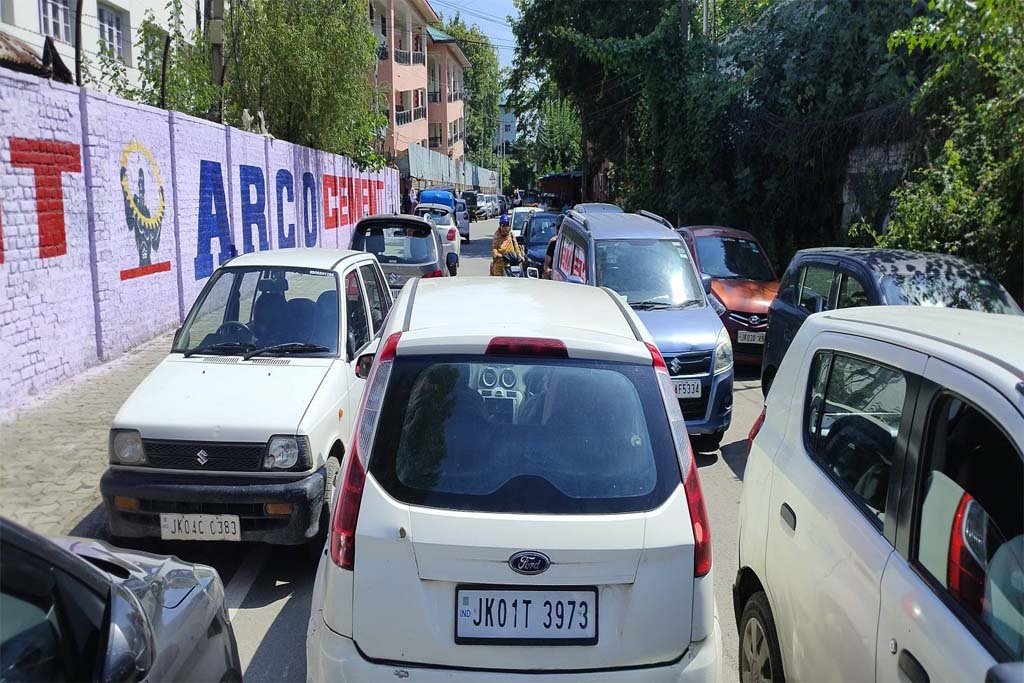
What was once a manageable challenge has now escalated into a full-blown urban predicament. Residents spend hours in gridlock, emergency services are allegedly delayed, tourists are greeted with honking horns rather than tranquil waters, and economic activity suffers as productivity declines. At its core, Srinagar’s traffic crisis is not merely a logistical problem.

ANATOMY OF CONGESTION
Traffic jams in Srinagar are no longer occasional inconveniences; they are daily experiences. Intersections such as Lal Chowk, Jahangir Chowk, Hyderpora, Nowgam, Sanat Nagar, Rambagh, Bemina, and Parimpora have become notorious for gridlock. Vehicles halt in the middle of intersections, blocking other lanes.
Over the past decade, Srinagar has witnessed an exponential rise in private vehicles. Estimates suggest that the Valley’s vehicle population has now crossed nine lakh, with the majority concentrated in Srinagar city. Roads designed decades ago for far fewer vehicles are now under relentless pressure. The situation is further aggravated by illegal parking, roadside encroachments, and vendors occupying footpaths and shoulders, leaving little room for smooth movement. Vehicles are parked indiscriminately along roadsides, blocking lanes and leaving footpaths occupied by vendors, creating both inconvenience and safety hazards.

SIGNALS, SYSTEMS, AND FAILURES
One might assume that modern traffic signals and control systems would alleviate congestion. Unfortunately, Srinagar’s experience shows the opposite.
The problem is not merely technical but systemic. Without a functional, integrated traffic management system, Srinagar’s roads remain chaotic. Infrastructure is only as effective as the enforcement and planning that underpin it. Modern solutions, such as real-time traffic monitoring, GPS-based enforcement, and command centers, remain largely absent.

CULTURE OF INDISCIPLINE
Beyond infrastructure, behavioral patterns exacerbate the crisis. Lane discipline is nearly nonexistent. Minibuses, taxis, and private vehicles stop indiscriminately, often blocking intersections while picking up or dropping passengers. Double-parking is routine, and vehicles occupy footpaths meant for pedestrians.

IMPACT ON DAILY LIFE, ECONOMY
The consequences of Srinagar’s traffic gridlock extend beyond mere inconvenience. The economic impact is significant: deliveries are delayed, traders lose precious hours, and productivity across sectors is affected. Commuters, including students and office-goers, spend excessive time in transit, reducing both efficiency and quality of life.
Health consequences are equally alarming. Noise pollution and vehicle emissions increase due to idling engines, posing respiratory and cardiovascular risks. Emergency services — ambulances, fire brigades, and police — are slowed by clogged roads, putting lives at risk.
Tourists, who once flocked to Srinagar for its tranquility, are instead confronted with a cacophony of honking horns, overcrowded streets, and congested roads. The city’s image as a serene, scenic destination is eroded by its traffic reality.

PARKING BOTTLENECK
Illegal and unregulated parking is a silent yet potent contributor to congestion. Markets such as Lal Chowk, Batamaloo, and Karan Nagar are gridlocked because vehicles double-park on roadways and footpaths. Limited multi-level parking, and poor public awareness make roadside chaos the default choice.
Even proposed solutions, such as designated parking zones and complexes, have seen slow implementation. Until enforcement and alternatives are robust, illegal parking will continue to strangle Srinagar’s streets.

TECHNOLOGY: A PATH FORWARD
Modern cities leverage technology to manage traffic efficiently. CCTV monitoring, GPS tracking, e-challans, and centralized command centers help detect violations, monitor congestion, and optimize traffic flow.
Srinagar can adopt similar measures. A real-time traffic command center, integrated with city-wide signals, can track jams, deploy personnel dynamically, and enforce rules automatically. Technology not only reduces human error but also ensures transparency and accountability.

PUBLIC TRANSPORT LINK
A city’s traffic efficiency is inseparable from its public transport system. Srinagar’s transport network is outdated, and insufficient.
Investment in a reliable, modern public transport system is crucial. Electric buses, feeder routes, last-mile connectivity, and strict regulation of private carriers can reduce congestion significantly. Public transport must be safe, punctual, and comfortable to incentivize citizens to leave their private vehicles at home.

CIVIC AWARENESS
Traffic reform is incomplete without public participation. Citizens must understand that following rules — lane discipline, proper parking, using indicators, yielding to emergency vehicles — is essential. Schools, NGOs, and community organizations can play a pivotal role in instilling traffic etiquette in young drivers, creating a culture of compliance over time.

ADMINISTRATIVE, POLICY REFIRMS

  • Immediate administrative actions can make a tangible difference:
  •  Ensure all traffic signals are functional, synchronized, and monitored.
  •  Strictly enforce regulations against intersection blocking and illegal parking.
  •  Develop clearly marked parking zones and public transport bays.
  •  Increase manpower and training in the Traffic Police.
  •  Deploy CCTV and automatic penalty systems for violations.
  •  Encourage carpooling and public transport use through incentives.
  •  Stagger office and school timings to reduce peak-hour congestion.

CONCLUSION
Srinagar has the potential to become a model of smart urban mobility in the Himalayan region. But achieving this requires commitment, coordination, and accountability. The challenge is significant, but so are the solutions. With political will, technological integration, public awareness, and disciplined enforcement, Srinagar can reclaim its streets and restore its image as a city that harmoniously blends natural beauty with modern urban life.

(Author is internationally known -a prominent freelancer, national TV debater, and columnist. Ideas expressed are his own. He can be reached at ahmadayaz08@gmail.com)

The views expressed in the article are of the author and do not, in anyway, reflect the opinion of the Valley Observer

Categories
OPINION

Educate schoolchildren on sustainable development

Muzamil Arif

The idea of sustainable development has become increasingly important in today’s society because it focuses on addressing present demands without compromising the capacity of future generations to address their own needs.
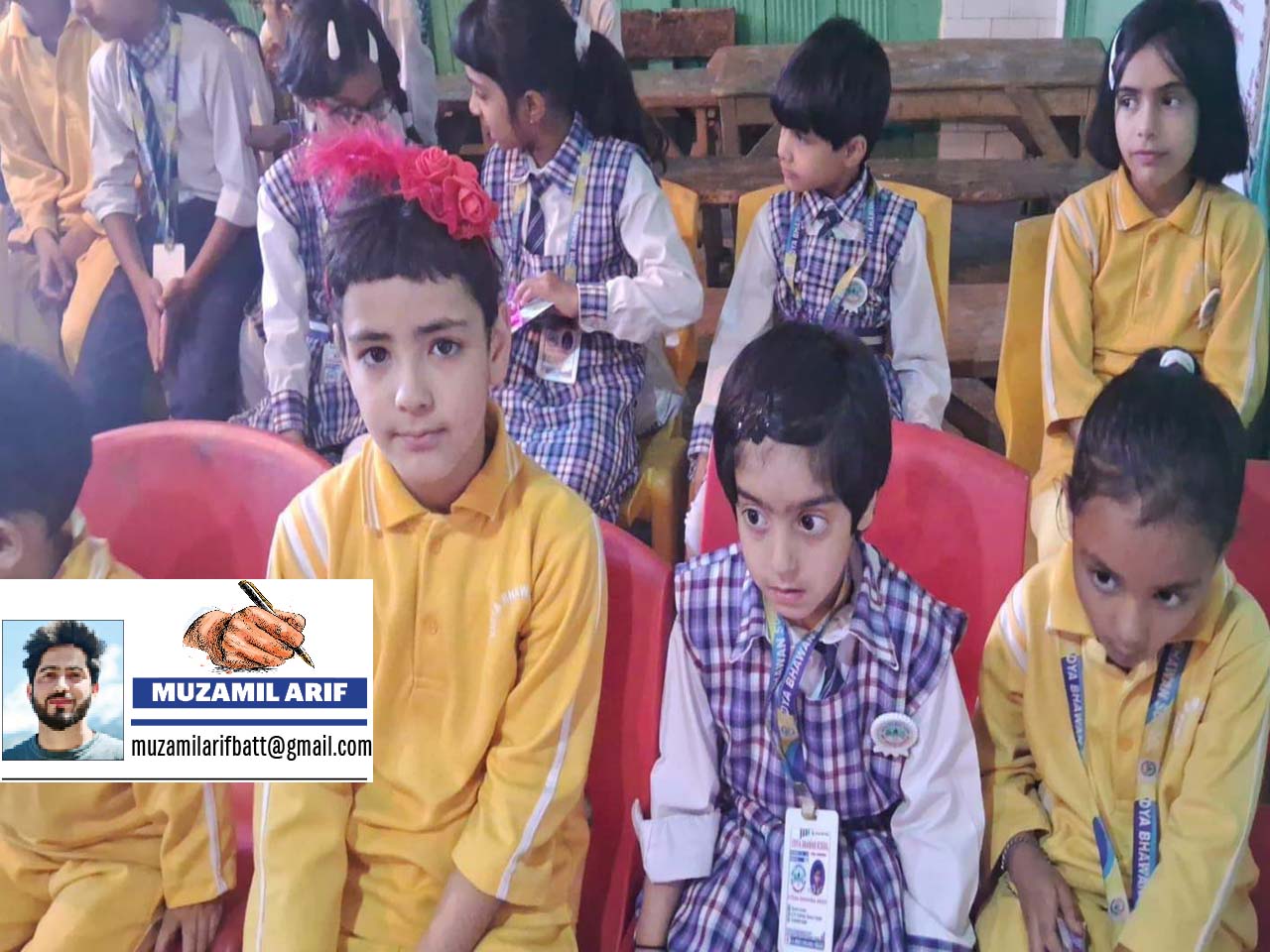
It is crucial to teach schoolchildren about sustainable development as we confront serious global issues like climate change, resource depletion, and environmental degradation. We enable students to become responsible global citizens capable of building a better and more sustainable future by arming them with information and attitudes focused on sustainability.
Children who attend school benefit from learning about sustainable development because it helps them understand the complex web of relationships that exists within the global ecosystem. They discover the close interdependence of environmental, social, and economic elements as well as the potential impact of our current behaviours.
Children can develop a holistic viewpoint and make thoughtful decisions to minimise adverse effects on the environment by recognising these links.
As the planet’s inheritors, it is imperative to instill in children a sense of responsibility for its preservation. They need to be made aware of the value of protecting biodiversity, preserving natural resources, and reducing climate change through education about sustainable development. Children may actively participate in sustainable practises including recycling, energy conservation, and sustainable consumption patterns by developing an environmental stewardship mind-set.
Children should be encouraged to think critically and analyse complicated situations from a variety of angles through sustainable development education. Here they gain the ability to weigh the effects of their decisions on the environment, society, and the economy. Children who work on sustainable development-related problems gain the creativity, adaptability, and resilience necessary to meet the challenges of the twenty-first century.
Sustainable development includes social fairness and economic well-being in addition to environmental preservation. They learn the value of fairness and justice in creating sustainable societies through being taught social responsibility, empathy, and inclusivity. They recognise that sustainable development is an international endeavour and that cooperation, respect, and awareness of many cultures and viewpoints are essential.

There is a rising need for experts in sustainable development as the globe moves towards a more sustainable future. We need to give youngsters the information and abilities required for the developing green economy by exposing them to sustainability principles at a young age. They can work in industries like sustainable agriculture, renewable energy, environmental management, and urban planning, improving the world while securing their own future employment.
In order for children to participate in a future that is environmentally friendly, socially just, and economically productive, it is our duty as educators, parents, and society at large to make sure they receive a complete education that incorporates sustainable development principles.

(The author can be mailed at muzamilarifbatt@gmail.com )

The views expressed in the article are of the author and do not, in anyway, reflect the opinion of the Valley Observer

Categories
OPINION

Celebrating Eid Ul Fitr with Mindfulness and Charity

“The values of gratitude, compassion, and mindfulness are not just for Eid Ul Fitr but should be practiced throughout the year, as we work towards a more just and equitable world for all.”
As Eid Ul Fitr approaches, it is crucial to reflect on the teachings of the Quran regarding moderation, gratitude, and compassion. This special festival reminds us of the importance of coming together as a community and extending a helping hand to those in need.
In a world where extravagance and wastefulness are often praised, it is essential to remember that Allah has strictly forbidden spending in vain. As we celebrate Eid Ul Fitr, let us practice mindfulness and moderation in our spending habits, ensuring that we do not fall into the trap of excess.
Furthermore, as we enjoy the blessings of this holiday, let us remember those who are less fortunate and extend a helping hand to them. Whether it is through donating to charity organizations or volunteering at local shelters, there are many ways to make a positive impact on the lives of others.
At the heart of Eid Ul Fitr is the spirit of gratitude and appreciation for the blessings in our lives. By cultivating a deeper sense of gratitude, we can not only honor the true meaning and spirit of this special holiday but also contribute to a more peaceful and harmonious society.
Finally, let us also ensure that we conduct our shopping and purchasing of essential commodities at government-approved rates and with sufficient quality standards. This will not only benefit us as consumers but also contribute to the betterment of society as a whole.
In addition to practicing moderation and mindfulness during Eid Ul Fitr, it is also crucial to ensure that the prices of essential commodities remain within reasonable limits throughout the year. This can be achieved through the efforts of government departments such as the Food Control and Standards (FCS) and Consumer Affairs (CA), which can monitor and regulate the prices of goods in the market. By regularly checking market rates, these departments can ensure that consumers are not exploited by unscrupulous traders who may take advantage of special occasions to inflate prices. Therefore, it is essential that the FCS and CA carry out their duties effectively and efficiently, not just during special occasions but throughout the year, to ensure that the rights of consumers are protected, and the market remains fair and equitable for all.
Bottom Line: As we prepare for Eid Ul Fitr, let us reflect on the teachings of the Quran and strive to embody the values of moderation, compassion, and gratitude. By doing so, we can contribute to a more just and compassionate world, one where everyone has the opportunity to thrive and live fulfilling lives.
“As we celebrate Eid Ul Fitr, let us remember that our actions have the power to make a positive impact on the lives of others and contribute to a more peaceful and harmonious society”

(The author holds the following positions: •Educational Columnist •Motivational Speaker •Associate Editor of the weekly ‘Education Quill’ •Senior EDP Head at DD Target PMT in Kashmir, which is a reputed institute for medical/JEE/Foundation Coaching Classes. Insta id UBI9305. Can be mailed at akhoon.aubaid@gmail.com)

The views expressed in the article are of the author and do not, in anyway, reflect the opinion of the Valley Observer
Categories
OPINION

Hope: The Light that Guides Us Through Life’s Darkest Moments

Hope is a fundamental human emotion that plays a significant role in shaping our lives. It is a positive attitude that enables us to look beyond our present circumstances and see a brighter future. Hope is the belief that things will get better, that there is a light at the end of the tunnel. It is the feeling that empowers us to keep going when times are tough, to overcome obstacles and achieve our goals. Hope is everything in life, and its significance and importance in day-to-day life cannot be overstated.

Hope gives us a reason to live. It is the force that drives us forward and helps us to overcome our darkest moments. When we are faced with challenges, hope gives us the strength to carry on. Without hope, we would be lost in despair, unable to see a way out of our problems. Hope keeps us focused on our goals and motivates us to take action to achieve them.

Hope also helps us to cope with loss and grief. When we lose someone we love or experience a significant setback, it is easy to feel overwhelmed by sadness and despair.

However, hope helps us to see that even in the darkest moments, there is still a reason to keep going. It reminds us that life is a journey with ups and downs, and that we can find happiness and joy again.

Furthermore, hope plays a crucial role in our mental health. When we are struggling with depression, anxiety, or other mental health issues, hope can be the catalyst for our recovery. It gives us the strength to seek help, to take steps towards healing, and to believe that we can overcome our challenges. Hope is the foundation for optimism and positivity, which are essential for good mental health.

In addition to our personal lives, hope also has a significant impact on our communities and society as a whole. Hope can inspire social change and encourage people to work towards a better future. When we have hope, we are more likely to take action towards positive change, whether it is in our personal lives or in our communities. Hope can be the driving force behind social movements that aim to create a more just and equitable world.

Moreover, hope is essential for our relationships. When we have hope in our relationships, we are more willing to forgive and work towards resolution when conflicts arise. It enables us to see the best in others and to believe that people can change and grow. Hope also gives us the strength to keep our commitments and promises, which is crucial for building trust in our relationships.

Hope is also important in our professional lives. When we have hope in our careers, we are more motivated to work hard and achieve our goals. It helps us to stay focused on our long-term objectives and to persist in the face of challenges. Furthermore, hope can be the catalyst for innovation and creativity, as it encourages us to think outside the box and come up with new solutions to problems.

In conclusion, hope is everything in life. It is the foundation of our emotional well-being, the catalyst for social change, and the driving force behind our personal and professional growth. Hope is the light that guides us through the darkest moments and gives us the strength to overcome our challenges. It is the fuel that drives us towards our dreams and aspirations. Without hope, life would be a bleak and hopeless existence. Therefore, we must cultivate hope in our lives and in the lives of those around us. We must strive to see the best in ourselves and others and to believe that a better future is possible. Hope is the essence of life, and we must embrace it with open arms.

(The author is student of M.A Political Science, Central University of Kashmir. She can be mailed at fatimabhat067@gmail.com)

The views expressed in the article are of the author and do not, in anyway, reflect the opinion of the Valley Observer

Categories
OPINION

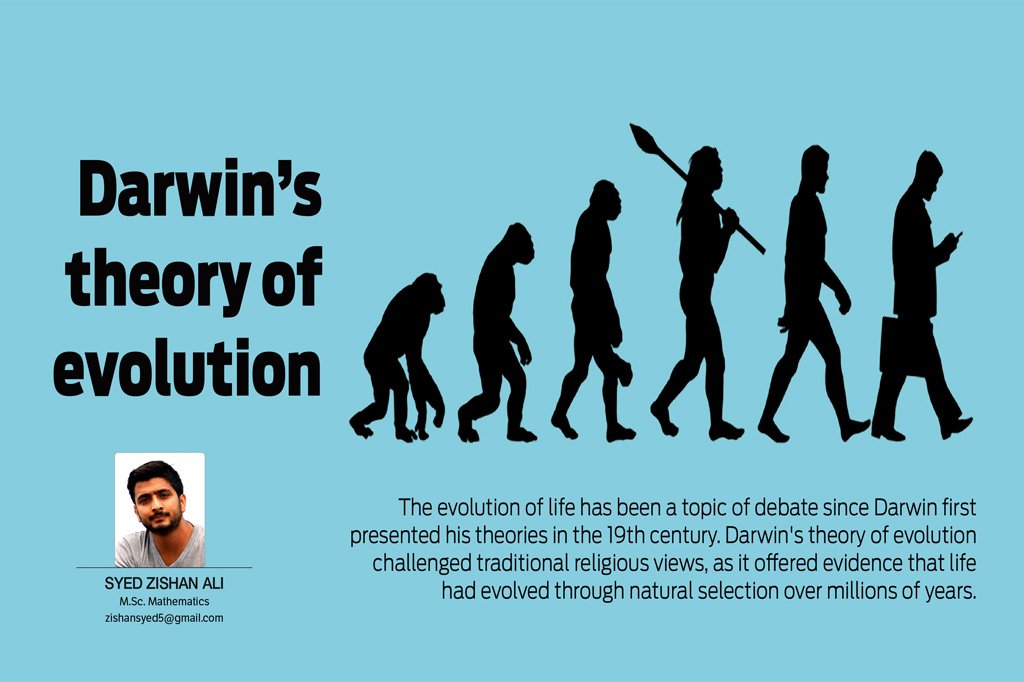
Darwin’s theory of evolution

The evolution of life has been a topic of debate since Darwin first presented his theories in the 19th century. Darwin’s theory of evolution challenged traditional religious views, as it offered evidence that life had evolved through natural selection over millions of years.

This sparked heated debates between scientists and religious leaders, who argued that Darwin was contradicting the Creation story taught in many religious texts. Despite this resistance to Darwin’s ideas, scientific advancements have allowed us to uncover more evidence supporting Darwin’s theory.

Through genetic sequencing and fossil records, we can now better understand how different species evolved over time. This has helped to make Darwin’s theories more accepted by the public.

In today’s world, there is much more acceptance of evolutionary science while still allowing for religious beliefs. Darwin’s theories are now widely accepted and scientifically supported, although it took decades to overcome early resistance from the scientific community and religious groups.

Darwin’s work has been crucial in helping us better understand the evolution of life on Earth, and his ideas have greatly influenced how we view science today. Most notably, Darwin’s contributions help us to better appreciate the natural world by understanding how life forms have changed over time.

His work continues to be celebrated as a major breakthrough in our understanding of evolution, making him one of the most influential scientists in history.

 Today, Darwin’s work serves as a foundation for all biological sciences and has helped us to better understand the complexities of life. It is important to remember that Darwin was one of the first biologists who proposed a explanation for life on Earth and contributed much to our current understanding of evolution and its implications for humanity.

Darwin’s findings have also had far-reaching effects in terms of how science is perceived today.

At its core, Darwin’s theory of evolution is founded on the idea that all forms of life have evolved through natural selection over time. Darwin proposed that species changed over generations due to adaptations which were favored by their environment, individual organisms with better adapted traits were more likely to survive and reproduce, passing these traits down to their offspring. By looking at fossils and living organisms today it is easy to see how Darwin’s ideas are supported by evidence.

Darwin’s theories continue to shape our understanding of biology, ecology and even anthropology today.

Since the time of Charles Darwin, more and more information has been discovered about the theory of evolution. This new knowledge has led to an in-depth understanding of how species evolve over time. With this, our view of evolutionary processes has become increasingly complex. The modern synthesis brought together genetics, biochemistry, population genetics, paleontology, embryology, and systematics to create an overarching evolutionary theory. This synthesis addressed many of the problems that Darwin was unable to explain at the time, such as the origins of new characters or traits in species.

The views expressed in the article are of the author and do not, in anyway, reflect the opinion of the Valley Observer

Exit mobile version