Categories
OPINION

My Srinagar, My Pride

This is my heartfelt memoir of the Srinagar I was born into and the Srinagar I carry within me.
Yesterday, as the results of the 10th and 12th grade examinations were declared, social media was instantly flooded with news of success. Every platform echoed with happiness, joy, and excitement as students and parents celebrated together. Today, a large number of students pass these examinations with remarkably high scores.
Many secure more than 90 percent marks, and quite a good number even achieve a perfect 100 percent, resulting in multiple students sharing the first, second, and third positions.
Watching all this, my mind drifted back to my own past.
I was reminded of the year 1992, when I passed my 10th-grade examination—then known as the matric examination. In those days, there was no social media, no television tickers, and no instant updates. Results were declared through a printed gazette.
Sometimes, even before the gazette arrived, the results were announced over radio sets and transistors, eagerly listened to by families and neighbours alike.
I still remember the anxious night before the result. Sleep refused to come as I lay in bed, counting the wooden planks on the ceiling of my room. Early the next morning, I rose and, by around 10 a.m., accompanied my father in search of the result gazette. It was commonly available in almost every locality. In a nearby mohalla, I saw a man holding the gazette, surrounded by students and parents, all patiently waiting for their turn.
Those who passed would willingly give him twenty or thirty rupees, while those who secured a distinction or first division happily gave more.
The moment a student was declared successful, neighbours, relatives, and friends would arrive instantly at the student’s home to congratulate the family. There were no formal invitations or planned gatherings. One ritual, however, was essential—the burning of isband and the showering of almonds and candies on the successful student and family members.
The focus was always on joy—pure, collective joy. Laughter filled the air, hearts remained open, and there was no place for material display. Serving kehwa with sheermal was a graceful and cherished tradition.
Celebrations often continued not just for a day but for an entire week, like a small festival. Whether a student passed in first division or third division hardly mattered. Passing itself was celebrated, and effort was respected as much as achievement.
Today, much of that has changed—along with many other beautiful elements of Srinagar’s rich cultural heritage. The declaration of results, passing examinations, and even achieving distinctions are now often celebrated behind closed doors, confined within four walls. At best, a small and selected circle of relatives or neighbours may be present, but the warmth of collective celebration has faded.
The simplicity of kehwa and sheermal has given way to pomp, extravagance, and unnecessary show. Snacks, tea, and even kanti kebab may still be served, yet hearts often remain closed. The genuine warmth, openness, and excitement that once defined such occasions—when guests were welcomed with sincerity rather than formality—seem increasingly absent.
Like many other aspects of life in my Srinagar, which once felt like a shared home, relationships too have changed. In those days, people truly belonged to one another. Festivals and celebrations were never personal affairs; they belonged to the entire neighbourhood.
Joy and sorrow, happiness and grief, were shared collectively and never owned by one family alone. Visiting neighbours and relatives was not a duty—it was simply a way of life.
Srinagar, especially the old city, lived and breathed around its wooden bridges—Zero Bridge, Budshah Kadal, Amira Kadal, Habba Kadal, Fateh Kadal, Zaina Kadal, Nawa Kadal, Aali Kadal, and Safa Kadal. Life moved slowly and gently, with simplicity, dignity, and very little pretence. If there was happiness, everyone joined in. If there was sorrow, everyone stood together.
This is the Srinagar I was born into. This is the Srinagar I remember—a city where distances were measured in footsteps, not vehicles; where bridges connected hearts, not just localities; where culture was not performed but lived sincerely, with dignity and togetherness.

My Srinagar, my pride.

Syed Majid Gilani is a government officer by profession and a reflective storyteller by passion. He writes on family values, moral wisdom, and real-life emotions.

The views expressed in the article are of the author and do not, in anyway, reflect the opinion of the Valley Observer

Categories
CRIME

J&K Police seizes 700 litres of Illegal kerosene oil and diesel in Shopian

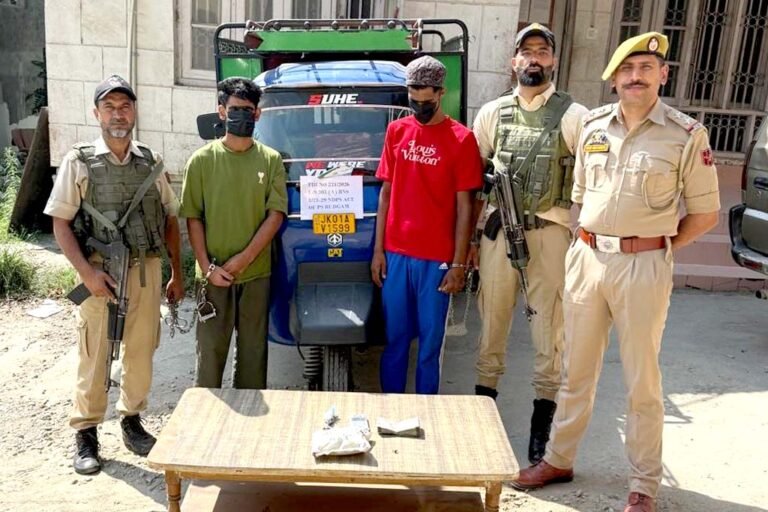
Shopian, February 08: Police have seized approximately 700 litres of illegal Kerosene oil and Diesel in Shopian and arrested the accused person involved in the commission of crime.
Acting on specific information regarding illegal sale of subsidised kerosene oil in the black market, Police conducted a raid at Imamsahib area of the district Shopian. A police party from Police Station Imamsahib recovered and seized approximately 700 litres of illegal kerosene oil and diesel from a shop. One person namely Naseer Ahmad War Resident of Arwani Bijbehara was found involved in the illegal trade.
Accordingly, a case FIR No. 10/2026 under relevant provisions of law has been registered at Police Station Imamsahib. The recovered kerosene oil and diesel were seized and accused has been arrested and further investigation is underway.
Preliminary investigation reveals that the accused was involved in black marketing of subsidised kerosene oil. The source of procurement is being investigated and any official found involved in facilitating the illegal trade shall be dealt with strictly as per law.
Police reiterate their commitment to act firmly against illegal activities and urge the general public to cooperate and share information regarding criminal activities in their areas.

Categories
BUSINESS

DC Budgam launched Three-Day ‘Naqsh-e-Meeras’ workshop at NIFT

Initiative aims to reconnect younger generation with Kashmir’s handcrafted traditions

BUDGAM, FEBRUARY 05: District Administration Budgam today inaugurated a three-day cultural and heritage workshop titled “Naqsh-e-Meeras”, aimed at promoting, preserving and reviving the rich and diverse traditional art and craft heritage of Jammu & Kashmir.
The workshop is being organised from 5th to 7th February, 2026 at the National Institute of Fashion Technology (NIFT), Budgam.
The programme was formally inaugurated by the Deputy Commissioner Budgam, Dr. Bilal Mohi-ud-Din Bhat, along with distinguished guests from the Indira Gandhi National Centre for the Arts (IGNCA), in the presence of senior district officers, artisans, students, Self Help Groups and members of the local community.
Speaking on the occasion, the Deputy Commissioner said that Naqsh-e-Meeras is a significant initiative of the District Administration to reconnect the younger generation with the rich legacy of Kashmir’s handcrafted traditions, while also providing a strong platform for local artisans to showcase their skills, products and creativity.
The DC emphasized that such heritage-based programmes are vital for preserving traditional knowledge systems that have been passed down through generations. He stated that Kashmir’s handicrafts are not just economic activities but are an important part of the region’s cultural identity, history and collective memory.
“We want our local art and crafts to flourish in a sustainable manner so that our younger generations understand the true value of handcrafted products and can clearly differentiate between machine-made and hand-made items. This understanding will help in preserving authenticity, quality and cultural heritage,” the DC said.
He further added that such seminars and workshops play a crucial role in boosting the morale of local artisans, craftsmen and children by giving them recognition, exposure and confidence.
“These platforms not only provide visibility to our artisans but also generate awareness among the masses to adopt and promote local products. This is fully aligned with the spirit of Vocal for Local, where people are encouraged to support indigenous crafts and local economies,” he said.
The DC also highlighted that showcasing traditional techniques and live demonstrations can significantly enhance the financial stability of artisans by opening new market avenues, increasing demand for authentic handmade products and creating sustainable livelihood opportunities.
By demonstrating old and traditional crafts in a modern, organised setting, we are creating linkages between heritage and contemporary markets. This will ultimately strengthen the economic position of our artisans and contribute to overall economic growth of the district and the region,” he added.
The DC stressed that the District Administration will continue to support such initiatives in collaboration with reputed national institutions to ensure that local craftsmanship receives the recognition, protection and promotion it truly deserves. He reiterated that District administration is committed to continue organising such heritage-focused programmes to promote cultural preservation, artisan empowerment, youth engagement and sustainable economic development across the district.
The event witnessed the presence of several senior district officers including GM DIC Budgam Zahid Rashid, SDM Beerwah Taufeeq Gazi, Chief Planning Officer Budgam Javaid Ahmad Najar, CEO Municipal Council Budgam Bilal Ahmad, CEO Budgam Rifat Irfan, District Information Officer Budgam Iram Khan, EO Municipal Committee Beerwah Zamir Lone, besides other senior officers of the district administration.
Large participation was also recorded from students of various schools and colleges, local youth, traditional artisans, Self Help Groups (SHGs), craftspersons and members of the general public, reflecting strong community engagement and interest in heritage preservation.
On the first day of the workshop, various competitions were organised including calligraphy, painting and sketching, aimed at nurturing creativity among students and young artists. Multiple stalls were set up showcasing a wide range of traditional crafts such as Paper Machie, Kani weaving, Sozni embroidery, cooper making, Kangri making, wood carving and other indigenous art forms.
An exclusive art gallery was also displayed featuring iconic paintings depicting old Jammu & Kashmir, offering visitors a glimpse into the region’s historical, cultural and artistic evolution.
Traditional activities such as yarn weaving and other heritage processes were also demonstrated live, giving participants a hands-on understanding of age-old techniques.
The workshop is being organised by District Administration Budgam in collaboration with the Indira Gandhi National Centre for the Arts (IGNCA) and the National Institute of Fashion Technology (NIFT), Budgam, ensuring expert guidance, technical support and national-level exposure for local talen.

Categories
BUSINESS

Over 8,000 new artisans trained in GI registered papier mache craft

Handicrafts & Handloom Dept refutes claims of art dying, published in a daily newspaper


SRINAGAR, JANUARY 31 – The Handicrafts and Handloom Department, Kashmir has strongly refuted certain portions of a news story published in a Local daily newspaper with headline – ‘The Art Will Die with Us’: Srinagar’s papier mache craftsmen battle extinction.


In a press release issued here today, a spokesman of the Department countered the claims made by Nasir Ahmad Mir, a papier mache craftsman, who was interviewed by a reporter for the news story published on 29.01.2026 of the said newspaper.


Giving details, the spokesperson stated that the Handicrafts and Handloom Department, Kashmir, has 19 training centres across Kashmir Division, imparting hands-on training in papier mache craft to around 400 artisans in elementary and advance training courses every year. “The Department has trained as many as 8,102 new papier mache artisans across the valley, who have taken the unique craft forward and carved out a niche for themselves,” he said, adding that a large number of papier mache artisans are still in the unorganised sector, who are being registered so that they can avail the benefits of various flagship schemes of the Government.


In order to promote and encourage artisans in papier mache craft, as many as 25 master craftsmen have been conferred with UT Awards over the last 10 years. “Apart from this, J&K has been made proud by papier mache craft maestros like Fayaz Ahmad Jan and Iqbal Hussain Khan, who have been conferred with Padma Shri & Shilp Guru awards respectively in recognition of their contribution in promotion of the craft,” he added.

Referring to the Department’s initiative of Know Your Artisan, under its Soulful Kashmir brand promotion, campaign, the spokesman said that special representation is made for papier mache craft, which remains the most popular, along with walnut wood carving, in the non-textile craft sector.


Apart from this, the spokesman added that a large number of papier mache artisans are recommended to JKTPO for participation in various J&K and national trade fairs, including IITF at Bharat Mandapam, Suraj Kund Mela in Haryana, Gandhi Shilp Bazaar and other high-profile events.


Dwelling upon the export potential of papier mache products, the spokesman stated that in the last 10 years, artefacts worth ₹212.06 Cr have been exported to outside destinations from Kashmir. “These figures remain the highest in respect of non-textile crafts in Kashmir Division,” he added.


In order to ensure the transition of skill from the master to the budding artisans, the Department has instituted a flagship Karkhandar Scheme in the department. “The scheme focuses on preserving traditional crafts such as papier mache, walnut wood carving, silver filigree, carpet weaving, Kani shawl weaving, Khatamband, and others like Sozni, tapestry, and engraved copperware,” he added.


Identifying the uniqueness of papier mache craft, both in sakhta and naqashi, the Department has obtained a GI registration for papier mache crafts from GI registry Chennai. “Authorised GI users can avail the facility of testing and QR Code based labelling at PTQCC, CDI, Srinagar, which shall go a long way in penetrating newer markets both within and outside the country.

Categories
CRIME

Police Solves Theft Case In Sopore; 2 Accused Arrested

Sopore, January 29: Police in Sopore have successfully solved a cattle theft case by arresting two accused persons involved in the commission of crime and recovered stolen cattle from their possession.

During the course of investigation of case FIR No. 21/2026 under Section 303(2) of the Bharatiya Nyaya Sanhita (BNS), several suspects were brought in for questioning. During sustained interrogation, one suspect Shakir Ahmad Dar son of Mohammad Ashraf Dar resident of Dangerpora Sopore confessed to his involvement in the commission of crime and further disclosed the role of another accused identified as Aadil Ashraf Dar son of Mohammad Ashraf Dar resident of Dangerpora Sopore.

Acting on the disclosure of the second accused, Police traced and recovered five heifer cows from Jahama Mawer, Handwara. Both the accused have been formally arrested in the case. Further investigation is underway to ascertain any additional linkages.

Police reiterate their commitment to swift investigation, protection of livelihood assets, and firm action against criminal elements.

Categories
JAMMU

CM Omar Abdullah’s intervention leads to arrest in assault on Kashmiri shawl seller in Uttarakhand

Condemns attack on Kashmiris, urges Home Ministry to sensitise states

JAMMU, JANUARY 29: Chief Minister Omar Abdullah has taken serious note of the incident involving the assault on a young Kashmiri shawl seller in Uttarakhand and initiated immediate steps to ensure accountability and safety of residents of Jammu and Kashmir living outside.

In this regard, Chief Minister Omar Abdullah spoke with the Chief Minister of Uttarakhand, Shri Pushkar Singh Dhami, urging him to take strict action against those involved in the incident.

In a post on X, the Office of the Chief Minister, J&K, stated:

“Chief Minister spoke with the Hon’ble Chief Minister of Uttarakhand, @pushkardhami, regarding the incident of assault on a young Kashmiri shawl seller in Uttarakhand and urged him to take strict action against the perpetrators. @pushkardhami assured that strict action, including registration of an FIR, would be taken in the matter and safety of J&K residents will be ensured.”

Subsequently, Uttarakhand Police took prompt action in the matter. In an official update, the police informed that FIR No. 26/2026 has been registered at Police Station Vikasnagar against the accused Sanjay Yadav and one other person under Sections 117(2) and 352 of the Bharatiya Nyaya Sanhita (BNS).

The update further stated: “The accused Sanjay Yadav has been taken into custody and necessary legal action is being initiated, and he will be sent to jail.”

Reacting to the incident and similar recent occurrences, Chief Minister Omar Abdullah, in a separate post on X, said:

“This recent series of attacks including in Himachal Pradesh and now this one are unacceptable and must stop. It can’t be claimed that J&K is an inalienable part of India while people from Kashmir, in other parts of the country, live in fear for their lives. My Government will step in wherever necessary & will do whatever is needed to ensure these incidents are not repeated. I hope Home Ministry, Govt of India will also sensitise other states on the same lines.”

The Chief Minister reiterated his government’s commitment to safeguarding the dignity, security, and rights of the people of Jammu and Kashmir across the country and ensuring that such incidents are dealt with firmly and decisively.

An 18-year-old Kashmiri youth had sustained serious head injuries and fractures after being attacked by some shopkeepers while selling shawls along with his family.

Categories
EDUCATION

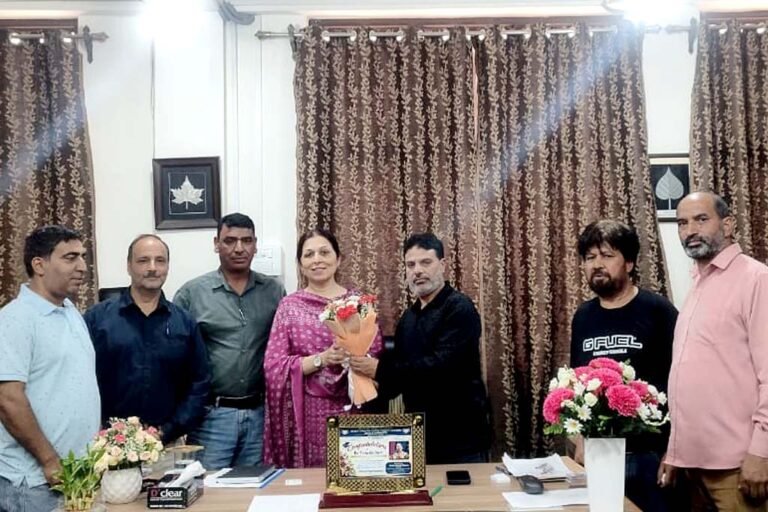
National Flag Unfurled at GCOE; Professor (Dr) Seema Naz Takes Salute

Srinagar, January 26: Government College of Education (Institute of Advanced Studies in Education), M.A. Road, Srinagar, celebrated the 77th Republic Day with great patriotism, enthusiasm, and fervour on its campus today.

The celebrations began with the unfurling of the National Flag by the Nodal Principal, Kashmir Division Colleges, and Principal of GCOE, Professor (Dr) Seema Naz, who also took the salute. The national anthem was sung with pride, creating a solemn and patriotic atmosphere across the campus.

The ceremony witnessed the presence of teaching and non-teaching staff along with a large number of students, who participated actively in the celebrations. The campus was decorated to mark the occasion, reflecting the spirit of national unity and constitutional values.

Addressing the gathering, Dr. Seema Naz extended her greetings to all on the occasion of the 77th Republic Day. She highlighted the historical significance of the day, recalling that the Constitution of India came into force on January 26, 1950, laying the foundation of a sovereign, socialist, secular, and democratic republic.

She emphasized that educational institutions play a crucial role in shaping responsible citizens and strengthening the democratic fabric of the nation. Dr. Naz urged students to uphold constitutional values, promote unity in diversity, and contribute positively to the progress and development of the country through education, discipline, and social responsibility.

The programme concluded with a renewed pledge by the staff and students to work with dedication, integrity, and commitment towards nation-building and upholding the ideals enshrined in the Constitution of India.

Categories
CRIME

Police Solves Burglary Case Within 24 Hours In Sopore, Accused Arrested

Stolen Property Recovered

Sopore, January 24: Police in Sopore have solved a burglary case within 24 hours of its reporting, leading to the arrest of the accused and recovery of stolen property.

Police Station Sopore received a written complaint from Akash Ahmad Wani son of Hafeezullah Wani resident of Nowhamam, Sopore, stating that during the intervening night of 22/23 January 2026, unknown burglars broke open his shop located at Iqbal Market, Sopore, and stole crockery items etc. Accordingly, a case FIR No. 22/2026 under relevant sections of law was registered at Police Station Sopore, and investigation was initiated.

During the course of investigation, several suspects were examined and among them one suspect Danish Ahmad Gojri son of Mohammad Rajab Gojri resident of Badshah Masjid, Batpora, Sopore, confessed to his involvement in the burglary.

On his disclosure, Police recovered the stolen property worth lakhs of rupees from his possession. Subsequently, the accused has been arrested in the case. Further investigation is underway to ascertain any additional involvement or linkages.

Police reiterate their commitment to swift investigation, protection of property and commercial establishments and firm action against criminal elements, ensuring public confidence and safety.


Categories
EDUCATION

Focus on Academic Preparedness and Student Welfare at Kashmir Division Principals’ Meet: Director Colleges

Baramulla, January 22: Building on the deliberations held during the recent Principals’ Meeting of Jammu Division colleges, the Department of Higher Education continued its divisional review process with a comprehensive meeting of Principals of all Government Degree Colleges of the Kashmir Division. The meeting was chaired by the Director Colleges, Prof. (Dr.) Sheikh Ajaz Bashir, and was aimed at assessing academic preparedness, reinforcing governance mechanisms and strengthening student-focused institutional practices across the Division.

The principal of the host institution, Prof. Mohd. Shafi Lone, Government Degree College Baramulla (Autonomous), extended a formal welcome to the participants and introduced the newly transferred Principals. It was highlighted that the decision to hold the first divisional meeting at an Autonomous college was a deliberate step to underscore the Department’s emphasis on academic autonomy, reflecting a clear policy direction towards expanding the number of autonomous institutions in the higher education sector in the near future.

In his address, the Director Colleges emphasised institutional cohesion, academic discipline and outcome-oriented governance as the foundational pillars for improving the quality of higher education. A detailed review of the Department’s digital governance was undertaken, reiterating the Planning & Development Portal of the Directorate of Colleges as the sole authenticated platform for institutional data, real-time reporting and delivery of online staff services. Principals were advised to ensure accuracy, regular updating and verification of institutional data to enable informed policy planning. It was also highlighted that the Department’s digital interventions, particularly the engagement of need-based Academic Arrangements during the current academic session, have been widely observed across colleges to significantly enhance operational efficiency, simplify processes and strengthen transparency.

The meeting reviewed college-wise performance under the Connect with Policy Planning & Development Initiative, with emphasis on timely data submission and institutional responsiveness. Principals were informed that sustained engagement in data-driven governance will continue to play a critical role in development and administrative decision-making.

Institutional development initiatives were deliberated in detail, including the functioning of Institutional Innovation Councils, the expansion of eYantra Labs, the implementation of SWAYAM Local Chapters for the promotion of blended education. The Action Taken Report (ATR) on eYantra was reviewed specifically, during which the Director Colleges directed all eYantra-enabled colleges to constitute one or more student teams for participation in the UT-level Hackathon proposed to be rolled out shortly, and participation of student teams trained by colleges in the national eYantra competitions organised and conducted by IIT Bombay.

Student welfare and engagement mechanisms received focused attention, particularly the strengthening of the Mentor–Mentee Programme for academic and psychosocial support, structured sports and co-curricular inclusive framework, and the Department’s institutional strategy for countering substance abuse through awareness, vigilance and early identification of vulnerabilities.

The SIGMA – Student Integrated Grievance and Messaging Application Portal was reviewed comprehensively, with college-wise registration performance shared. Principals were encouraged to further enhance student onboarding and effective utilisation of the platform to ensure secure and time-bound Messaging to students and timely grievance redressal.

In a major announcement, the Director Colleges informed the meeting about the rollout of the SCALE – Student Connect for Academic Leverage and Excellence initiative, envisioned as a comprehensive student outreach programme to offer continuous guidance on NEP-2020, academic mobility, progression pathways and career planning in all Government Degree Colleges.

The meeting also reviewed the status of ongoing developmental works being executed under various budget heads. Principals were advised to maintain close coordination with executing agencies and ensure regular monitoring of project timelines and quality parameters.

Concluding the deliberations, the Director Colleges reiterated that teaching and non-teaching staff are the primary drivers of institutional quality and urged Principals to cultivate a supportive and motivated work environment. He called upon all institutions to collectively advance the Department’s mission through transparency, accountability and student-centric governance, so that Government Degree Colleges of Jammu & Kashmir continue to emerge as vibrant centres of academic excellence and societal transformation.

Categories
BUSINESS

New Lease of Life for Kashmir’s Namda Craft

In-house wool carding to cut outsourcing costs and strengthen livelihoods of Namda artisans

SRINAGAR, JANUARY 21: In a major fillip for revival of the indigenous Namda craft of Kashmir, Department of Handicrafts & Handloom, Kashmir today awarded contract for the Supply, Installation, Testing and Commissioning (SITC) of card cloth for wool carding machine through Mechanical & Hospitals Engineering Department.

The commissioned wool carding machine has an annual processing capacity of approximately 29,000 Kgs of wool. This enhanced capacity is expected to significantly strengthen the local value chain associated with the traditional Namda craft. The installation of this facility will substantially reduce the cost incurred on outsourcing wool carding, thereby directly benefiting artisans engaged in the Namda craft.

In a press statement issued by the department today, Deputy Director UNDP, Mirza Shahid Ali, said J&K is the second largest producer of wool fibre in India and ranks first in the production of Merino wool, despite this advantage, a substantial portion of raw wool has traditionally been sent outside J&K for carding, resulting in higher costs and delays.

He further stated, “This initiative is cost-effective, efficient and less labour-intensive and will play a major role in strengthening sustainable livelihoods, enhancing productivity and preserving Kashmir’s rich handicraft heritage, especially Namda which is in a revival mode”.

The department reiterated its commitment to providing modern infrastructure and technical support to traditional crafts, ensuring their revival, sustainability, and global competitiveness.

Exit mobile version