Categories
BUSINESS

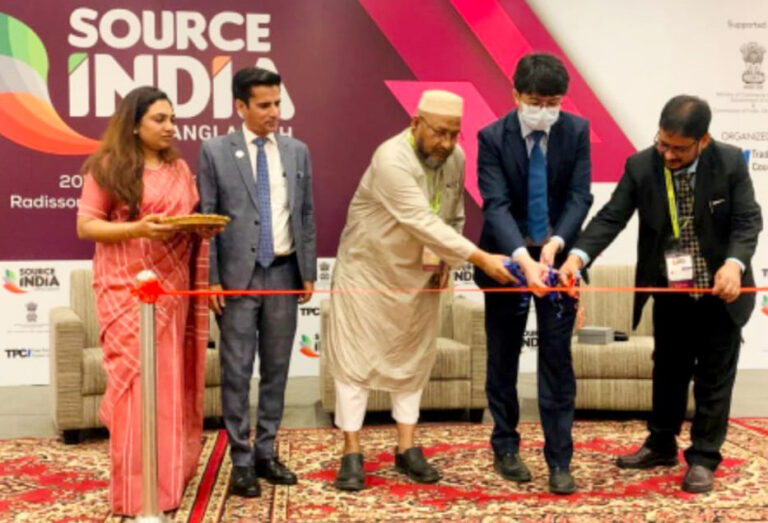
JKTPO participated in Source India Bangladesh Exhibition by TPCI in Dhaka, Bangladesh

JAMMU, MARCH 25: Jammu and Kashmir Trade Promotion Organization (JKTPO) participated Source India Bangladesh 2023 in Dhaka, Bangladesh. The Exhibition was organized by Trade Promotion Council of India (TPCI) with support of Department of Commerce, Govt. of India.

The event was inaugurated by Pratik Negi, First Secretary, Economic & Commerce, High Commission of India, Dhaka in presence of Md. Anowar Hossain-General Secretary, Bangladesh Food Stuffs Import & Suppliers Association (BAFISA) and Abul Kalam Azad -Secretary General, Bangladesh Chemical Importers & Merchant Association.

This event provided the gateway to the Food Processing Companies, Basic Chemical, Dyes and Pigments, Edible Chemicals  sector of India to enter the Bangladesh market. The event was a perfect B2B platform for our manufacturers to showcase their products under one roof in the Bangladesh Market. This event has provided an interactive platform for our delegates to generate business through product displays, direct interaction with the Buyers.

JKTPO in collaboration with TPCI, facilitated the participation of 09 entrepreneurs of J&K from Agro and  Food Processing industry for the event  from J&K. The J&K exhibitors received very good response from the buyers and around 500+ business lead were generated by them in the event. Products like Saffron, Canned Cherries, Honey, Fresh Fruits, Walnuts, Dry fruits, Aromatic oils,  etc received very good response from the buyers.

The participants from J&K received very good response in this B2B event.  M.A Khan from Being Well India quoted – “I would like to express my sincerest gratitude for the fantastic event “Source India Bangladesh”  that JKTPO organized at Dhaka. It was truly an incredible experience, and I can’t thank you enough for all the hard work and effort that went into making it a success”. From VKC Nuts Gagan Jain said “The event was well organized and great networking opportunity amongst the companies attending.

Irfan Shiekh from Al Dua Foods said “I made several promising business connections and met several potential business partners. The event provided us the platform to interact with Top food industries of Bangladesh. We networked and shared product samples with most of the participants. We sincerely believe that most of the business meeting will into potential partnership/ buyers.”

Around 75 Companies from multiple sectors and over the India including  Jammu & Kashmir, Maharashtra, Delhi, Andhra Pradesh, Tamil Nadu etc. participated in “Source India Bangladesh 2023“. Around 500+Buyers attended the event for their sourcing requirements and networking with Indian exhibitors. Representatives from Bangladeshi companies like Shwapno supermarket, Amana Group, Square Food & Beverages, Pran Group etc.  to explore the possibilities of business collaboration in Bangladesh.

Categories
BUSINESS

KCCI Delegation calls on J&K Bank MD & CEO

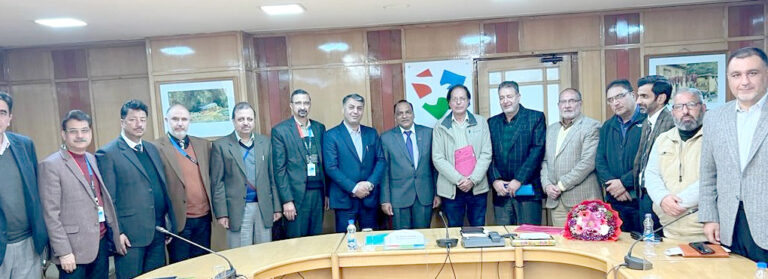
SRINAGAR, MARCH 21: A delegation of Kashmir Chamber of Commerce and Industries (KCCI) today called upon MD & CEO J&K Bank, Baldev Prakash at Corporate Headquarters. During the introductory meeting, MD & CEO felicitated the newly elected members of KCCI executive body led by President Javed Ahmed Tenga.

Bank’s General Managers Ashutosh Sareen, Syed Rais Maqbool, Syed Shujaat Hussain, Divisional Head (Kashmir) Syed Shafat Hussain, Zonal Head (Srinagar) Shabir Ahmad along with DGMs were also present at the meeting  besides senior KCCI office-bearers Ashaq Hussain Shangloo, Fayaz Ahmad Punjabi, Faiz Ahmad Bakshi and others.

Speaking on the occasion, MD & CEO Baldev Prakash dwelt upon the long-lasting relationship between the chamber and the Bank saying, “J&K Bank is your Bank, which has always supported businesses in a very pro-active manner. While carrying forward the rich legacy spanning over decades of mutual progress, we plan to take this association to another level in coming times.”

“Whatever is required to further strengthen the relationship will be done within the regulatory guidelines, for I truly believe that our progress is interlinked with your growth. And we need to join forces to accelerate the socio-economic development of this place”, he added.

Earlier, the members thanked the Bank for its continued financial support especially to ensure continuity and revival of businesses during difficult times like 2014 floods, Covid19 etc. The delegation also put on record its appreciation of the management for recently taken measures especially rolling out One Time Settlement Schemes and establishment of LCUs.

While stressing upon the need to engage each other at various levels, members of the delegation assured the Bank’s management of complete cooperation from KCCI whenever and wherever required.

Categories
BUSINESS

Lt Governor presents UT Level Award to the Artisans

Congratulates all award winners for their commendable service to preserve and promote priceless cultural and artistic heritage

Administration has taken important steps to boost handicraft and handloom sector: LG Sinha

We are committed to provide training, design, technology, financial and other infrastructure support that will significantly contribute to the growth of handicraft & handloom sector and earnings of artisans: LG

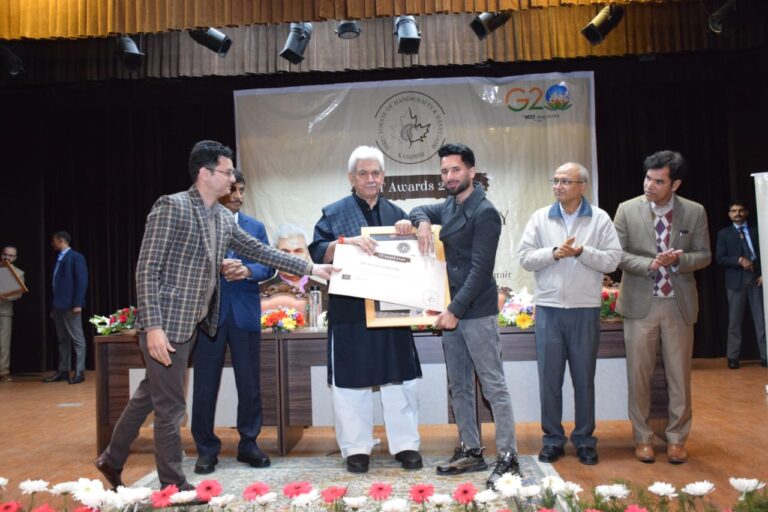
SRINAGAR, MARCH 18: Lieutenant Governor Shri Manoj Sinha presented the UT Level Award to the Artisans at Raj Bhavan auditorium today.

The Lt Governor congratulated all the award winners for their commendable service to preserve and promote priceless cultural and artistic heritage.

The Lt Governor said administration has taken several important steps to boost handicraft and handloom sector.

We are committed to provide training, design, technology, financial and other infrastructure support that will significantly contribute to the growth of this sector and earnings of artisans, he added.

The Lt Governor said an unprecedented growth has been recorded in the last three months and this sector has registered Rs 729 crore worth export despite the instability in the global market and it shows the collective efforts of artisans and handicraft department.

 More than 3 lakh artisans are registered with the department. Number of steps like enhanced financial assistance, 7% interest subvention, training, assistance to 3000 Self Help Groups and cooperative societies have been taken to accelerate the development of this sector, he added.

 The Lt Governor also spoke on the various other efforts of the UT administration such as GI tagging, labeling, brand building, incentives to increase exports and ensure access to the global market.

“The Department has launched e-commerce platforms to empower the artisans,” the Lt Governor said. 

Under the guidance of Hon’ble Prime Minister, J&K has set a new record in Village Industrial Unit. In the last financial year, 1.73 lakh new jobs were generated under PMEGP alone, he added.

On the occasion, the Lt Governor directed the Department of Handlooms and Handicrafts to develop a mechanism for further increasing the export in the sector and changing the lives of artisans and craftsmen.

Dr Arun Kumar Mehta, Chief Secretary; Sh Prashant Goyal, Principal Secretary Industries & Commerce; Sh Vijay Kumar Biduri, Divisional Commissioner Kashmir, other senior officers of Handicraft & Handloom Department, besides large gathering of awardees and artisans were present.

Categories
BUSINESS

J&K Bank inks agreement with LIC of India

SRINAGAR, MARCH 14: With a view to provide its customers a wider range of life-insurance products and services, Jammu and Kashmir Bank today entered into an agreement with the country’s insurance giant Life Insurance Corporation (LIC) of India.

General Manager (Cross Selling Vertical) Narjay Gupta signed the agreement on behalf of J&K Bank, while as, Regional Manager (MBAC) P K Saxena put in his signatures representing LIC India in presence of Bank’s Executive Director Sudhir Gupta, General Manager Syed Rais Maqbool, LIC of India’s Senior Divisional Manager Dinesh Tanania besides senior officials of J&K Bank and LIC of India at Bank’s corporate headquarters. The agreement will be effective from April 1, 2023.

Terming the agreement a milestone set to benefit Bank’s growing clientele, Executive Director Sudhir Gupta said on the occasion, “With customer welfare at the heart of Bank’s policies, the tie-up with LIC of India – a premier insurance company in the country – will provide our customers an access to wider range of products that LIC offers while adding to Bank’s non-interest income. This association will surely be beneficial to both the organisations.”

Pleased with the tie-up P K Saxena hoped that association between two leaders in their own operational domains will script a new chapter of success in serving the people. He said, “We are excited with the journey we have embarked upon with leading financial institution in UTs of J&K and Ladakh. By offering the industry-best insurance related products and services to customers, I am sure our company will gain greatly from J&K Bank’s extensive network of touch points selling our products.”

Sounding optimism General Manager Narjay Gupta said, “LIC’s products and J&K Bank’s second-to-none services will bring laurels to both the institutions going forward as the agreement will provide greater choice of insurance solutions to the customers.”

On the occasion General Manager Syed Rais Maqbool asserted that both the organisations will live up to the expectations of their stakeholders so as to build further on their reputation. “Our country has a vision to insure every individual in the times to come. I think this collaboration will play its part greatly in achieving the national goal across our operational geographies”, he added.

Categories
BUSINESS

J&K Bank ties-up with Seth Industrial Corporation

SRINAGAR, MARCH 13: With a view to facilitate its customers, J&K Bank today entered into an agreement with Ludhiana-based Seth Industrial Corporation (SIC) – one of the leading manufacturers in wide assortment of electric vehicles like e-Bikes, e-Scooters, e-Rickshaws in the country under the Brand name ‘Neelam’.

Deputy General Manager Imtiyaz Ahmad Bhat signed the MoU on behalf of the Bank while as Rajesh Seth put in his signatures as Joint Director/Partner of SIC in presence of Business Head (SIC) Ranbir Singh Saini during a function organised at the corporate headquarters of J&K Bank.

Speaking on the occasion, DGM Imtiyaz Ahmad Bhat said, “Through this tie-up we are happy to offer easy, affordable and attractive financing solutions to our customers while encouraging electric vehicular transport in the country. As part of our green policy initiatives, we are already partnering with many such electric vehicle manufacturers throughout our operational geographies.”

While commenting on the importance of affordable financing, Rajesh Seth said that the demand for electric vehicles was only growing but easy and hassle-free finance was the main supply-side constraint. “However, after signing the MoU with J&K Bank, which is the premiere financial institution in UTs of J&K and Ladakh with strategic presence across the country; I feel the partnership will enable us to scale our operations and provide eco-friendly ride besides sustainable livelihood to our common clientele.”

Notably, the bank’s customers can avail a range of concessions from SIC that primarily includes over the counter discount of Rs 3000 along with three free services without charge. Also, the clients availing finance from J&K Bank can avail the company’s extended warranty period of 3 years on Lithium Batteries instead of 2 years for general customers besides 21 months warranty time on other batteries instead of 18.

Categories
BUSINESS

Nadru spices up Kashmir Kitchens, livelihood

SRINAGAR: On a cold morning, a group of men on their small boats are looking for something on mid waters in world famed Dal Lake here. Are they up so early to catch rainbows? Surely not! They have no nets or angling rods. Are they there to collect fodder? No! So, guess it right – Dal does not grow green leaves on surface in winters. Well, actually the two Pheran clad men are up too early to pluck the most sought after aquatic vegetable’ –the organic Lotus Stem or Nadru as called in local parlance.

Growing naturally in major lakes in Kashmir, Nadru  continues to tease taste buds and powers livelihood in the valley.

Equipped with a long stick, two Dal inhabitants 48-year-old Bahir Ahmad Akhoon and a 46-year-old Mushtaq Ahmad Akhoon are continuously dowsing the waters to locate lotus stem. As soon as they feel the obstacle with long stick, they immediately pull it out with the help of a Shum, a metal fork tied at the end of the rod. And on the surface pops up the long, cylindrical creamy white lotus stems, one of the prized vegetables of Kashmir.

Though the organically cultivated Nadru grows naturally in all the major water bodies of valley, Dal Nadur or a lotus stem from Dal lake is regarded as the best quality for its exquisite taste and whitish color.

Nadrus grow mainly between the autumn and summers. By end of March, Nadru farmers pluck out edible lotus stems worth crores.

Used widely by the valleities, Nadru has a lion’s share in Kashmir’s cuisine. Be it Eid and Navroz for Muslims or Shivratri for Kashmiri Pandit families, the waterborne vegetable is essential part of local culture.

Near and dear ones are invited and served cuisine made from Nadru. It is hardly possible that a Nadru dish is not served to invitees during the feasts organized in Kashmir families during winters.

“My son who studies abroad is returning home after a gap of one year. I am going to prepare Nadru dish for him, as he likes them the most. I am exploring what else to get with them,” says Hafeeza Akhtar from Srinagar’s Lal Bazar, while carrying a bunch of large sized Nadru in a bag.

Lotus stem is often prepared with fish that makes them ‘Nader Gaade’, a dish loved by one and all. ‘Nader Haakh’, lotus stem and Collard Green and ‘Nader Muje’, Lotus stem and radish are among the traditional dishes made from locally produced Nadru. Besides there are variety of foods ranging from street chaats to snacks and dishes whose essential ingredient is famed Nadru. In some neighbourhoods of Dal and Anchaar lake, where the lotus grows in abundance, people can be often seen drying the stuff on attics to keep it for summer use.

Such is the craze for this edible stem of symbolic lotus plant that it serves as a token of love or prized gift in Kashmir culture. A bunch of Nadru stems is a prized gift or treat exchanged between the acquaintances, friends or relatives especially during winters and festivities.

While adding colour to valley cuisine these lotus stems are a source of livelihood too. From cultivation to marketing, hundreds of families across Kashmir benefit from it. A cultivator, vegetable sellers or nadru dealer, everyone gets their share from its trade.

“I have been cultivating nadru for past 20 years. Whole men folk, my two sons and  I usually harvest 10,000 to 12,000 bunches of lotus stem every year. This aquatic commodity is our major source of income,” Ghulam Mohammad Akhoon told the Valley Observer while plucking the lotus stems in Dal. “At times, I often hire people to pluck the stuff as the demand upticks during severe cold. During this period, most of people prefer to stay indoors and like to cherish Nadru dishes,”

Before being sold in market, these lotus stems are arranged in bunches, which are graded according to the length and girth of stems in a bunch. An average Nadru bunch weighing about 2 kilograms fetches between Rs 200 to Rs 300. There are some bunches which are priced up to Rs 900 in the market. The price of edible stems shoots up during festivities however.

The cultural legacy of Nadru continues despite the waterborne crop faced a near total wipe-out from Dal and Anchaar waters during the devastating floods in September 2014. In the wake of floods, many Nadru cultivators had rented  marshy lands in the neighboring district of Ganderbal, preserved seed there and then again propagated it in these lakes. Thanks to these resilient Nadru cultivators, lotus in a full bloom is again a popular sight on Dal and adjacent waterbodies in the valley. The prized vegetable has re emerged as a main aquatic crop of the valley and  continues to fuel the livelihoods of hundreds of families associated with the trade.

Meanwhile Akhoon who is dowsing the Dal waters, finds his catch, a long lotus stem -the Nadru!

Categories
BUSINESS

Modern Yinder spins new hopes for Kashmir Pashmina, women spinners

Nasir Yousufi

SRINAGAR: In a small room of a single-storied house, a 45-year-old single mother, Nargis who lives with her two children in Chanpora here seems jubilant as she places the much anticipated table-sized thread spinning machine in the corner of her room.
Unable to believe that the spinning wheel she had thrown away nine years back has returned to her house -in a new avatar with a promise of economic prosperity.
A modern spinning wheel, modern charkha or modern yinder as called in the local parlance is the latest innovation in Valley’s Pashmina industry that has off late rejuvenated the faith of Pashmina wool spinners in the craft.
The world-famed Pashmina shawls have been a hallmark of Kashmir handicrafts. And the role of women in powering this craft through their unmatched spinning skills is an open secret.
Many Kashmiri women particularly from Srinagar households have been spinning Pashmina and Shahtosh for ages. There are hundreds of legends from yore eulogizing the valor of women, who raised their families from income made from spinning yarn on charkha.

They say as lifestyles shift, so does the household expenditures. By at the turnaround of this millennium, most of these Pashmina wool spinners either hanged these charkhas over attic or send them to scrap for sitting on them meant meager returns. Like Nargis, most of such weavers had shifted to other works more profitable than the traditional spinning of Pashmina wool.
But then, the spinning craft is back with a bang.

And it’s essentially thanks to the group of scientists at the Sher-e-Kashmir Institute of Agricultural Sciences and Technology or SKUAST Kashmir, who developed the modern charkha, which has not only rejuvenated the hopes of spinners but the women who are using it claim to earn two to three hundred percent more than what they usually used to earn from traditional yinder.
“With the increased cost of living, to meet the two ends from a meager earning of Rs 30-40 per day from the age old yinder was impractical. So I had to shift from kataen kaem or hand spinning of yarn to some other feasible work almost thirteen years back,” said Arifa Bilal, a 45-year-old Pashmina wool spinner from old City of Srinagar. “But deep in my heart, I always missed that old yinder as the wheel had helped my mother… Fortunately, I came to know about its new avatar, got few days of training in handling this wheel and thanks to Almighty, I am able to earn about Rs 250 to 300 a day now,” added Arifa while sitting beside her charkha.
Introduced by SKUAST-K in 2022, the Modern Yinder is a pedal driven charkha fitted on the table. The pedal driven charkha is much easier to operate than the older wooden ‘yinder’ and has almost doubled the output for these women spinners.

Dr Sarfaraz Ahmad, who was a part of SKUAST-K team that innovated the novel yinder said that the modern charkha has health benefits as well. “Earlier the women used to sit behind the traditional yinder but the modern charkha provides her comfort of sitting on a chair while spinning the wheel”, he told the Valley Observer.
Seconding Dr Ahmad, Sameena Akhtar, a newlywed woman from Srinagar said that given the design of modern yinder, she is able to operate it on ease despite “backache and disc issues.”
The redesigned charkha has been a game changer. It is attracting hundreds of women towards the trade. Many women who had left the spinning have resumed and earn more. A training centre run by a Pashmina dealer in Srinagar has trained hundreds of women so far in operating pedal driven new charkha.
“This pedal driven charkha has helped in increasing the output of hand spun Pashmina Yarn. Together at this centre, we have trained almost 200 women including young girls in operating the novel yinder,” said Ishfaq Qadri who runs the centre at his Me & K Pashmina House in downtown Srinagar. Qadri who is known for selling famed Pashmina Shawls to different parts of the world has so far distributed more than 40 modern charkha’s free of cost among the spinning community.
“Such technological interventions are definitely helpful in increasing both the produce as well as the income of weavers, which forms an essential ingredient in the revival of Pashmina industry in the valley,” he added.
Experts believe that the development is the beginning of an era of revival of once a hallmark of Kashmir- the hand -woven Pashmina shawl business.
Boosting the morale of hand woven Pashmina wool spinners in the valley, Government has also fixed the minimum selling price for one knot at Rs 2.5, which has given a further push to once the mainstay craft of women folk mainly from downtown Srinagar.
According to Mahmood Ahmad Shah, Director Handicrafts & Handlooms Department Kashmir, the craftswomen spinning hand woven Pashmina yarn play a pivotal role in the Pashmina craft and his department is trying its best to ensure the benefits of famed craft trickles down to every stakeholder.
As for the single mother Nargis, she spins the modern charkha to earn her livelihood like never before!

Categories
BUSINESS

Man with magical fingers! From masjid to hotels, his art soothes people

Srinagar: While holding it with his left hand, a pheran clad man gradually spins  the flower vase as he rolls his brush on the artifact repeatedly. After hours of the intricate painting, the plant bearing tufts of rose drawn on the vase looks  real.

Aga Syed Sajad Hussaini Hamdani, a man bestowed with magical fingers is an accomplished Paper Machie artist from Zadibal area of Srinagar. A son of respectable and learned personality Aga syed Ali Hussaini Hamdani from Khanqah-e-Sokhta Nawakadal in Srinagar, Sajad has been tinkering with colors and brush since his childhood. Even though Sajad’s parents wanted him to become an engineer, his unflinching love with colors and designs landed him into the world of Paper Machie.

“Whenever my parents entered into my room, where I was supposed to study school books they always found me doing drawings. Once sarcastically, my father grabbing my hand took me to a nearby Paper Machie workshop in the area. To the surprise of every one at home, I never opened the school bag onwards while embracing the craft as a lifetime career”, says Sajad while recalling the incident which changed the course in his life.

After the incident , there was a no time to look back. While his peers and class mates were making it to the colleges and universities, the natural artist in Sajad was being groomed at the hands of  Kashmir, best artist Haji Mirza Muhammad Saleh from the valley. I was lucky enough to spend 14

years of my life and apprenticeship with such a great teacher . Through his knowledge , He taught us to be the change and that change can be conceived through the brush.

Infusing life into the artificats for more than 30 years now, this artist from Down Town has produced thousands of rare designs in the craft winning respect and accolades through out the globe. Having fetched to the demands of Valley’s renowned craft businesses like Suffering Moses, Kawoosa Art and Bony Arts, the rare designs made by Sajad are valued world over and within the domestic circles too. From Mehraab of Masjid-e-Salman Farsi, Budgam Imambara , hotels in Srinagar to Mumbai hotels, the paper machie panels designed and painted by this artist soothe thousands of onlookers and visitors.

Sajad has won laurels for his unmatched work across the globe. I still use to get orders from the customers from different parts of the world. According to Sajad, the demand for his work has increased within the country also. Off late, lot of people from different states of India have shown keen interest in the possession of paper machie artifacts. There is a good scope for growth, if a person treads on it professionally, says the artist while deliberating upon the career opportunities for the youth in this field. Initially I used to deliver my orders to few showrooms and businessmen operating in some European countries only. But now, there is a good demand for the art within in the domestic circles. Only a days ago, I received a call of appreciation from one of my customer in Mumbai. The trade needs patience and dedication. Apart from the time, youth who want to be in this craft should bear in mind the principle of honesty and preservance, As both pays in the long run. I ask the youth to come forward and embrace  the ancestral craft, as it is full of opportunities and avenues keeping the changing lifestyle and taste of the people in mind.

In these days to reach out to the world is a not any big task. With the help of a social media , any artist can put his work on display for the world audience and earn livelihood as well as much needed encouragement.

Recently , Sajad’s magical fingers handed him a job in one of the reputed universities of the valley. In th year 2018, He was appointed as senior skill instructor by Design Innovation Centre  of Central University Kashmir. Posted presently at Islamia College Srinagar, Sajad grooms hundreds of new hands in to the world of Paper Machie.

Though the handicrafts industry in the valley has taken a severe hit from past 30 years, recent enlisting of Srinagar among the creative city network by UNESCO for its unique crafts and art world coupled with  a rejuvenated push of the authorities to promote and curate the heritage art of Kashmir has instilled a ray of hope among the artistic fraternity in the valley. According to Sajad, the government as wel as people should put concerted effort to encourage and promote the art in the valley. Sajad believes that like other parts of the world, the community should celebrate and observe the artisans day in Kashmir.

Categories
BUSINESS

Kashmir willow basketry gets fresh lease of life

SRINAGAR: Creating novel designs and adapting to changing trends, Valley’s willow wicker artisans rise to the occasion to keep the age old willow wicker basketry relevant in Kashmir.

After sharpening their tips, a man carefully chooses reeds from a bunch of wickers in front of him. One-by-one, he soon weaves them onto a wooden frame. Seemingly after hours of intense thought process and sheer display of intricate skill, Ghulam Ahmad, a 52-year-old wicker worker carves these wicker reeds into a beautiful basket at his residential workspace in Ganderbal’s Kachan village. The area is known for its age old craft- Kaeni Kaem or willow work in local parlance.

Kaeni Kaem

Locally also called as Shaakhsazi, the willow-wicker work is a handicraft involving primarily weaving of baskets from willow reeds. Remote villages like Umerher, Kachan, Shallbugh in Central Kashmir’s Ganderbal are the traditional hub of willow wicker-work in Kashmir.

From somewhat pliable slender twigs to decorous creations, the willow wicker undertakes an interesting journey.

“After cultivating willow twigs, they are harvested and arranged into bunches according to their length and width. Then each bunch is boiled in a large boiler. One by one each twig is then peeled and arranged in a bunch arranged in lawns and open spaces for sun drying,” says Mushtaq Ahmad, a willow grower from Ganderbal while narrating the process involved in willow-wicker harvest.

The wicker reeds used as a primary raw material in the age old cottage industry are cultivated in abundance near wetlands in Ganderbal.

Most of the harvest units, the majority of which are located in Umerher village are labour intensive, carrying out wicker processing manually. From here, the naturally brown coloured wickers find their way into large number of households in Shallabugh and Kachan villages, where willow-wicker craftsmen weave them into a range of products primarily the baskets, vases and kitchenware.

But till a few years ago, in the absence of any takers, the traditional basket makers were left in lurch.

The Depression

Baskets, flower vases, chairs, trays and Kangri are the significant willow-work products made in the valley. People in valley have been traditionally using these items since ages. However, the availability of comparatively economical fancy and polished Chinese products replaced the traditional wicker products over the years.

“As the markets were flooded with the trendy products mostly machine made from China, the taste of people too changed. Most of the people discarded the use of the traditional basketry items,” says Zahoor Ahmad Wani, a basketry shop owner from Srinagar. “There was a time when, Kangri, a traditional firepot used during winters in the valley was the only item in demand.”

But thanks to sharp wit of a group of artisans from Central Kashmir’s Shallabugh and Kachan villages who have not only sustained the art but are successfully passing it over to newer generations.

A fresh beginning

Leave the willow décor aside, few years ago apart from making Kangris and few baskets, there was almost no work for the Kashmir’s willow-work craftsmen.  This was the time when Kadam, an NGO came to the rescue of Kashmir’s traditional basketry craft. Kadam not only mentored the craft, it helped the artisans to craft market driven designs from wicker through in person trainings.

“What we could make was only the traditional designs and products. However, after getting training from Kadam, our way of work has changed. Our designs have changed completely. Our products are now market driven,” Ghulam Ahmad told the Valley Observer.

“The trainings have been much beneficial in grooming our skill. Our products now match the international standard and off late there are many orders from international buyers too. At a time our younger generation was reluctant to learn the craft but for the last few years,  lot of youngsters have shown their interest in this traditional craft and  have infact taught it,” added Ghulam Ahmad while giving a final shape to willow drawer for Sofa.

The artisans from the village are now producing a wide range of products which include basketry, kitchenware, home décor, plantery, lamp shades, trays, wall plates, cradles, home utility and even sofas.

The technical intervention from Kolkata-based NGO facilitated by government has helped in bringing the artisans together to revive the age old rural craft in the valley.

According to Imtiyaz Ahmad, Cluster coordinator from Kadam, the government is really working in close coordination with the organizations to uplift the craft and to have an impact. “Our approach is twofold- one, to upgrade the skill of local artisan community related with the trade and two, to facilitate the market access.” 

“We are continuously upgrading and reaching out to  artisans through several training modules . So far a large number of artisans particularly the willow-wicker craftsmen from Ganderbal have participated and benefitted from this programme,” he said. With new push for the craft and the production of cheeky designs, the Kashmir willow-wicker products have an easy access to global market platforms like Myantra now.

Categories
BUSINESS

Vestaun: Sowing SEEDS of prosperity

Srinagar: In 2013, when Sana Masood, a young girl from Srinagar returned to her homeland, she brought along insightful experience from her career as consultant with multinational companies like FabIndia and Organic India, outside Jammu and Kashmir. Back home, the young girl proceeded with her agricultural startup –Sustainable Eco enterprise Development Solutions or SEED.

Nine years on SEEDS, a group of social entrepreneurs works with hundreds of beneficiaries to literally give wings to aspiring women engaged in small scale agricultural activities in rural Kashmir.

Having established three centres each in South Kashmir’s Bandzoo Pulwama, Central Kashmir’s Dara Srinagar and Uri area in North Kashmir, Masood’s organization is multidimensional in helping the small scale women farmers in these areas to earn for their primary activities in the fields.
From  imparting training to women farmers for various agricultural activities, providing quality seeds, professing organic farming, conducting exposure tours of these farmers to buying back the produce on market rates from these women, the organization is “at the forefront to help the small time or backend farming community.”

“Initially we used to impart training to few women only, but within few years, the centre has added more than 115 beneficiaries from nearby villages of Bandzoo, Khanbasti, Lassipora, Zasoo to name a few,” says Sana while referring to common facilitation and demonstration centre established by her organization at Tumlihal, Pulwama.

Experts frequently visit the centre to train the beneficiaries.

A women beneficiary Shaheena(name changed) from Tumlihal says “that last time Dr Nayeema Jabeen had visited the facilitation centre and I learnt a lot of things about the cultivation and processing of red chilies.” She says after getting affiliated to the centre, she has been able to earn handsome money from her backyard vegetable farming.

Seconding Shaheena, a number of beneficiaries from the surrounding villages say that they are benefitting in many ways from the centre.

Laced with an ideology of sustainable agriculture, the primary sector organization strongly advocates organic farming.

“Apart from training the women in various agricultural techniques, our stress is on sustainable agriculture. And that is possible through organic farming. So our main focus is to train these farmers in producing manure and growing the food without using any chemicals or fertilizers,” adds Sana.

At Uri centre, there are more than 75 beneficiaries and at Dara in Srinagar, a state-of-the-art centre equipped with multiple facilities is being built, she says.

Having leased some area of land, SEED has a specialization in growing ethnic and heritage lot. Fresh vegetables to pulses and medicinal plants to herbs, the organization has successfully tried hands at a variety.

Sana says they are able to grow a large number of ethnic varieties of vegetables and herbs in collaboration with local farmers in different parts of the valley.

“We prefer to own the cultivation of local popular crops as per the area. That does not only promote the local produce but also helps in cooping to the demand for various local agricultural products,” she further adds. 

Buoyed with the response of local women farmers, SEED has recently launched Vestaun, a brand name for their products. Vestaun in local parlance means feminine friendship.  “Picked, processed and packaged carefully, these products showcase Kashmir heritage.”

“Be it a Taraxacum Officinales  popularly called as Haend, dried vegetables ,rare mushrooms like guchi, ethnic pulses, red chillies, garlic or mint,” Vestaun packs them all.

Providing an opportunity to small scale women farmers, Vestaun offers ample platform to process and market their produce.

“Lot of our produce particularly in far-flung areas does not reach the market in time. So we need to increase the shelf life of these products. And, it can be effectively done through proper processing and packaging.”

It  is not only the vegetables, Vestaun, which eyes national and international markets, has brought a number of dry fruits, pickles and jams to the market. Lavender oil, walnut kernel, rose oil are the latest additions.

As the organization gradually expands, more and more people are willing to work with the SEED to reap the actual benefits from farming. And the women among them are at the forefront.

Sana says her organization is more focused on women because being women herself, she wants to “inculcate the feeling of dignity in women.” “Since a number of women are directly or indirectly engaged in agricultural activities, but their contribution seldom counts. It’s our mission that every valuable contribution of women folk particularly in the field of agriculture counts and they get their due profit share for their efforts,” says Sana explaining to flock of rural woman, the essence of her latest brand Vestaun.

Exit mobile version