Categories
BUSINESS

35 Kashmir craftsmen to participate in India Int’l Trade Fair in New Delhi

Direct-to-Consumer Sales Platform for World-Famous Pashmina, Kani Shawls, Silk Carpets & more

SRINAGAR, NOVEMBER 13: In order to provide direct marketing linkage, as many as 35 artisans and weavers from Kashmir are participating in the 44th edition of the prestigious India International Trade Fair (IITF) 2025, scheduled from November 14 to 27 at Bharat Mandapam, New Delhi.

Organised by the India Trade Promotion Organisation (ITPO), IITF is country’s biggest and most celebrated trade-cum-consumer fair, attracting lakhs of visitors annually.

In a press statement issued here today, a spokesman of the Handicrafts and Handlooms Department, Kashmir, stated that on the requisition of Jammu & Kashmir Trade Promotion Organization, a list of 35 artisans and weavers from Kashmir Division, after draw of lots, was forwarded for participation in the Trade Fair which includes 05 each from Srinagar and Budgam, 03 each from Baramulla, Ganderbal, Anantnag & Bandipora, 02 each from Kupwara, Shopian, Pulwama & Kulgam, and 05 from within the registered Cooperative Societies.

The spokesman further stated that IITF at New Delhi will provide globally-acclaimed Kashmir artisans a direct marketing opportunity for displaying and selling their wide range of exquisite handmade products to domestic and international buyers which include Pashmina and Kani Shawls, Sozni & Crewel embroidery, Hand-knotted Silk Carpets, Walnut Wood Carving and Papier Mache items.

“This is a golden opportunity for our artisans to connect directly with the buyers. IITF 2025 will not only elevate Kashmir’s GI-tagged handicrafts on a global platform but also empower our craftsmen economically by ensuring they retain the full value of their labour,” the spokesman added.

Categories
JAMMU

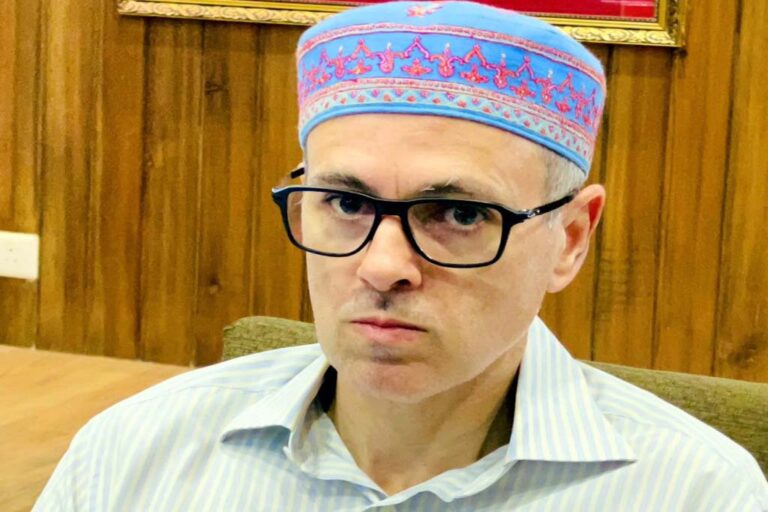
CM Omar Abdullah addresses 19th Convocation of University of Jammu

CM highlights transformative reforms in higher education, stresses role of universities in empowering youth under Mission Yuva

JAMMU, NOVEMBER 13: Chief Minister Omar Abdullah today said that his government has undertaken a series of transformative reforms to enhance access, quality and relevance in higher education across Jammu and Kashmir—reforms that directly benefit institutions such as the University of Jammu and, most importantly, its students.

He was speaking at the 19th (Second Special) Convocation of the University of Jammu, held at the General Zorawar Singh Auditorium. The Chief Minister, who also serves as the Pro-Chancellor of the University, attended the event as the Guest of Honour.

The convocation was graced by Lieutenant Governor Manoj Sinha, the Chancellor of the University as chief guest and attended by Advisor to the Chief Minister Nasir Aslam Wani, Members of Parliament Ghulam Ali Khatana and Sat Paul Sharma, Chief Secretary Atal Dulloo, Vice Chancellor Prof. Umesh Rai, Member University Council Prof. A.K. Kaul, senior faculty members, distinguished achievers, degree recipients, students and proud parents.

In his address, the Chief Minister congratulated the graduating students, medal winners and Ph.D. awardees, describing the convocation as a “moment of pride, celebration and reflection” for the institution and everyone associated with it.

“To the parents, guardians and families—your support, sacrifices and faith have been essential in reaching this proud moment. This achievement belongs to you as much as to your children,” the Chief Minister said, acknowledging the pivotal role of families and educators in shaping future generations.

He said that the University of Jammu has grown from strength to strength and today stands as a beacon of learning with 11 off-site campuses, 40 academic departments and over 160 affiliated colleges, serving the educational aspirations of students across Jammu and Kashmir.

Highlighting the University’s achievements, Omar Abdullah commended its NAAC A++ accreditation with a CGPA of 3.72, considered as highly ranked in the country, and noted its consistent presence among the top 100 universities in the National Institutional Ranking Framework (NIRF), securing the 51st position in the university category this year. He also appreciated the university’s steady rise in the State Public Universities category—from 23rd in 2024 to 21st in 2025—reflecting its growing stature as a centre of academic and research.

“The University’s focus on employability through job fairs and global placement drives, including partnerships with International organisations reflects a forward-looking approach that ensures education here translates into meaningful career opportunities,” he added.

Commending Vice Chancellor Prof. Umesh Rai and his team for their relentless commitment to academic excellence, innovation and holistic student development, the Chief Minister said that the University’s progress embodies the transformative vision of higher education his government seeks to strengthen across Jammu & Kashmir.

In his address, Omar Abdullah also highlighted Mission Yuva, his government’s flagship initiative designed to harness the creativity, potential and energy of the youth of Jammu & Kashmir.

“Mission Yuva aims to provide young people with a structured platform for capacity building, career guidance, entrepreneurship and civic engagement. By integrating education with skill development, innovation, and mental well-being, it seeks to prepare our youth not only for employment but for leadership and nation-building,” he said.

The Chief Minister emphasized that the synergy between Mission Yuva and the higher education ecosystem is already visible through mentorship programmes, startup incubation, cultural and literary engagement and outreach initiatives involving universities like the University of Jammu.

“Together, these efforts ensure that our young citizens are not only educated but empowered to contribute meaningfully to a progressive, inclusive and self-reliant Jammu & Kashmir,” he asserted.

Calling education the “heart of transformation,” the Chief Minister said Jammu and Kashmir stands at the threshold of a new era of opportunity, where universities play a pivotal role in shaping innovators, entrepreneurs, and responsible citizens.

“As we march ahead, let us ensure that the light of knowledge reaches every corner—from the campuses of Kathua and Bhaderwah to the remotest hamlets of Poonch and Kishtwar—for education remains our most powerful tool for equity and empowerment,” he urged.

Encouraging the degree and medal recipients to carry forward the values instilled by their alma mater, Omar Abdullah said:

“The University has invested in you. Now it is time for you to invest in the world around you. Remember, success is not measured by what you achieve for yourself but by what you contribute to society.”

The Chief Minister also reminded the young graduates that while the convocation marks the culmination of years of rigorous study and personal growth, it also signals the beginning of a new journey filled with purpose, challenges, and opportunities.

“The education you have received here has given you more than degrees and knowledge—it has equipped you with critical thinking, problem-solving, ethical judgment and lifelong learning. Wherever your journey takes you, be worthy ambassadors of the University of Jammu,” he said.

Chief Minister Omar Abdullah, in his concluding remarks, urged the youth to dream big, think boldly, and serve selflessly.

“The nation looks to your generation to build a future marked by progress, harmony and inclusivity. My wish for each of you is that you find work that gives you purpose and allows you to lead a life that balances ambition with compassion. My challenge to you is to be an agent of positive change in your families, your professions, and your communities,” he said.

The Chief Minister expressed confidence that the University of Jammu will continue to shine as a centre of excellence, innovation, and character building, and that its students will carry forward the legacy of knowledge and service to society.

Categories
SPORTS

Satish Sharma launches J&K Pickleball team Jersey ahead of IPA Pickleball Nationals 2025

SRINAGAR, NOVEMBER 11: In a significant boost to rapidly growing sport of Pickleball in Jammu & Kashmir, the official jersey of the Jammu & Kashmir Pickleball Team was today launched by Minister for Youth Services & Sports, Transport, Food, Civil Supplies & Consumer Affairs, Science & Technology, Information Technology, and ARI & Trainings, Satish Sharma ahead of IPA Pickleball Nationals 2025 to be held in Bengaluru.
Speaking on the occasion, Minister Sharma extended his best wishes to the players representing the Union Territory at the upcoming national event and expressed pride in the growing participation of J&K’s youth in emerging sports disciplines. He commended the Jammu & Kashmir Pickleball Association for its consistent and committed efforts in promoting Pickleball across districts and building a strong sporting culture in the region.
“The rise of Pickleball in Jammu & Kashmir reflects our youth’s enthusiasm to embrace new avenues of sports and fitness. The government remains committed to supporting such initiatives that promote healthy lifestyles, talent recognition, and sporting excellence,” Minister Sharma maintained.
The launch event marks yet another step towards enhancing the sports infrastructure and opportunities for youth in Jammu & Kashmir, aligning with the government’s broader vision of developing the Union Territory as a hub of sporting talent and excellence.
Pertinently, Jammu & Kashmir Pickleball Association has played a pivotal role in expanding the sport’s footprint by establishing dedicated Pickleball venues, hosting tournaments, and encouraging players from diverse age groups and backgrounds to take up the sport.

Categories
EDUCATION

CM Omar Abdullah inaugurates 20th Foundation Day of IUST, Awantipora

Says strengthening higher education, research & skilling as key to building a knowledge-driven J&K

AWANTIPORA, NOVEMBER 10: Chief Minister Omar Abdullah today inaugurated the 20th Foundation Day celebrations of the Islamic University of Science & Technology (IUST), Awantipora, reiterating his Government’s commitment to strengthen the higher education, skilling, and research ecosystem across Jammu and Kashmir to enable youth to lead the region towards a progressive and knowledge-driven future.

Speaking on the occasion, the Chief Minister extended warm felicitations to the University for achieving the milestone, praising IUST’s remarkable progress over two decades. “Great things often come from humble beginnings. The growth I see here today—in infrastructure, academic environment and the quality of students—reflects that IUST has evolved into a beacon of learning and innovation,” he said.

Reflecting on the transformation in the education landscape, Omar Abdullah highlighted the significance of the new education policy and its flexibility for students. “The ability to design your own degree and blend practical knowledge with classroom learning is a gift your generation enjoys. In our time, education meant repeating what was in the books, without knowing if it would ever be useful. Today’s system encourages creative and critical thinking,” he observed.

The Chief Minister, who earlier inaugurated the University’s Tech Expo, lauded the students’ ingenuity and problem-solving spirit. “The innovative projects I saw today give me confidence that our future will be brighter than our present. From robotic fruit-picking systems to automatic snow shovels designed for narrow lanes—these ideas address real challenges and demonstrate the evolving mindset of our youth,” he remarked.

Underscoring the importance of research and patents emerging from the University, the Chief Minister noted, “In the field of education, 20 years is infancy. Yet, for a young institution like IUST to have produced over 70 patents speaks volumes about its academic vibrancy and innovative spirit.”

He assured full government support to the University’s ongoing expansion and infrastructure development. “It is our responsibility to ensure that IUST gets all necessary facilities and resources to continue its growth trajectory. Whatever we can do to support this institution, we will,” he pledged.

Referring to the emerging educational hub around Awantipora, Omar Abdullah said, “With AIIMS Awantipora nearing completion, this area will soon become a key centre of learning and healthcare. We must, therefore, continue to nurture IUST’s growth plans.”

The Chief Minister also endorsed the University’s proposals for developing sports infrastructure and affiliation of colleges from South Kashmir. He assured to expedite the land transfer for sports while advocating for sharing the facilities with the local community. “If such facilities are built with public resources, they should benefit the larger community as well,” he said.

On the affiliation of colleges, he remarked, “It’s time to recognize that Kashmir is no longer a single-university region. IUST has matured enough to affiliate colleges in South Kashmir. Sometimes, resistance to change is just human nature—but progress requires us to adapt.”

Reaffirming his personal commitment to the University, Omar Abdullah said, “I assure you of my Government’s continued support and engagement. Every time you invite me, I will be here. Twenty years is a milestone, but I am confident the next twenty will be even more successful for IUST.”

On the occasion, the Chief Minister also inaugurated the Community Radio Station and the Veshav Girls Hostel, released the University’s Annual Report, and witnessed the exchange of six Memoranda of Understanding (MoUs) with reputed institutions and industries. He also felicitated students who brought laurels to Jammu & Kashmir in national-level sports events.

Minister for Agriculture Javid Dar, Advisor to the Chief Minister Nasir Aslam Wani, MLAs Ghulam Mohiddin Mir, Justice (Retd) Hasnain Masoodi, Rafiq Ahmed Naik, and Waheed Para, Vice Chancellor IUST Prof. Shakeel Romshoo, faculty members, and students were present on the occasion.

Categories
SPORTS

Police inaugurates Cricket Tournament for Specially-abled persons in Shopian

Shopian, November 10: Under the aegis of the Civic Action Programme, Police in Shopian inaugurated a Cricket Tournament for Specially-Abled Persons at Sports Stadium Batapora, Shopian. The tournament features teams from various districts and aims to promote inclusivity, sportsmanship and recognition of the exceptional talent of differently-abled sportspersons.
The tournament was inaugurated by SSP Shopian Shri Mushtaq Ahmad Choudhary-JKPS, who graced the occasion as the Chief Guest. In his inaugural address, SSP Shopian encouraged all participants to play with enthusiasm, spirit and fairness. He emphasized the importance of sports in shaping character, fostering discipline, and promoting a healthy lifestyle. SSP Shopian, also highlighted the pivotal role of sports in building a drug-free, crime-free and progressive society, reiterating that youth engagement is vital for peace and prosperity in the district.
The inaugural match was played between Shopian Strikers and Anantnag Legends, showcasing their talent and competitive spirit.
This initiative highlights J&K Police’s dedication to community welfare, with a strong focus on supporting underprivileged, orphans and persons with disabilities.

Categories
SPORTS

Athletes’ attitude turns challenges into triumphs: Yasha Mudgal

Declares open 69th National School Games in Taekwondo at Jammu

J&K begins campaign in style as Nasir ul Islam assures medal for hosts


JAMMU, NOVEMBER 09: Commissioner Secretary Youth Services and Sports, Yasha Mudgal declared open the 69th National School Games in Taekwondo Under-19 Boys category at Indoor Sports Complex Bhagwati Nagar here today.

Addressing a large gathering of players on the occasion, the Commissioner Secretary said that the attitude of talented athletes consistently transforms challenges into triumphs, embodying determination and resilience at every turn. She added that Sports and games, apart from promoting physical fitness, play a crucial role in nurturing mental, moral, and emotional well-being, contributing to the holistic developments to of one’s personality.

Yasha Mudgal emphasized that sports play a pivotal role in fostering unity, friendship, and understanding among young people from diverse regions across the country.

“Sports build bridges of unity and friendship. I am delighted to be here with you at the inauguration of the 69th National School Games. It gives me immense pleasure, on behalf of myself, my colleagues, and people of Jammu and Kashmir, to warmly welcome all of you to this prestigious tournament,” she said.

The Commissioner Secretary assured the participants of full support from the government and the organizers, adding that every effort would be made to ensure their comfort, safety, and well-being.

While extending her wishes to participants, the Commissioner Secretary said, “As the saying goes, winning is not as important as taking part. I sincerely admire your enthusiasm and dedication in coming here to compete,”.

Earlier, Director General of Youth Services and Sports, Anuradha Gupta, in her welcome address stated that the department had made all necessary arrangements to host the event in a fitting and well-organized manner, assuring that no stone would be left unturned to ensure the comfort and safety of the visiting athletes.

Pertinently, this grand sporting spectacle brings together 34 teams, representing diverse States, Union Territories, and Organizations from all corners of the country, reflecting unity, teamwork, and the true essence of competitiveness.

The impressive march past by the 34 participating teams drew appreciation from the Commissioner Secretary and applause from a large gathering of spectators present at the venue. Players, coaches, and team officials also took an oath of sportsmanship, pledging to uphold the values of fair play, discipline, and teamwork while preserving the sanctity and spirit of sports.

Meanwhile, Jammu & Kashmir began the championship in fine style, with Nasir ul Islam delivering his rival from Telangana in the quarterfinals to seal berth in the semi-finals, thus ensuring medal.

In other results of the day, NVS defeated Odisha, Bihar outplayed Jharkhand, Telangana triumphed over Chhattisgarh, Tamil Nadu overcame West Bengal, Assam prevailed against CISCE, Haryana beat Himachal Pradesh, Mizoram defeated Vidya Bharati, CBSE outclassed Maharashtra, Delhi edged past Karnataka, Andhra outperformed IPSC, KVS beat Goa, Uttarakhand won against Kerala, and Gujarat triumphed over Rajasthan.

Categories
JAMMU

Lieutenant Governor Attends the 150th year celebration of ‘Vande Mataram’

LG pays tributes to Bankim Chandra Chattopadhyay

Our commitment and dedication to motherland will take our nation to its destiny of a Viksit Bharat: LG

Young generation must remember that they are inheritors of this great civilization and their contribution in progress and prosperity of society will be fitting tribute to Maa Bharti: LG Sinha


JAMMU, NOVEMBER 07: The Lieutenant Governor Shri Manoj Sinha attended the 150th year celebration of ‘Vande Mataram’, organised by Department of Culture.

The Lieutenant Governor paid tributes to Bankim Chandra Chattopadhyay and visited the exhibition on the National Song ‘Vande Mataram’. He said, Rishi Bankim Chandra had strengthened the bond between Maa Bharti and her sons and inspired people to secure the independence.

“Our commitment and dedication to the motherland will take our nation to its destiny of a Viksit Bharat. Young generation must remember that they are inheritors of this great civilization and their contribution in the progress and prosperity of society will be fitting tribute to Maa Bharti,” the Lieutenant Governor said.

The year 2025 marks 150 Years of Vande Mataram. Our national song “Vande Mataram”, by Bankim Chandra Chattopadhyay was written during the auspicious occasion of Akshaya Navami which was on 7th November in 1875. Vande Mataram first appeared in the literary journal Bangadarshan as part of his novel Anandamath. The song, invoking the Motherland as the embodiment of strength, prosperity and divinity, gave poetic expression to India’s awakening spirit of unity and self-respect. It soon became an enduring symbol of devotion to the nation. The celebrations witnessed Mass Singing of the full version of “Vande Mataram” with participation of citizens across all segments of society.

Shri Jugal Kishore Sharma, Member of Parliament; Er. Gulam Ali Khatana, Member of Parliament, Rajya Sabha; Shri Atal Dulloo, Chief Secretary; Shri Chandraker Bharti, Principal Secretary, Home; Shri Bhim Sen Tuti; IGP Jammu; Shri Brij Mohan Sharma, Principal Secretary, Culture; Shri Ramesh Kumar, Divisional Commissioner Jammu; administrative secretaries; senior officials; heads of educational institutions; youth and prominent citizens were present. Officials and people from across Jammu Kashmir also joined the UT-level commemorative event through virtual mode.

Categories
EDUCATION

GCOE Srinagar commemorates 150 years of National Song ‘Vande Mataram’

ACS Higher Education graces event as Chief Guest

‘Emphasis on civic responsibility, patriotism, role of education in Nation building’

SRINAGAR, NOVEMBER 07: Government College of Education (GCOE) here today organized a district level event to commemorate 150 years of the National Song “Vande Mataram”, celebrating its historical, cultural, and patriotic significance.

https://www.youtube.com/watch?v=JsfrsoF6FYg

Additional Chief Secretary, Higher Education, Shantmanu was Chief Guest on the occasion.

Director Colleges, Prof. Sheikh Aijaz Bashir; CEO Srinagar, SDM East, faculty members and large number of students were also present on the occasion.

The programme commenced with the mass singing of “Vande Mataram” led by the Prime Minister, Narendra Modi, live streamed from the national event. This was followed by flag hoisting ceremony led by Additional Chief Secretary and singing of National Anthem thereby giving a dignified and patriotic start to the event.

After the flag hoisting, the Department of Music, Government College for Women, M.A. Road, Srinagar in collaboration with the cultural committee IASE presented a melodious rendition of “Vande Mataram.” Their performance created a deeply emotional and patriotic atmosphere in the auditorium.

Addressing the gathering, ACS Shantmanu emphasized on the importance of civic responsibility, patriotism, and the role of education in Nation building. He appreciated the efforts of institution in organizing such a meaningful event that connects education with cultural heritage.

Speaking on the occasion, HoD History, Dr. Abdul Rashid Sheikh gave an insightful talk on the history and significance of “Vande Mataram.” He traced its origin from Bankim Chandra Chatterjee’s novel Anandamath (published in 1882), its role in the Indian freedom struggle, and its enduring relevance as a symbol of unity and patriotism.

In her welcome address, Principal, Dr. Seema Naz highlighted the role of the institution for fostering unity, integrity, and spirit of patriotism among the teachers.

The Cultural Committee organized a patriotic song performance by Puran Bakshi and Muneer Shah (B. Ed 2nd Semester), showcasing India’s rich musical and cultural traditions. The songs resonated with the spirit of patriotism and collective pride.

The gathering also witnessed the live broadcast of the Honourable Prime Minister’s national address, as part of the nationwide commemoration programme. The Prime Minister’s message focused on national unity, cultural pride, and the values embodied in “Vande Mataram.” The address rekindled a sense of national pride and unity among the audience.

The formal proceedings concluded with a vote of thanks presented by Prof. Syed Shabana, Head of the Department of Hindi. She expressed gratitude to all dignitaries, guests, faculty members, and students for their participation and cooperation in making the event a success. The event was moderated by Prof. Lateef Ahmad Shah and the proceedings were documented by Prof. Shawana Manzoor.

Categories
BUSINESS

Textiles Ministry sanctions 100 more modern looms for carpet weavers

Looms specially designed, offering back-rest and suitable seating arrangement


SRINAGAR, NOVEMBER 06: Close on the heels of distribution of 100 Modified Modern Steel Looms amongst the carpet weavers, the Union Ministry of Textiles has sanctioned ₹51.00 lakh for procurement and distribution of 100 more looms under the ‘Wool Processing Scheme’ of the Central Wool Development Board.

Each loom costing ₹51,000 has been specially designed by the Indian Institute of Carpet Technology (IICT), Srinagar, which provides a suitable back-rest and comfort seating arrangement for the weavers.

Sharing details in a press statement issued here today, Director IICT, Srinagar, Zubair Ahmad, thanked the Ministry of Textiles for sanctioning additional 100 Modified Modern Steel Carpet Looms amongst the active weavers for the current financial year 2025-26. “These looms are modified, keeping in view the health concerns of the weavers, who sit for long hours for weaving of the world-famous hand-knotted Kashmir carpets,” he stated.

Director IICT further stated that the Ministry of Textiles has already released the first tranche of ₹30.60 lakh for procurement of the looms. “Once the UC for first instalment is issued, the remaining two instalments shall also be released for procurement and distribution of looms amongst the intended beneficiaries,” he added.

The Department of Handicrafts and Handloom, Kashmir, has advised the interested carpet weavers to approach the offices of Assistant Director Handicrafts/ Handloom, in Kashmir Division for the completion of the requisite formalities.

Categories
OPINION

SRINAGAR IN GRIDLOCK

Citizens must understand that following rules is essential

AHMAD AYAZ

Srinagar, the summer capital of Jammu and Kashmir, has long been celebrated for its serene Dal Lake, Mughal gardens, and breathtaking Himalayan backdrop. Its streets, historically meandering through ancient architecture and bustling markets, were once relatively calm and orderly. Today, however, they are a stark reminder that even the most beautiful cities are not immune to urban chaos.
What was once a manageable challenge has now escalated into a full-blown urban predicament. Residents spend hours in gridlock, emergency services are allegedly delayed, tourists are greeted with honking horns rather than tranquil waters, and economic activity suffers as productivity declines. At its core, Srinagar’s traffic crisis is not merely a logistical problem.

ANATOMY OF CONGESTION
Traffic jams in Srinagar are no longer occasional inconveniences; they are daily experiences. Intersections such as Lal Chowk, Jahangir Chowk, Hyderpora, Nowgam, Sanat Nagar, Rambagh, Bemina, and Parimpora have become notorious for gridlock. Vehicles halt in the middle of intersections, blocking other lanes.
Over the past decade, Srinagar has witnessed an exponential rise in private vehicles. Estimates suggest that the Valley’s vehicle population has now crossed nine lakh, with the majority concentrated in Srinagar city. Roads designed decades ago for far fewer vehicles are now under relentless pressure. The situation is further aggravated by illegal parking, roadside encroachments, and vendors occupying footpaths and shoulders, leaving little room for smooth movement. Vehicles are parked indiscriminately along roadsides, blocking lanes and leaving footpaths occupied by vendors, creating both inconvenience and safety hazards.

SIGNALS, SYSTEMS, AND FAILURES
One might assume that modern traffic signals and control systems would alleviate congestion. Unfortunately, Srinagar’s experience shows the opposite.
The problem is not merely technical but systemic. Without a functional, integrated traffic management system, Srinagar’s roads remain chaotic. Infrastructure is only as effective as the enforcement and planning that underpin it. Modern solutions, such as real-time traffic monitoring, GPS-based enforcement, and command centers, remain largely absent.

CULTURE OF INDISCIPLINE
Beyond infrastructure, behavioral patterns exacerbate the crisis. Lane discipline is nearly nonexistent. Minibuses, taxis, and private vehicles stop indiscriminately, often blocking intersections while picking up or dropping passengers. Double-parking is routine, and vehicles occupy footpaths meant for pedestrians.

IMPACT ON DAILY LIFE, ECONOMY
The consequences of Srinagar’s traffic gridlock extend beyond mere inconvenience. The economic impact is significant: deliveries are delayed, traders lose precious hours, and productivity across sectors is affected. Commuters, including students and office-goers, spend excessive time in transit, reducing both efficiency and quality of life.
Health consequences are equally alarming. Noise pollution and vehicle emissions increase due to idling engines, posing respiratory and cardiovascular risks. Emergency services — ambulances, fire brigades, and police — are slowed by clogged roads, putting lives at risk.
Tourists, who once flocked to Srinagar for its tranquility, are instead confronted with a cacophony of honking horns, overcrowded streets, and congested roads. The city’s image as a serene, scenic destination is eroded by its traffic reality.

PARKING BOTTLENECK
Illegal and unregulated parking is a silent yet potent contributor to congestion. Markets such as Lal Chowk, Batamaloo, and Karan Nagar are gridlocked because vehicles double-park on roadways and footpaths. Limited multi-level parking, and poor public awareness make roadside chaos the default choice.
Even proposed solutions, such as designated parking zones and complexes, have seen slow implementation. Until enforcement and alternatives are robust, illegal parking will continue to strangle Srinagar’s streets.

TECHNOLOGY: A PATH FORWARD
Modern cities leverage technology to manage traffic efficiently. CCTV monitoring, GPS tracking, e-challans, and centralized command centers help detect violations, monitor congestion, and optimize traffic flow.
Srinagar can adopt similar measures. A real-time traffic command center, integrated with city-wide signals, can track jams, deploy personnel dynamically, and enforce rules automatically. Technology not only reduces human error but also ensures transparency and accountability.

PUBLIC TRANSPORT LINK
A city’s traffic efficiency is inseparable from its public transport system. Srinagar’s transport network is outdated, and insufficient.
Investment in a reliable, modern public transport system is crucial. Electric buses, feeder routes, last-mile connectivity, and strict regulation of private carriers can reduce congestion significantly. Public transport must be safe, punctual, and comfortable to incentivize citizens to leave their private vehicles at home.

CIVIC AWARENESS
Traffic reform is incomplete without public participation. Citizens must understand that following rules — lane discipline, proper parking, using indicators, yielding to emergency vehicles — is essential. Schools, NGOs, and community organizations can play a pivotal role in instilling traffic etiquette in young drivers, creating a culture of compliance over time.

ADMINISTRATIVE, POLICY REFIRMS

  • Immediate administrative actions can make a tangible difference:
  •  Ensure all traffic signals are functional, synchronized, and monitored.
  •  Strictly enforce regulations against intersection blocking and illegal parking.
  •  Develop clearly marked parking zones and public transport bays.
  •  Increase manpower and training in the Traffic Police.
  •  Deploy CCTV and automatic penalty systems for violations.
  •  Encourage carpooling and public transport use through incentives.
  •  Stagger office and school timings to reduce peak-hour congestion.

CONCLUSION
Srinagar has the potential to become a model of smart urban mobility in the Himalayan region. But achieving this requires commitment, coordination, and accountability. The challenge is significant, but so are the solutions. With political will, technological integration, public awareness, and disciplined enforcement, Srinagar can reclaim its streets and restore its image as a city that harmoniously blends natural beauty with modern urban life.

(Author is internationally known -a prominent freelancer, national TV debater, and columnist. Ideas expressed are his own. He can be reached at ahmadayaz08@gmail.com)

The views expressed in the article are of the author and do not, in anyway, reflect the opinion of the Valley Observer

Exit mobile version