Instructs identification of routes & framing of time schedule by today
Srinagar, March 23: In a first, Night Bus Service to start in Srinagar on different routes to facilitate general public.
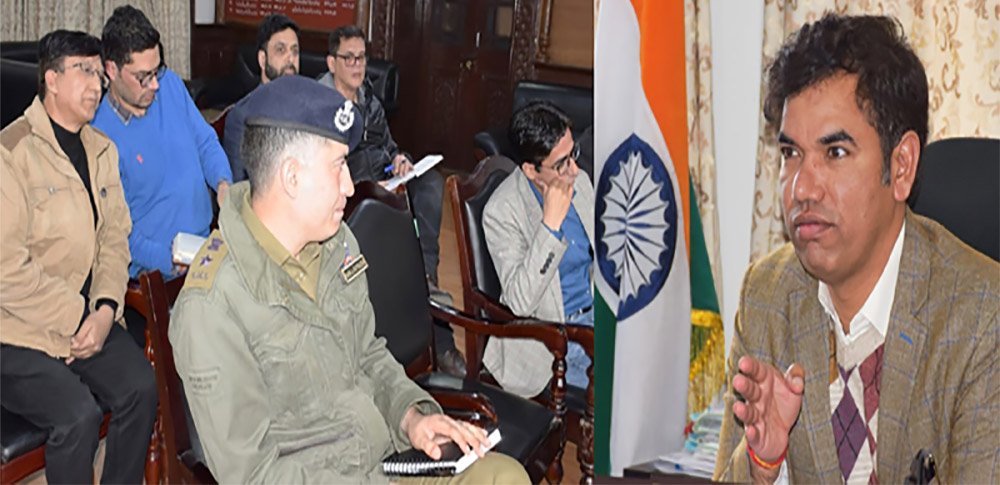
In this regard, the Divisional Commissioner Kashmir Vijay Kumar Bidhuri today convened a meeting of officers to chalk out plan for induction of SRTC Bus for night transport service.
The meeting was attended by Regional Transport Officer, Kashmir; Senior Superintendent of Traffic Police, City; General Manager JKSRTC and other officers.
Addressing the officers, Div Com directed JK SRTC to spare more than fourteen busses which shall run on different routes of Srinagar to facilitate general public after dusk when public transport usually remains unavailable to commuters.
Div Com also directed RTO Kashmir to identify routes to ply SRTC buses besides he instructed him to frame the time schedule simultaneously and submit same by today.
Also, Div Com instructed concerned Smart City officer to pace up the ongoing works and remove debris and material from roads to avoid bottleneck obstacles.
During the meeting, it was informed that the bus service will be available upto 10 PM in night.
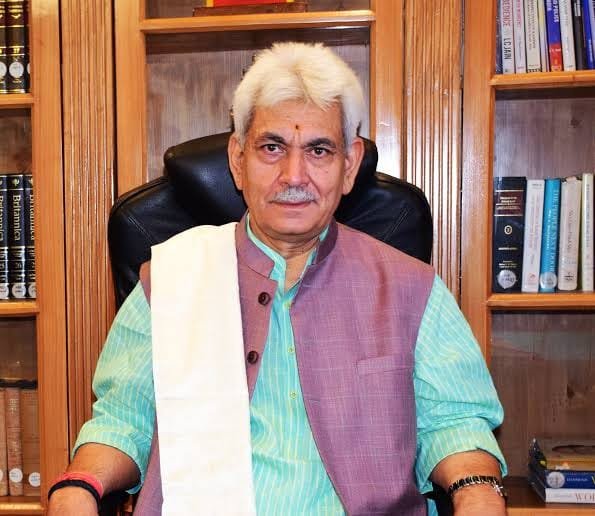
JAMMU, MARCH 21: Lieutenant Governor Shri Manoj Sinha has extended his greetings on the beginning of auspicious days of Navratri.
In a message, the Lt Governor said: On the auspicious occasion of Navratri, I extend warm greetings to all the citizens, especially Kashmiri Pandit brothers & sisters, who are celebrating Navreh.
Navratri symbolises the spiritual joy and the triumph of good over evil. It is an occasion to pray for strength, courage, determination and to promote goodwill, brotherhood, peace, harmony and to remind ourselves of our rich spiritual heritage, said the Lt Governor.
“May Navratri festivities bring peace, happiness, prosperity and a brighter future to all,” the Lt Governor prayed.
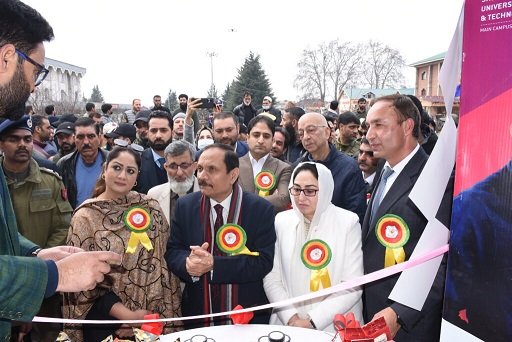
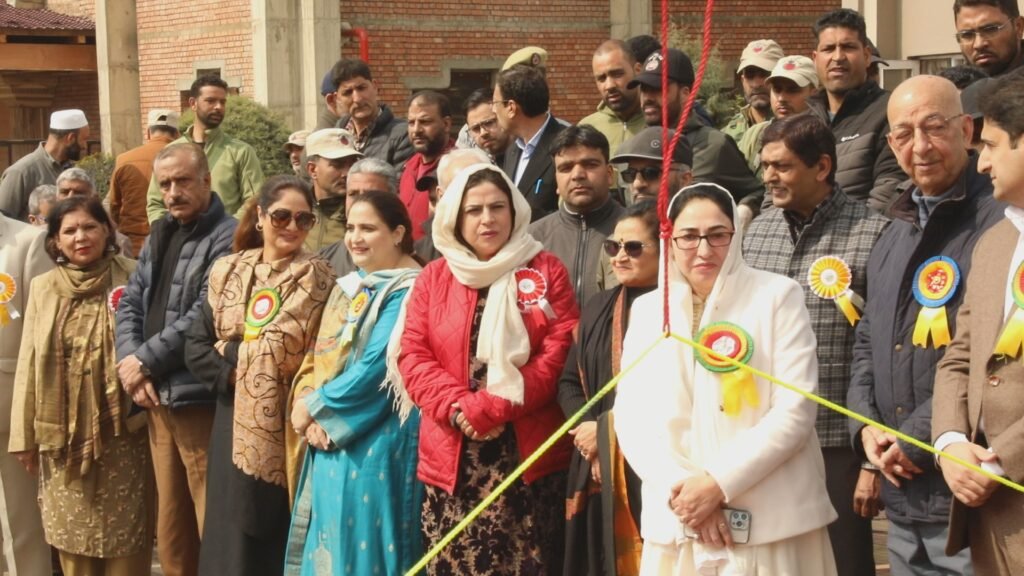
SRINAGAR: Keeping with its tradition of organizing annual Kisan Mela, the Sher-e-Kashmir University of Agriculture Science and Technology or SKUAST- Shalimar Kashmir organized a mega two-day annual Kisan mela on the weekend in the first week of March drawing thousands of people, agriculture enthusiasts, agriprenuers and agriculture experts together from nook and corner of the UT.
Amidst an overcast sky, an elderly man walks brisk to reach a seed stall among hundreds of kiosks arranged in a pattern on the foothills of Zabarwan Hills on the outskirts of Srinagar. After searching through the scores of stalls, his search finally ends at a seed stall where he happily gets his share of Bean seeds. Mohammad Ismail Dar, a progressive farmer from Zewan Srinagar has come to visit Annual Kisan Mela at SKUAST Shalimar here.
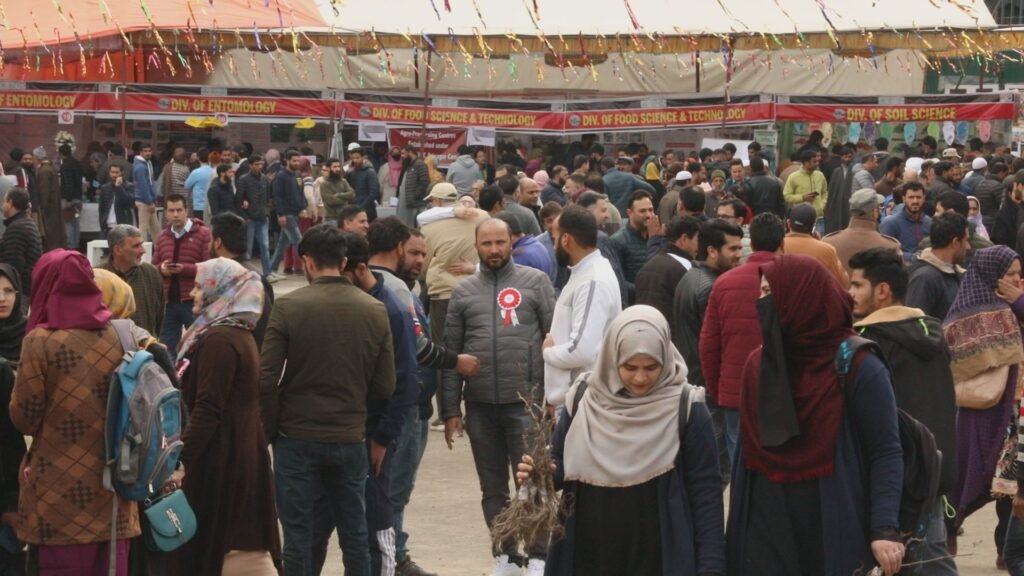
On Sunday, March 4, the picturesque campus presented a festive look, as thousands of people visited the famed mela bedecked with hundreds of stalls displaying and selling new varieties of plants, seeds and even the fauna.
Every year, Sher-e-Kashmir University of Agriculture Science and Technology Kashmir holds Annual Kisan Mela at its main campus Shalimar. Mostly organized in the first half of March, this year the event was held on 4th and 5th March.
Amidst the visible respite from Pandemic, the mela saw a heavy footfall of people, as hundreds of farmers, nature enthusiasts and even families along with children could be seen thronging the mela.
“Actually I had come here to get Kiwi saplings only. But after looking at the kind of new and hybrid varieties of different plants, I have now purchased almost six types of saplings ranging from flowers to fruits,” says an enthusiastic housewife Shahida Akhtar from north Kashmir’s Pattan area who has come here along with her family. “Though these are available at many places in the valley now, I think here I can get good and trusted varieties! After coming here I also came to know that there are many new varieties available these days which we could grow in our kitchen gardens,” adds Shahida while carrying a pack of flower saplings in a bag.
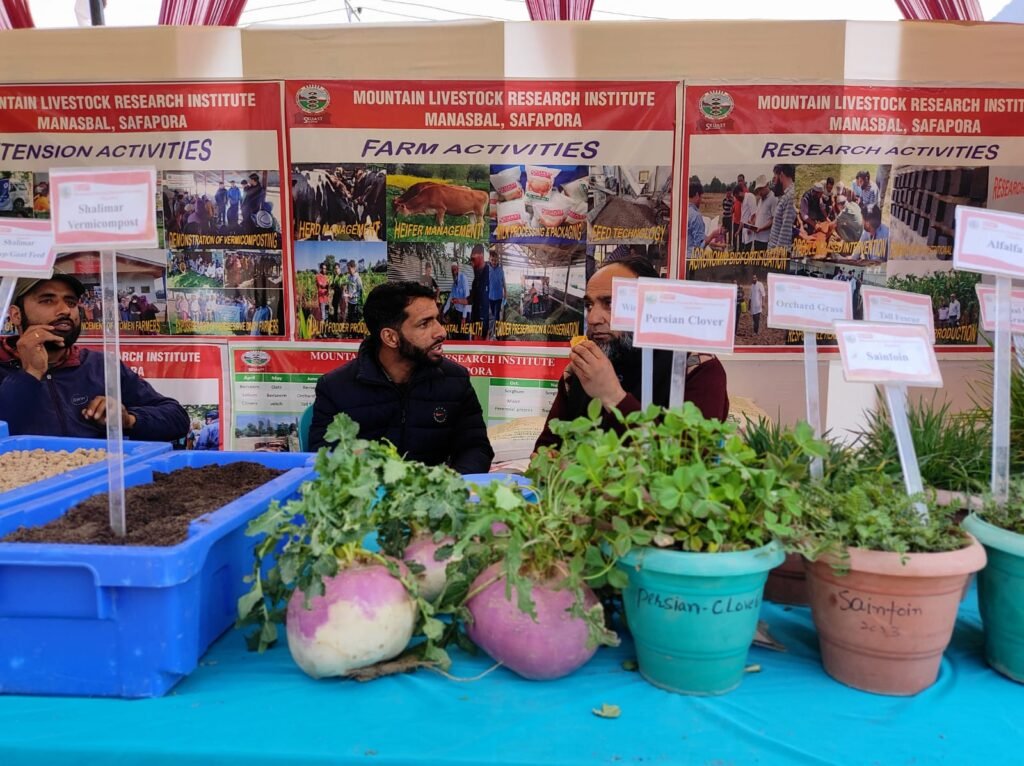
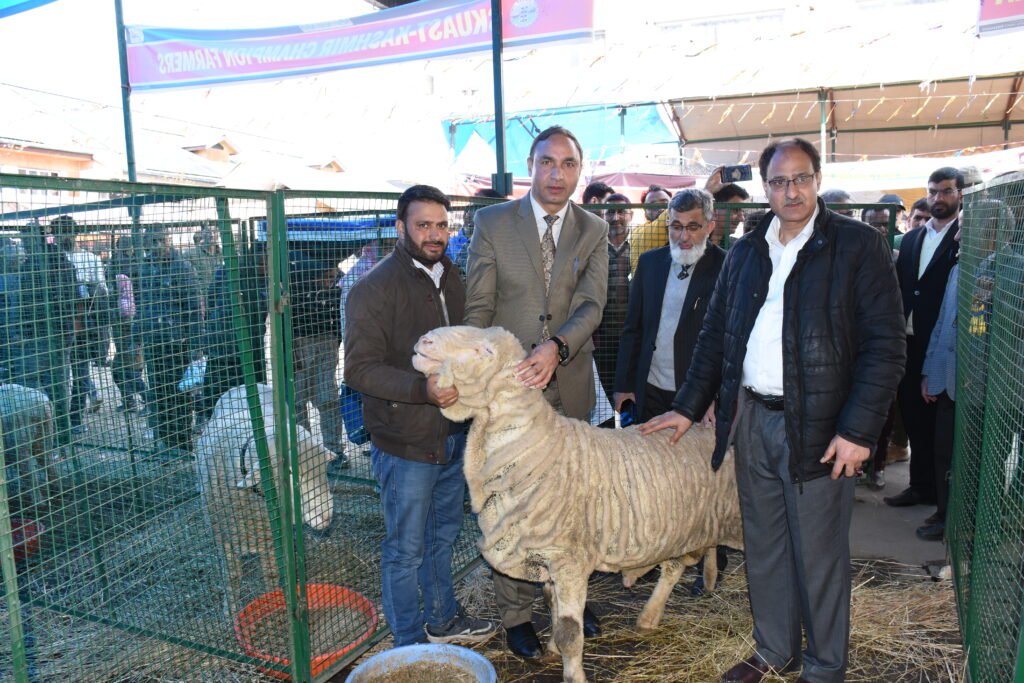
Hundreds of progressive farmers, agricultural entrepreneurs, local and regional agricultural zones had setup stalls in the premises of the campus displaying their agricultural produce. From hybrid variety of flowers, apple, plum, peach, cherry, walnut, colourful corn, organic mushroom, honey, diary products, fowls and Australian sheep to high yield cows, the stalls displayed a variety.
“These type of fairs give us glimpse into agricultural activities of the valley. They reflect our cultural and agricultural diversity,” says one of the officials from SKUAST coordinating the annual mela in the campus.
“These stalls displaying the products derived from diverse flora and fauna of valley are a window to our primary activities. These moments enrich our experience. People should come and visit such fairs as the act encourages the farmers as well as the researchers. Moreover, such gatherings help in updating the knowledge regarding the modern trends in agriculture,” the official opined.
“A stall setup under the banner of Krishi Vigyan Kendra, Ganderbal was among the focus of attraction. Apart from a range of organic products at display, the stall attracted droves of people for rootstocks of a variety of fruit plants. We have sold a good number of rootstock on the first day. We hope, by tomorrow we will finish the remaining stock,” says the In-charge of the stall.
While high yield variety seeds and saplings were the centre of attraction, display of modern technology used in agriculture these days at many stalls also added color to the fair. From newly introduced walnut dehuller, paddy thresher, bike tractor to integrated farming, experts demonstrated their use. Speaking to a group of people, Dr Waseem from SKUAST elaborated upon the ambience and applications of integrated farming system.
In a live demonstration of system, the expert showed how a farmer can use his orchard for integrated farming mixing backyard poultry, dairy, agriculture crops and vermicomposting together besides growing fruits. Integrated farming is a latest trend that envisages both sustainability as well as more profitability. “By switching to integrated farming while the farmers can yield more from small land holdings, the vermicomposting and mixed agrarian activities ensure the conservation of the quality of soil.”
Apart from the stalls representing different agricultural zones of the valley, some farmers from neighbouring union territory of Ladakh also added to the rich culture of the fair. Tsering Dolma, a champion farmer from the 14000 ft high altitude Nyoma area of Leh had put a variety of local organic products on display. “All these products are purely organic in nature. We do not use any sort of chemical fertilizers, as all our products are grown with the help of vermicompost,” says Tsering while displaying a handful of barley grains to customers as people keep thronging the venue.
JAMMU, MARCH 20: Lieutenant Governor Shri Manoj Sinha has extended his warm greetings to the people, especially the members of the Parsi community, on the occasion of Navroz, the Parsi New Year.
In his message, the Lt Governor said that the auspicious occasion of Navroz symbolizes new beginnings and celebration of seasons.
“May the festival bring happiness, health and prosperity to all,” the Lt Governor said.
Srinagar, March 20: President All J&K Shia Association and PC General Secretary Molvi Imran Reza Ansari extended his felicitations to people of Jammu & Kashmir in particular and throughout the globe on the occasion of Nauroz. Molvi Imran said that Nauroz-e-Alam comes with the vitality and freshness of nature and conveys the beautiful message of the green and blooming spring season.
“We are proud that this magnificent event is not only celebrated in Iran but also people in many countries around the world celebrate Nauroz which is also called the “Alam-Afrooz”, meaning a new day that brightens the world with its arrival”.
Molvi Imran said that Nauroz marks the first day of spring and the beginning of the year in the Persian calendar. Besides holding different functions and cultural programmes, people also offer special prayers on this day.
Molvi hoped that the day will usher the state in a new era of progress and prosperity and people will stand united to strengthen the bonds of brotherhood and amity while celebrating the festival.
In his message of felicitations, General Secretary All J&K Shia Association and Senior leader JKPC Abid Hussain Ansari, said that the festival has high cultural and religious significance. Abid said that Jammu and Kashmir is a symbol of a composite culture where people of different religions are living together in peace and harmony adding that this centuries-old brotherhood and communal harmony needs to be strengthened. He hoped that the day will usher the state in a new era of progress and prosperity and people will stand united to strengthen the bonds of brotherhood and amity.
On this occasion JKPC Youth General Secretary Mudasir Karim while greeting people on Nauroz said that this auspicious day marks the first day of spring and the beginning of the year in the Iranian calendar. It is celebrated on the day of the astronomical Northward equinox, which usually occurs on March 21 or the previous/following day depending on where it is observed. Extending the greetings to the people of Mudasir Karim prayed for peace, development and tranquility in the UT.
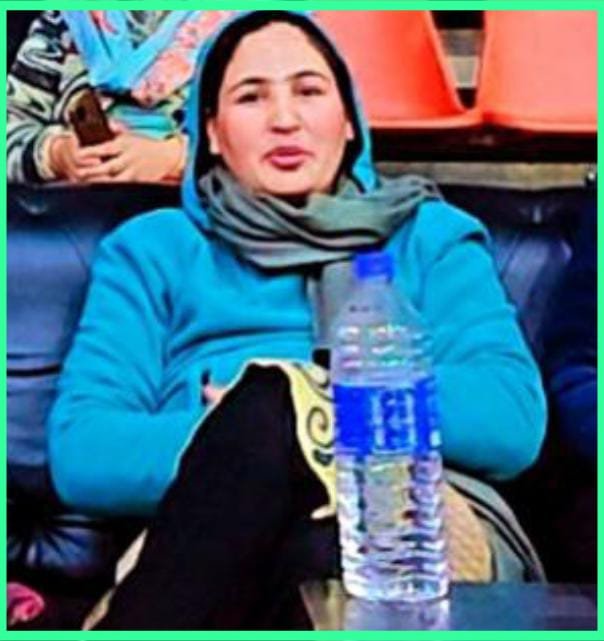
SRINAGAR, MARCH 11: The Deputy Director Information PR Kashmir, Bilal Mukhtar Dar expressed grief and sorrow on the demise of Jabeena Akhtar, an international athlete from Treran Tangmarg of Baramulla district.
Bilal Mukhtar prayed for eternal peace to the departed soul and courage to the bereaved family especially to her husband Khursheed Ahmad to bear this irreparable loss.
He said she was courageous, talented and a master in her profession who played an important role to empower Kashmiri girls and bring up the hidden sportsmanship in them. She was an inspiration to Kashmiri girls, through her endeavours, to chase their dreams, he added.
Social Evils like Drug Abuse, Violence against Women needs to be eradicated for a better & normal Society: DC B’la
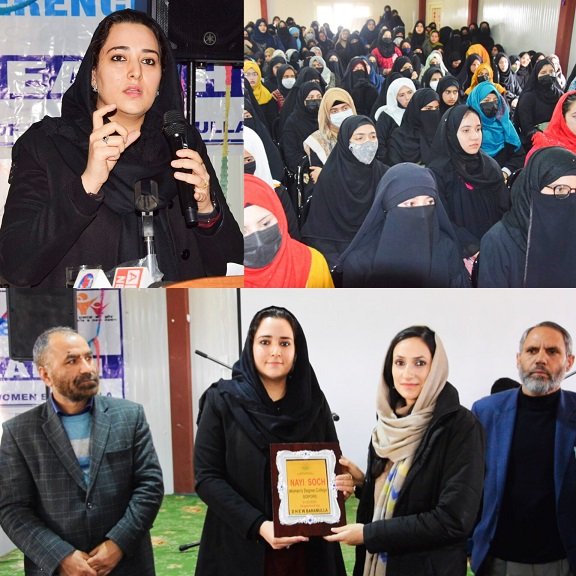
BARAMULLA, MARCH 01: Continuing its reach out to the people in distress, the District Administration Baramulla in collaboration with District Hub for Empowerment of Women (DHEW) today organized a daylong conference on Mental Health at Govt Degree College for Women Sopore.
Deputy Commissioner (DC) Baramulla, Dr Syed Sehrish Asgar was the chief guest on the occasion.
The conference was convened under the banner of “Nayi Soch” which is an ambitious initiative of District Administration Baramulla for generating awareness about mental health and allied issues among the masses.
Speaking on the occasion, Dr Sehrish said that administration and people are on the same page in the fight against drug abuse. She proclaimed that district administration recently established a Drug De-addiction Center at PHC Singhpora which will cater the in and out door patients from across the district.
Dr Sehrish said that self introspection is vital for mental health and awareness among masses is the need of the hour to curb the menace of substance abuse.
She further said that the administration will go tough against those who are involved in trafficking of drugs and stringent laws will be executed in this direction.
The conference witnessed a huge gathering of students and youth of Sopore sub division.
Counselors and subject experts spoke on the occasion and highlighted the importance of psychological and social well being of a person.
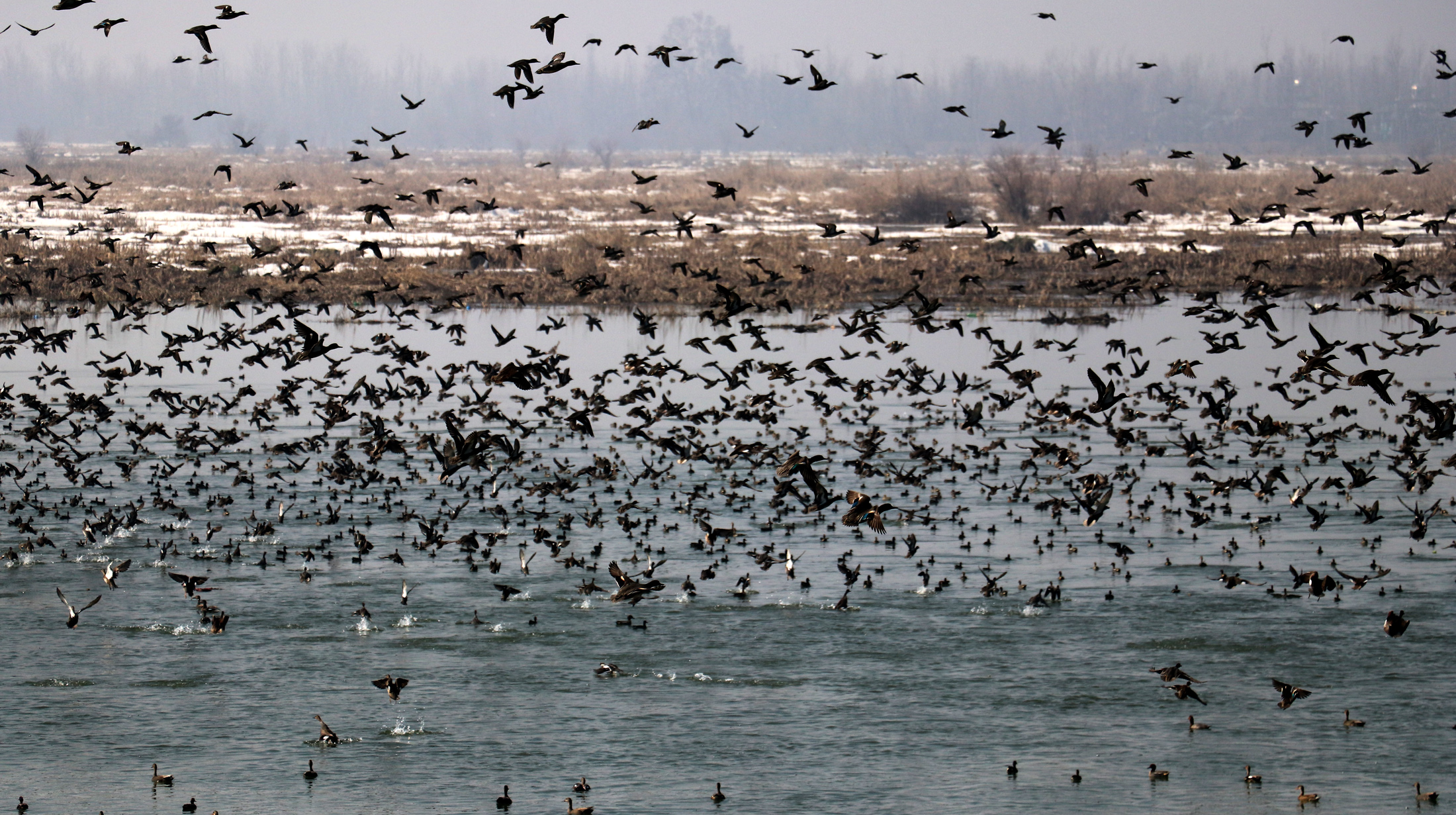
SRINAGAR: Come winters and annually thousands of migratory birds visit Kashmir. But not all of them are lucky enough to enjoy the hospitality of their favorite habitat –the wetlands as many such winged visitors get poached.
Braving the freezing cold of January, 12-year-old Farheen stealthily opens the window of her room to experience the soul soothing aura of central Kashmir’s Hokersar wetland, which lies just a few yards away from her house. Hoots, chirps and echoes produced by flock of birds is never less than a soulful treat for her or any nature lover.
From Water Ballards, Coots, Pintails and Teals to Shovellers, Gadwals, Tufted Ducks, Graylag Geese, Wigeon, Pochards and others, every winter thousands of birds take a long flight to comparatively less colder Kashmir wetlands from colder habitats in Siberia, China, parts of Europe and even Australia.
This annual migration, which lasts for about six months from October till March in the valley is always a treat to witness for any nature enthusiast, in particular the bird lovers.
Pegged between five to seven lakh, these migratory birds land in Hokersar, Hygam, Prichal, Shallabugh, Wullar and Dal Lake, the wetlands considered as a feeding ground for these birds.
Feeding on naturally available food present in the form of insects, worms and fish, the hovering of these migratory birds making patterns in the skies attracts attention of many birders and nature enthusiasts.
“The birds are a prize to watch. Watching thousands of birds gliding up and landing down is always a momentous sight,” said Farheen.
However, after flying thousands of kilometers many of these winged guests only land in a deathtrap, as they get killed at the hands of poachers before their return.
Despite the government ban on poaching and strict vigil by the government forces, killing of the birds goes unabated in and around the wetlands of Kashmir. Ducks, Geese, Swans to Mullards, for poachers all are in the target list.
Few years back, the Sher-e-Kashmir University of Agricultural Sciences and Technology or SKUAST Kashmir, under an initiative to study the migration patterns of migratory birds in Kashmir wetlands, fitted PTT(Platform Transform Terminal), a satellite based tracking device on many birds to track their movement.
To every member’s astonishment in the research team, the results were shocking.
According to Dr Khursheed Ahmad, Principal Investigator, the track of many such birds fitted with PTT was lost within few weeks as the device either stopped to send signal or signal went stagnant.
“For a stagnant signal, one can assume that the bird has suffered a natural death but if it goes off altogether, there is every likelihood that the bird has been poached,” Dr Ahmad told Valley Observer. “Our team met with cases where poachers had damaged the devices after catching or killing the bird.”
Not only guns, people use traditional traps and other hunting techniques to catch the winged visitors.
Occasional bangs in late evenings and the early mornings in deeper belts of the paddy fields are allegedly a “normal” for the people living around Shallabugh and Rambergarh areas, the villages marking the boundary between the capital city of Srinagar and Baramulla in north Kashmir.
“Since these areas are close to Hokersar wetlands, many birds visit these paddy fields for food and presumably get killed by poachers,” says a resident of Rambergarh Srinagar.
Admitting the poaching of winged visitors outside the protected wetland areas, Sajad Ahmad, Range Officer, Wildlife says that most of the poaching takes place outside the protected areas of wetlands, as the birds fly towards paddy fields and other cropping lands for the easy availability of feed.
“It is during these flights outside the protected areas, they get easily killed, as the poachers find it very easy to shoot them outside protected areas,” added Ahmed.
The Jammu and Kashmir Police are also keeping a strict vigil on the poachers. Some months ago, a person accused of poaching was arrested.
Poaching mainly takes place for adventure or money. It’s largely believed that the poached birds are secretly sold for around Rs 1,000 “per prey.”
Ironically, the place globally famous for hospitality –Kashmir isn’t that hospitable towards the winged visitors, who visit the Valley unmindful that their long flight could be the last!
SRINAGAR: Braving the biting cold, a middle-aged fisherman, Mohammad Sultan starts his day in the wee hours only to ensure that he returns home by noon to prepare one of the cherished winter delicacy from his days catch –Phaire or smoked fish of Kashmir.
Back home, his wife Saleema carefully cleans the larger sized fish in a tub. After cleaning the stock, she slightly tilts the tub to let the water drain out. At a few meters, her husband, Sultan arranges the heap of special dry grass in layers to make a grassy platform in their backyard at Central Kashmir’s Anchaar area in Srinagar.
The husband wife duo places the cleaned fish on a platform of grass and torch it to produce flame, smoke and heat. In a split of time, a prized catch gets engulfed in fire and smoke. After hours of slow flame and dark smoke treatment, Kashmir’s prized winter delicacy, Phaire is ready for sale.
Phaire
A fish partially roasted in smoke and flame is widely consumed by Kashmiris, mainly during winters. Cooked with Haakh or collard greens, tomato, raddish, lotus stem or dried brinjal, the Phaire does not only fill the Kashmiri kitchens with aroma but also satiates the “gastronomical sense of every food lover.”
During winters, a traditional dish ‘Phaire Haakh’ made from smoked fish and collard greens is vogue in traditional Kashmiri kitchens.
“This is my favorite form of fish. My children are also fond of it. We usually wait for winters to come to eat this fish”, says Mymoona Akhtar, a middle aged woman from Dalgate area while buying the smoked fish at Nowhatta in Srinagar.
Mymoona is a not the only customer. Another woman in her fifties, Haleema standing besides Mymoona also waits for her turn to get hold of her pack.
The making
The process of making smoked fish requires efforts of many people and is quite interesting in itself. The fish are first caught usually from the Dal or Anchar lake, then the women who are expert in cleaning it, wash and remove the waste part. After washing, the fish are laid down on the wild dry grass interwoven loosely shaped in the form of platforms and then dried for a while after which the grass is torched to smoke the fish on it.
When the fish becomes dark brown in colour and are properly smoked these fish are collected in a willow trays or baskets and then sold in the market.
Mostly the women sell the Phaire in the market in traditional willow baskets. Interestingly they also play a significant role in the making of smoked treat.
“My wife and daughter help me in smoking the fish for weeks together. While I usually catch some stuff myself for days together and buy the bulk of it from the fishermen from Dal lake side, my wife and a daughter engage in the collection of a special dry grass,‘naar gaase’ from nearby wetlands used in smoking the fish,” said Sultan.
Sells like hotcakes in cold
The demand for the smoked fish increases during winters. There is a common belief that the winter delicacy is a source of warmth in the colder months of winter. The same is reflected in the increased sale of the specially made fish.
Mohammad sultan has been in the smoked fish trade for decades. “I have been smoking the fish since my youth. I have learned the art from my ancestors. Though its demand diminishes during summer, my sales increase exponentially throughout the winters.”
Despite availability of fresh foods throughout the year, the taste and cultural legacy keeps its popularity afloat.
Cultural Icon
Despite round the year availability of fresh food in the valley now, unlike the past when the people had to bank mainly on dried vegetables during winters, the culture of relishing smoked fish still prevails in the valley.
Many believe that it “is the taste and cultural significance of this winter delicacy which lures the people for this traditional feast.” Often, many people still invite nears and dears for its feast.
“A friend of ours is visiting us tomorrow. So we decided to prepare Phaire Haakh, a traditional winter treat for him, as he has returned after a gap of two years from a gulf country,” said Tasleema while buying smoked fish from Saraibala market in Srinagar.
“Firstly I will remove the burned skin from the fish, clean them thoroughly and then mix the stuff with a blend of spices and Haakh,” Tasleema added while explaining the preparation of Phaire Haakh in Kashmir kitchens to the Valley Observer.
Amidst a variety of food including exotic pasta, pizza and mommo being sold in Kashmir, the traditional Phaire stands distinct as it continues to be a cherished winter delicacy in the valley.
Srinagar: Zaitoon Akhtar, a 42-year- old woman from Devsar hamlet in south Kashmir’s Kulgam carefully segregates the dried brinjals from the long thread like slices of sundried gourd before the local vegetable dealer weighs the stuff on his handheld balance and negotiates the deal.
Every year Zaitoon sundries the surplus produce from her vegetable garden and sells it during winters. “I have been making Al Hache, sundried bottle gourds and wangan hache dried brinjal slices for several years now. While I use some of the dried stuff in my kitchen, I am able to sell the rest of it to a dealer for good amount, as there is always a good demand for these dried vegetables in the market during winters,” she says while showing a tangled mass of Al Hache or sundried bottle guard.
About 90 kilometers away, Shahida Bano from Chadoora Budgam in central Kashmir has a dozen odd transparent bags filled with dried vegetables hanging on the attic of her multi-storied house. “During summers there is surplus production of vegetables in our vegetable gardens. Since the price of the same is very less due to surplus supply in the market, I prefer to sundry the surplus vegetables and sell them during winter months for a good return,” says middle-aged Shahida seconding Zaitoon.
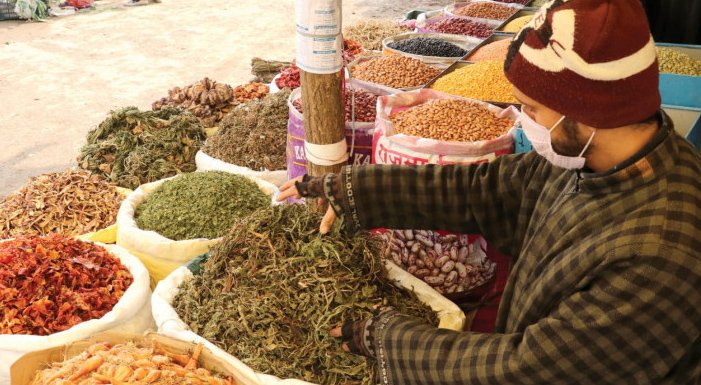
Be it a sliced brinjal, laced gourd, tomato chops, turnip halves, their sundried form is destined to be a part of Kashmiri cuisine in almost every household, scenting the surroundings with peculiar aroma and taste during winters with -Hokhsyun or sundried vegetables.
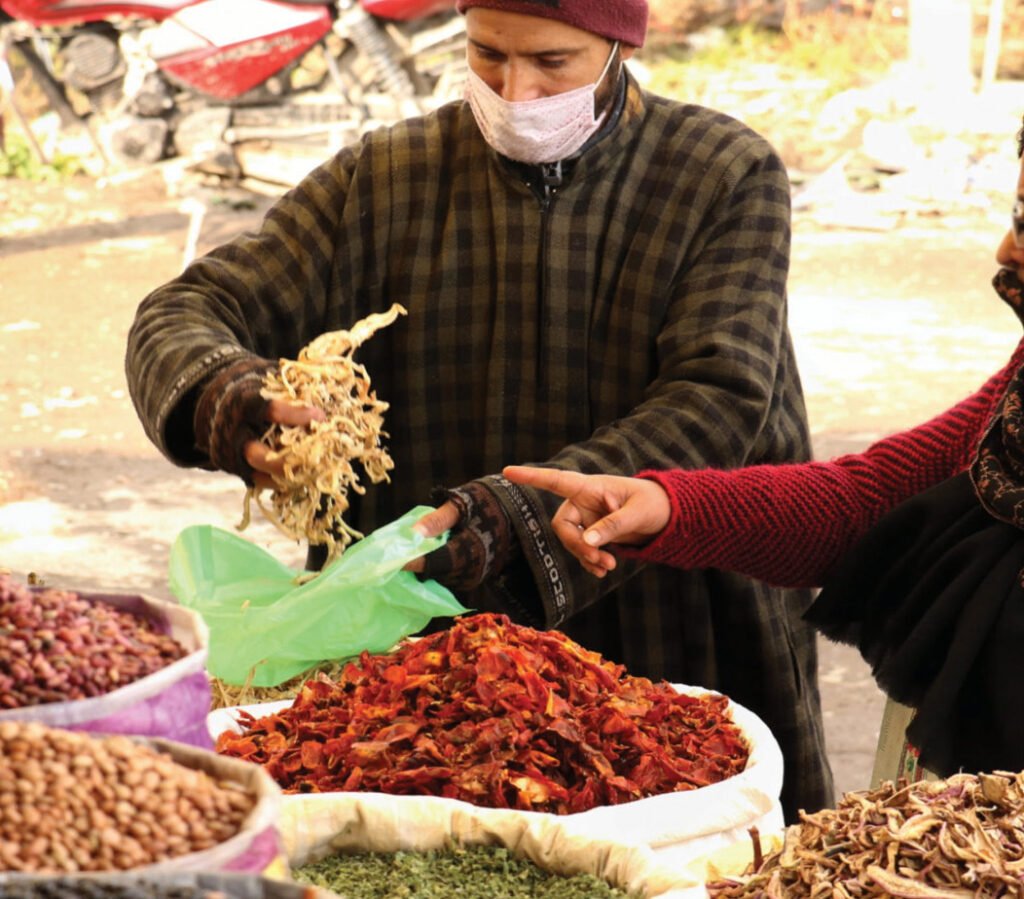
With the demand from every nook and corner of the valley, the sellers of the dried delicacies dot almost every major market in the Kashmir towns and cities. “I have been selling these vegetables throughout the winters for many years now,” says Fayaz Ahmad, while standing besides the mass of dried stuff, put for sale on a push cart adjacent to famous Jamia Masjid at Srinagar’s famous Nowhatta market in congested downtown.
Zaid Ali/VO
Asserting, though seasonal in nature, there is good demand for these edibles during winters, Fayaz says, while selling the slices of Ale Hache to a customer.
There are many customers from places like Kargil, Leh and Jammu as well. Kashmiri Pandit community in Jammu is also fond of Hokhsyun. “On an average, I send a consignment weighing hundreds of kilograms, comprising of dried veggies to these places by the end of autumn every year,” says Bashir Ahmad Dar a Hokhsyun dealer from Noorbagh area of Srinagar.
Lesser movement of people during winters, lack of proper agricultural activity and peculiar geographic location promotes the use of dried veggies in the region.
As the valley witnesses a good production of locally grown vegetables like bottle gourd, brinjal and tomato in summers, there is a tradition of sun-drying the surplus for the use in harsh winters. During the months of July and August, there is large scale production of gourds, brinjal and many other vegetables owing to increased trend of kitchen gardening and hybrid variety of seeds in the valley. “Growers or households, usually dry up the surplus produce for the winter use,” says, Ajaz Hussain, Agricultural Officer, from Jammu and Kashmir Agricultural Department, posted in Srinagar.
It is not only turnip, gourd, tomato and brinjal which are sun dried in large quantities, but people also sundry lotus stem, fish, pepper, spinach and dandleon for consumption in winters. Though most of the vegetables are available in the valley throughout the year, some vegetables and fruits like gourd and pear are mostly dried as they are not easily available in the market during winters.
Consumption of dried veggies has been a part of the Kashmir’s culture since ages. Climatic conditions, geographic location and its unique culture are among many contributing factors as to why the people in this part of world still long for Hokhsyun.
According to Mohammad Ashraf, ex-Professor of History, in older times due to harsh winters, the movement of people used to get restricted. “Absence of any agricultural activity coupled by harsh life conditions imposed by the apathetic weather forced the people to pile the stock to survive those times.”
Zaid Ali/VO
The tradition finds its followers in these modern times too, as the region still goes through the period of harsher colder days during Chilai Kalan, when the temperatures plummet to sub zero for scores of days together.”
Famines are also one of the reasons for this tradition, says the historian, while deliberating upon the main causes for the practice. “For the fear of famine in earlier times, people took to stocking the consumable stuff in the valley… One of the reasons why people have a stock of consumables for months together here.”
Other reasons apart, it is essentially the taste that drives the people to make the dried stuff still a part of Kashmiri kitchen.
Zoona, a sexagenarian woman says though she does not eat much at this age, she often keeps asking for Hokhsyun varieties to her children for its aroma and taste.
Though medical fraternity raises concerns about the hygiene of Hokhsyun, the use of winter delicacy goes on in the valley.
“When not dried properly, the dried vegetables can catch fungus, a source of toxins which are carcinogenic in nature. But if dried and cooked properly, these are quite safe to consume,” says Dr Abdul Gani Ahangar, ex- medical superintendent from the Health department of Jammu and Kashmir.
Amidst the Chillai Kalan, 40 days of harshest period of winter, cuisines in both urban and rural Kashmir aromatize with Hokhsyun to much delight of vegetable growers. People are enjoying the popular Hokhsyun dishes like Gogje Paneer, Alhache-Chicken and Hoggad chutney in the valley. Here Hokhsyun is a winter speciality!